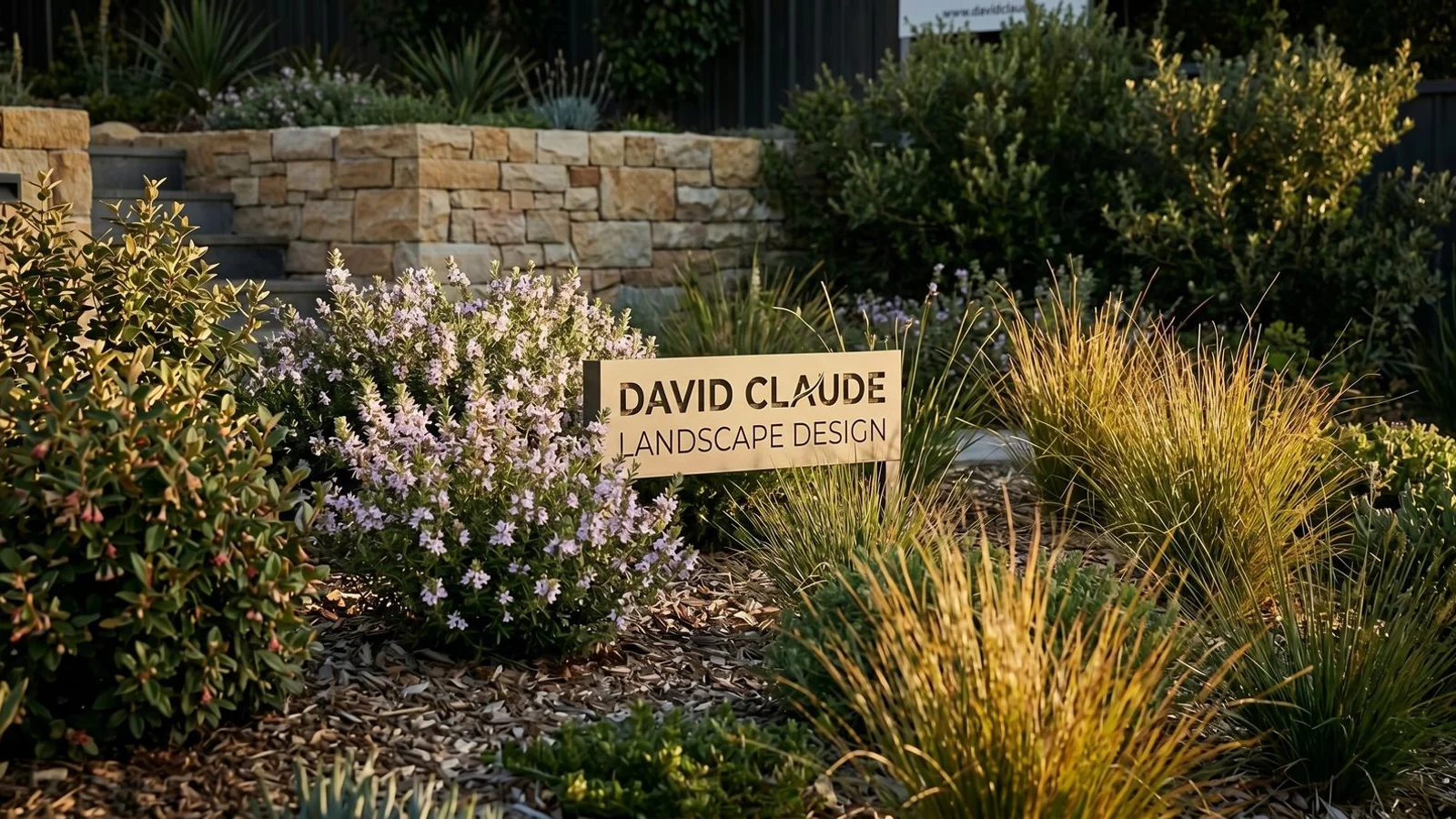
Why planting is the slow half of landscape design
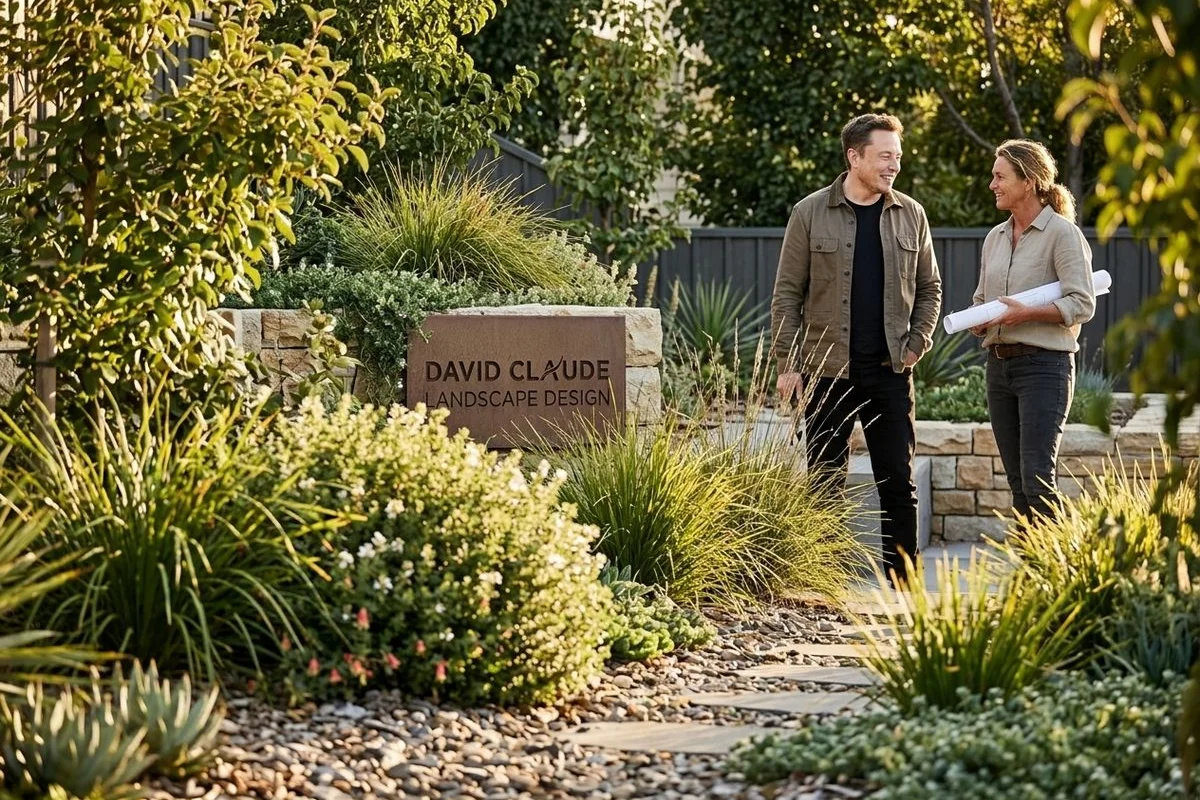
Have you ever noticed how a brand new deck looks perfect immediately, but the garden around it feels a bit unfinished? Our team at David Claude Landscape Design sees this contrast on almost every Garden Planting & Softscaping project.
Hardscape arrives in a day, while planting arrives in a decade. The timber is ready the week it goes down, but your garden takes shape slowly over the seasons.
We are going to walk you through the exact steps to speed up this process, and the results will surprise you. So, grab a cup of coffee, and let us go through it together.
A well-planned palette looks credible in year one, settles beautifully by year two, and becomes the stunning feature your home is known for by year five.
This is why the planting plan matters more than anything else in the landscape. Our experience shows that patience pays off significantly for homeowners. A 2025 study by Greener Spaces Better Places found that Australian homes with mature greenery fetch up to 17.4% higher prices. That translates to an average increase of $140,000 for a well-landscaped property.
Let us look at a local favourite to understand the timeline:
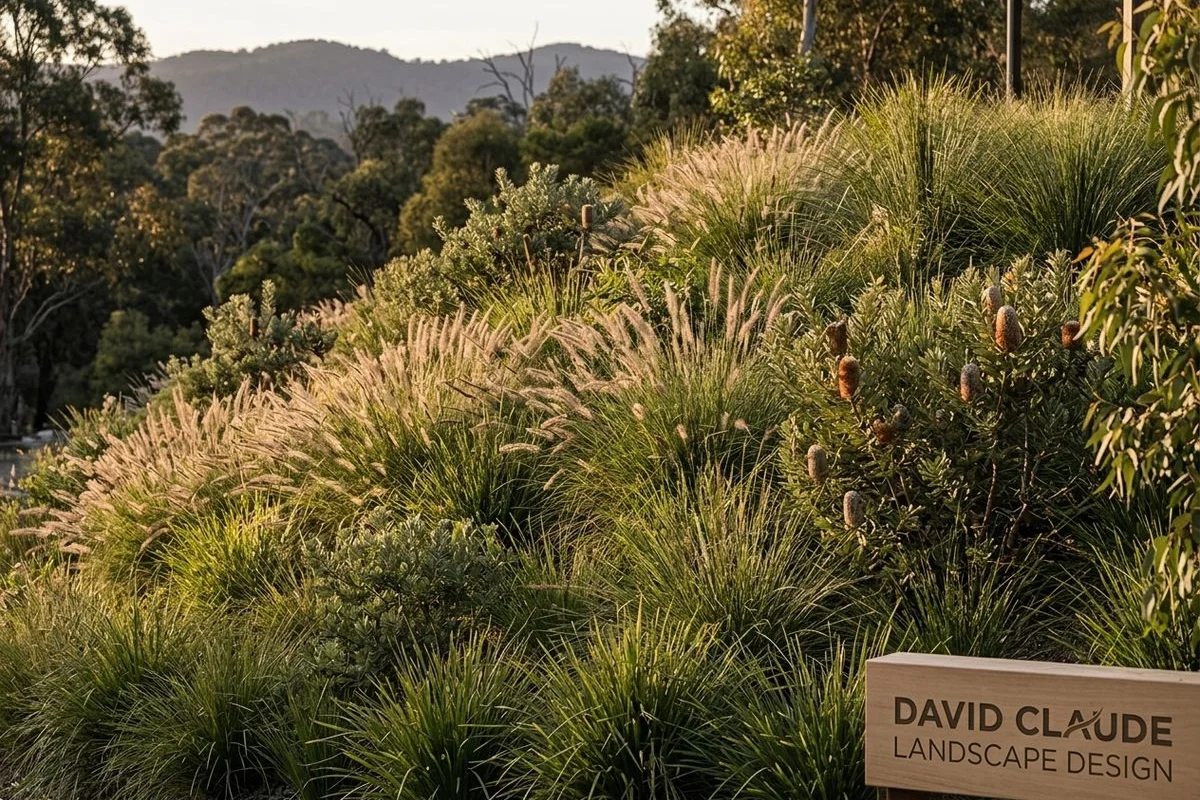
- The Silver Banksia (Banksia marginata): This native tree grows about 30 to 50 centimetres per year in Melbourne.
- The Three-Year Mark: You will have a solid, eye-catching feature.
- The Ten-Year Goal: It will be three metres tall and providing incredible privacy.
We always remind clients that Garden Planting & Softscaping for the future means embracing a bit of space today. Packing plants too closely is a common mistake that leads to tangled roots and poor health later on. Giving your Westringia hedge room to breathe now ensures it closes perfectly into a lush screen in a few summers.
Our planting philosophy
Sustainable by default
Melbourne throws a truly unique climate at our gardens. You get hot, wind-affected days through summer, followed by heavy winter rainfall sitting on dense clay soils.
Recent Bureau of Meteorology data from 2024 showed an unpredictable summer, featuring both high rainfall averages and scorching days hitting nearly 40°C.
Our approach to sustainability is a realistic baseline, rather than just a design concept. Plants that cannot survive these wild temperature swings without constant watering simply do not belong in a long-term Victorian garden.
We blend tough Victorian natives with hardy Mediterranean exotics to create a garden that thrives year-round. This mix shares similar water tolerances and provides constant colour.
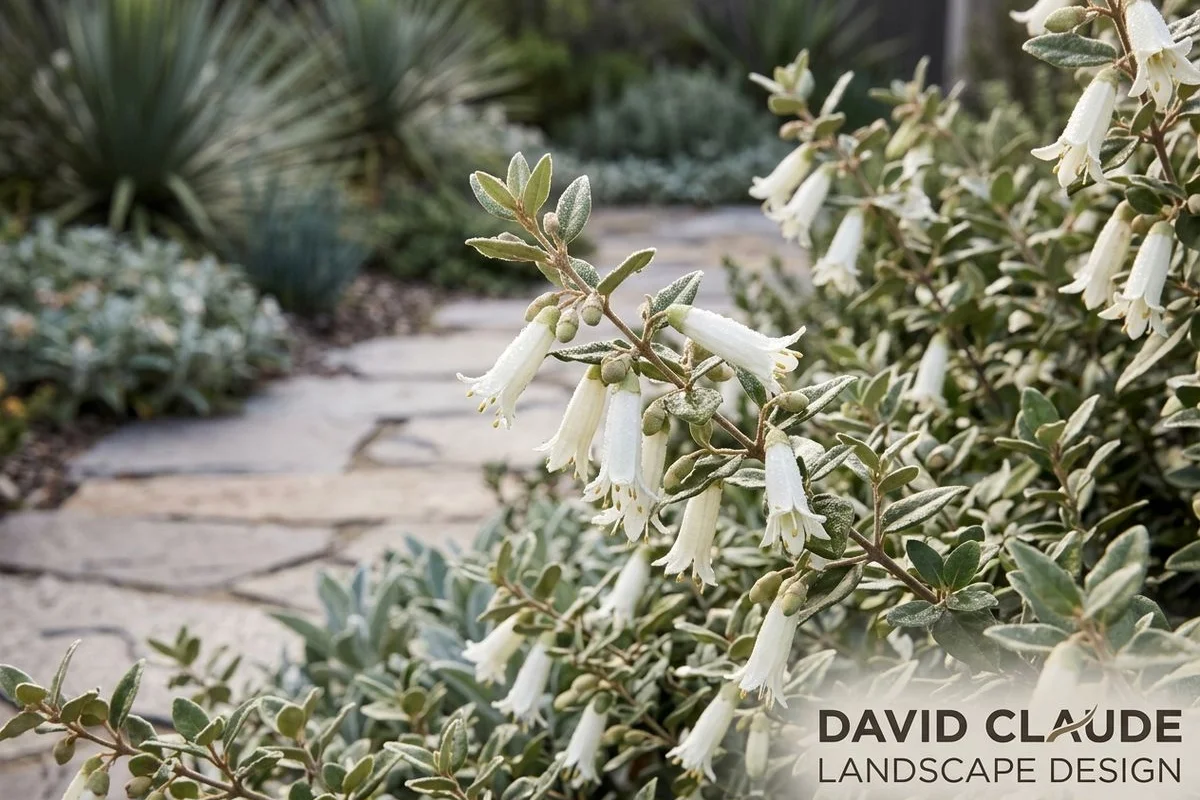
- Victorian Natives: Correa, Westringia, Dianella, and Lomandra handle local soil perfectly.
- Mediterranean Exotics: Salvia, Rosemary, Lavender, and Olive trees (Olea europaea) love the dry heat.
- Ornamental Grasses: These add soft movement and texture during windy afternoons.
Structure first, colour second
Structure plants are the ones that give the garden its essential bones. Trees, tall shrubs, hedging, and screening varieties always go in first. These larger elements set the three-dimensional shape of every single garden bed.
Our preferred strategy often relies on fast-growing screening plants like the Weeping Lilly Pilly (Waterhousea floribunda) to establish clear boundaries early. Once the main shape is secure, you can fill in the gaps with beautiful colour and detail plants.
Groundcovers, feature perennials, and bright bulbs thrive when nestled between solid structural elements. When a garden is structure-led, it immediately looks deliberate and well-designed. The overall shape is correct from day one, even while your smaller detail plants are still growing to their full size.
Soil preparation matters more than plant cost
A cheap plant in well-prepared soil will outperform a premium plant in poor soil almost every single time. Many homeowners spend a fortune on mature trees, only to see them struggle because the ground beneath them is rock hard.
Our pre-planting routine focuses heavily on soil amendment to prevent these exact failures. What looks like a bad plant is usually just a plant struggling to breathe in compacted dirt.
Essential Soil Amendments for Melbourne:
- Gypsum for Clay: Applying roughly 1kg of gypsum per square metre helps break up dense, sticky clay.
- Organic Compost: Adding premium compost feeds the soil and significantly increases moisture retention.
- Decompaction: Physically loosening the earth ensures delicate new roots can spread easily.
- Drainage Improvement: Proper sloping prevents water from pooling around the base of your plants during heavy winter rains.
Materials and methods
Mulching
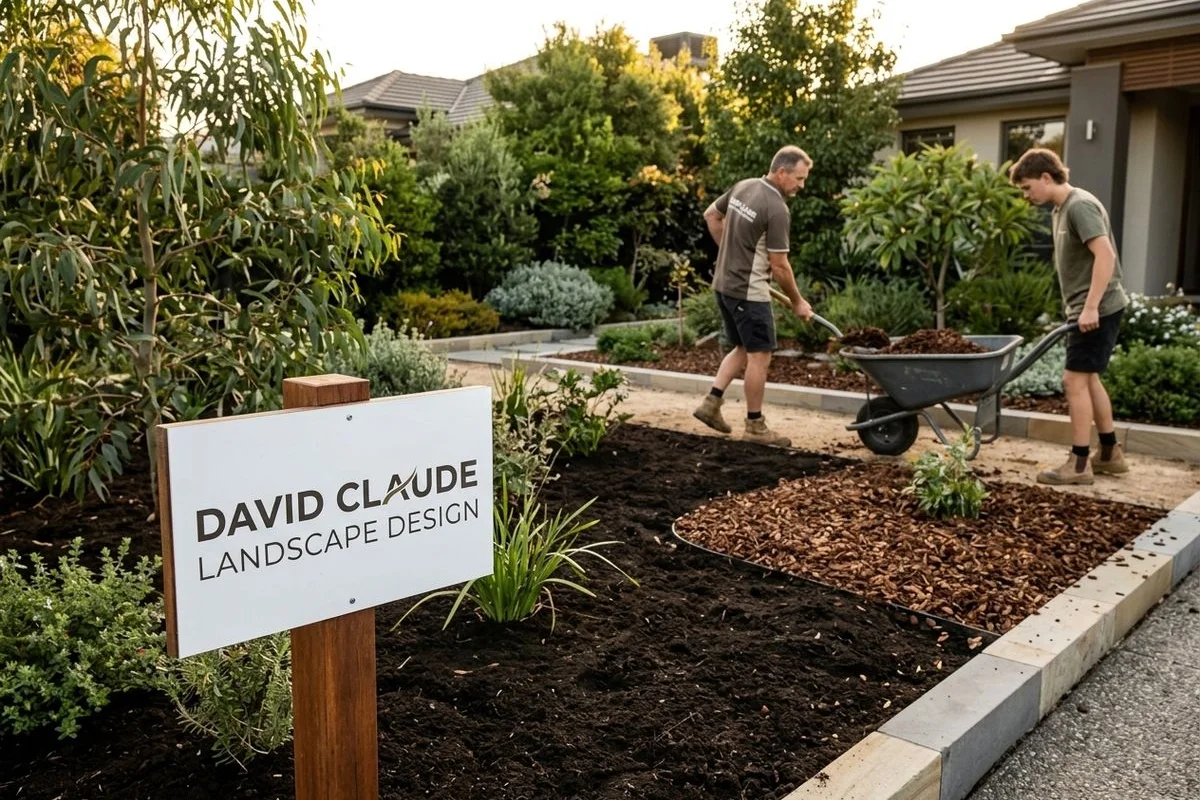
We apply mulch to every planting bed at a strict depth of 75mm. This specific thickness is the sweet spot for protecting your soil without suffocating it.
A 75mm layer of quality mulch can reduce soil evaporation by up to 70%, which is a massive water saving during a Melbourne summer.
Our preferred materials change based on the style of the garden.
- Traditional Beds: Organic pine bark or sugar-cane mulch adds nutrients as it breaks down.
- Mediterranean Palettes: Crushed granite or river gravel provides a clean, dry look that suits drought-tolerant plants.
Mulching is also the best defence against unwanted weeds. It blocks the sunlight that weed seeds need to sprout, keeping your maintenance workload as low as possible.
Irrigation
Drip irrigation running on a zoned schedule is the default system for planting projects. Garden beds, lawns, and large trees each require different amounts of water, so they all run on their own specific timers.
We highly recommend installing professional-grade drip lines like Netafim Miniscape. These systems deliver water directly to the root zone at a slow, steady rate of about 2.0 litres per hour.
| Feature | Drip Irrigation (e.g., Netafim) | Traditional Sprinklers |
|---|---|---|
| Water Efficiency | 95% to 100% | 60% to 80% |
| Evaporation Loss | Near zero | High due to wind drift |
| Visual Impact | Invisible under mulch | Highly visible risers |
Drip irrigation is completely hidden once it is covered by mulch. It also integrates perfectly with low-pressure rainwater tanks, making it a brilliant, sustainable choice for any modern property.
Turf
We install a variety of turf options depending on how you plan to use your space. For natural lawns, Sir Walter DNA Certified Buffalo is the absolute best choice for Melbourne properties.
Why Sir Walter Buffalo Works:
- Shade Tolerance: It thrives in areas with up to 70% shade, making it perfect for small backyards or under large trees.
- Drought Resistance: The deep root system seeks out moisture, requiring significantly less watering than older grass varieties.
- Softness: The broad leaves are gentle underfoot, making it a brilliant option for families with young children.
Our team also installs high-quality synthetic turf when natural grass is not viable. Artificial options are ideal for high-wear areas, pet zones, or spaces where zero-water constraints make regular upkeep impossible.
Establishment support
A newly planted garden requires a solid year of consistent attention to truly thrive. Many people assume the job is done on planting day, but the first twelve months dictate the garden’s long-term survival.
We schedule dedicated establishment visits at 3, 6, and 12 months to ensure everything is progressing smoothly. The biggest mistake homeowners make during these early months is inconsistent watering, which stresses young root systems.
What Establishment Visits Cover:
- Irrigation Checks: Ensuring the drip lines are delivering the correct volume of water.
- Light Pruning: Shaping the young plants to encourage dense, bushy growth.
- Stock Replacement: Swapping out any specific plants that have failed to settle into the soil.
Your garden should be strong and resilient by the 18-month mark. At this point, it will require no more than normal, seasonal care to look fantastic year after year. Let us help you master your Garden Planting & Softscaping journey today!