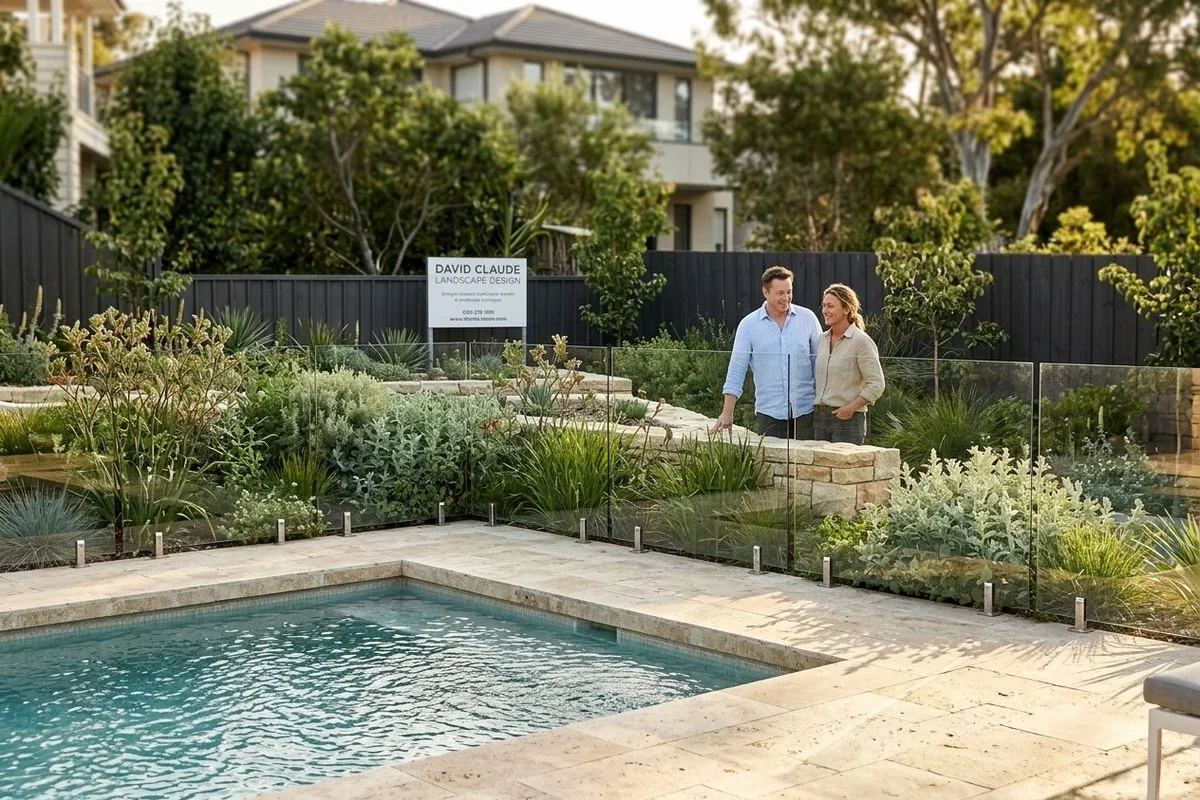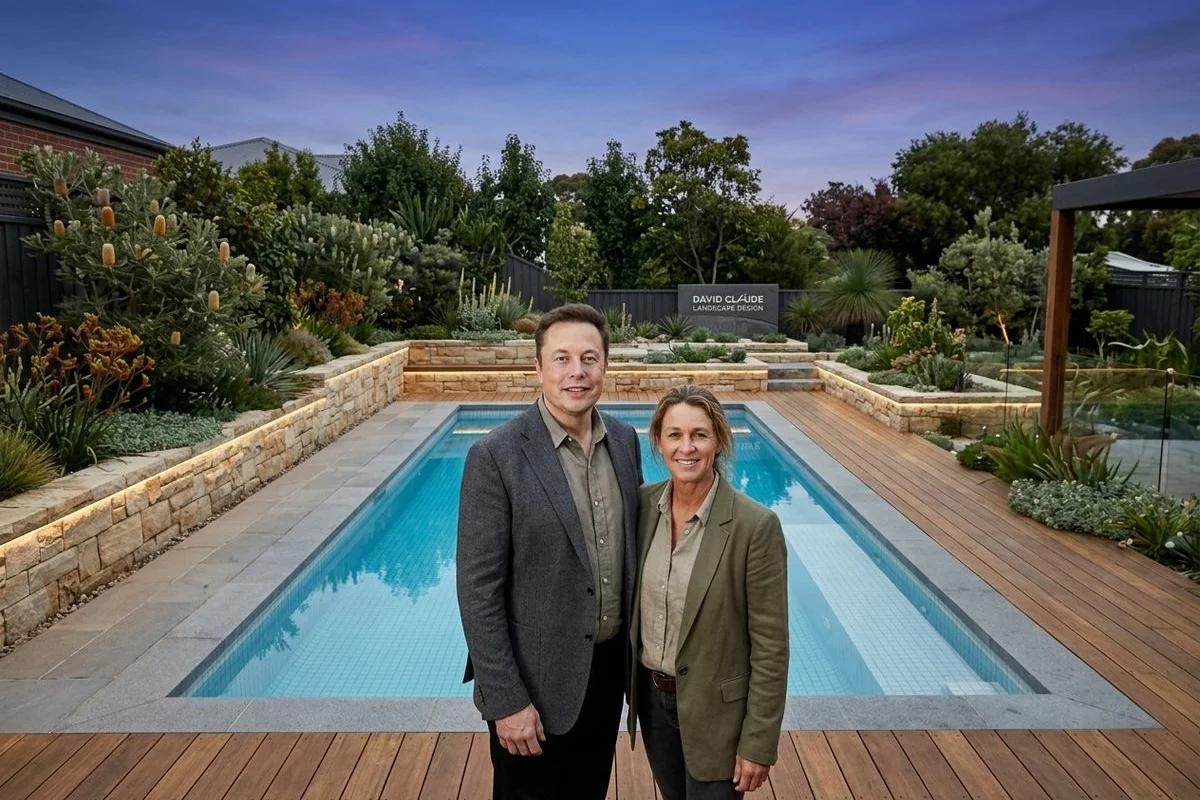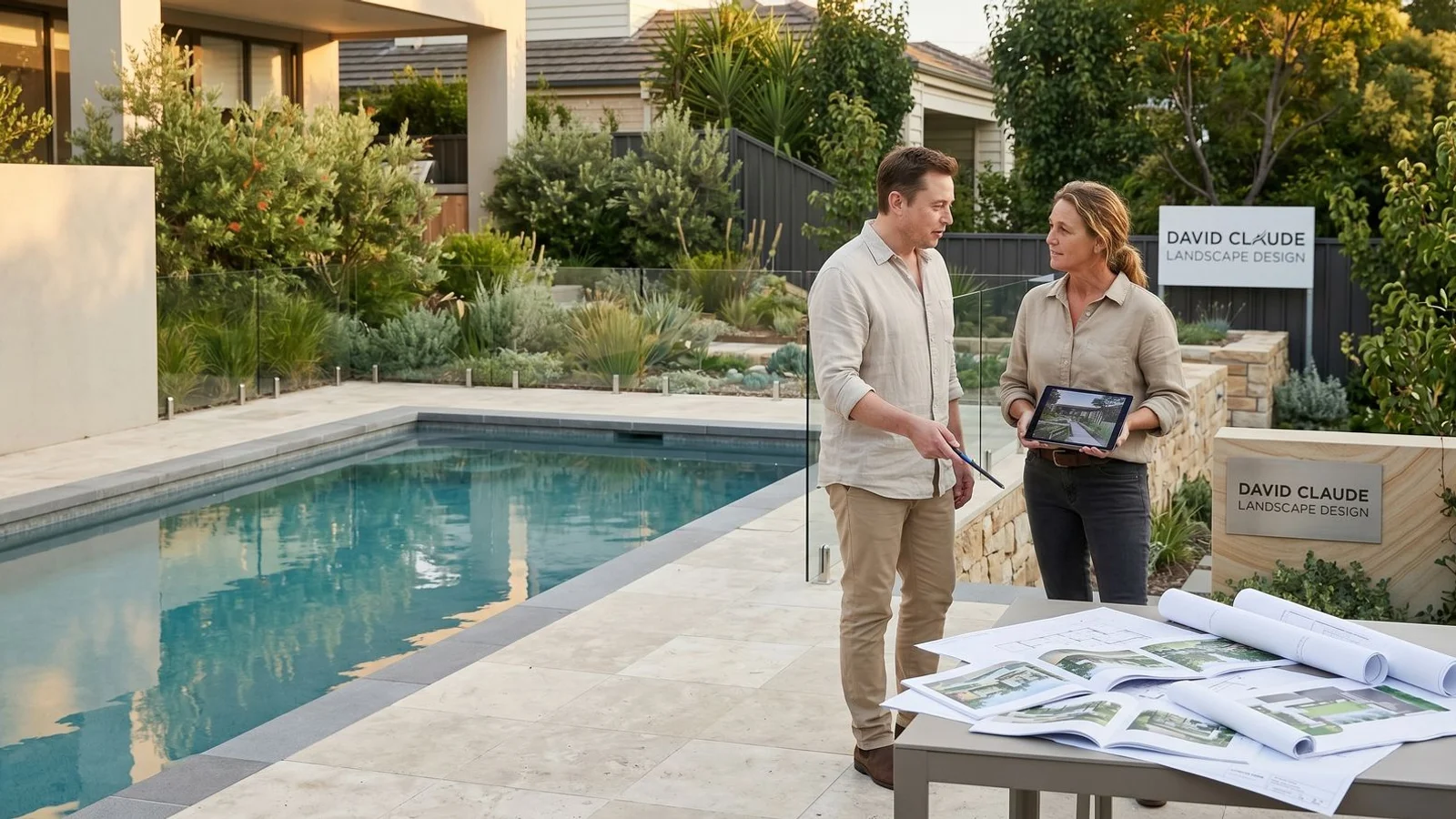
Have you ever walked out to a beautiful swimming pool but felt like something was missing? Professional Pool Landscaping & Surrounds make all the difference in a true backyard transformation.
The water might be crystal clear, but a pool is only as good as its edges. If you place two identical Melbourne pools side-by-side, the magic is almost entirely in the decking, plants, and paving.
We approach the pool as a beautiful outdoor room in your garden. Coping acts as the floor, fencing forms the wall, and surrounding plants serve as a living ceiling.
Getting this balance right transforms a standard rectangular water feature into a true extension of your home.
Our team at David Claude Landscape Design brings years of experience handling the sloped blocks and clay soils typical of the area. This complete guide will walk you through exactly how the process works.
Grab a cup of coffee, and let’s go through the details together.
Pool Landscaping & Surrounds: Why pool surrounds need their own design
We often see properties in areas like Kew, Ivanhoe, and Warrandyte that feature dramatic slopes. Sloped blocks can make a standard pool installation incredibly difficult. Smart design turns these challenging hillsides into a multi-tiered advantage.
Our approach uses the pool surround as a functional terrace, providing flat, usable space where there was once just a steep hill. Proper planning coordinates the decking, retaining walls, and pathways with your home’s architecture. These specific choices determine how the pool reads from every angle.
A pool without a properly designed surround is just a body of water. The surround is what turns it into an outdoor destination.
The surround at detail
Coping and paving selection
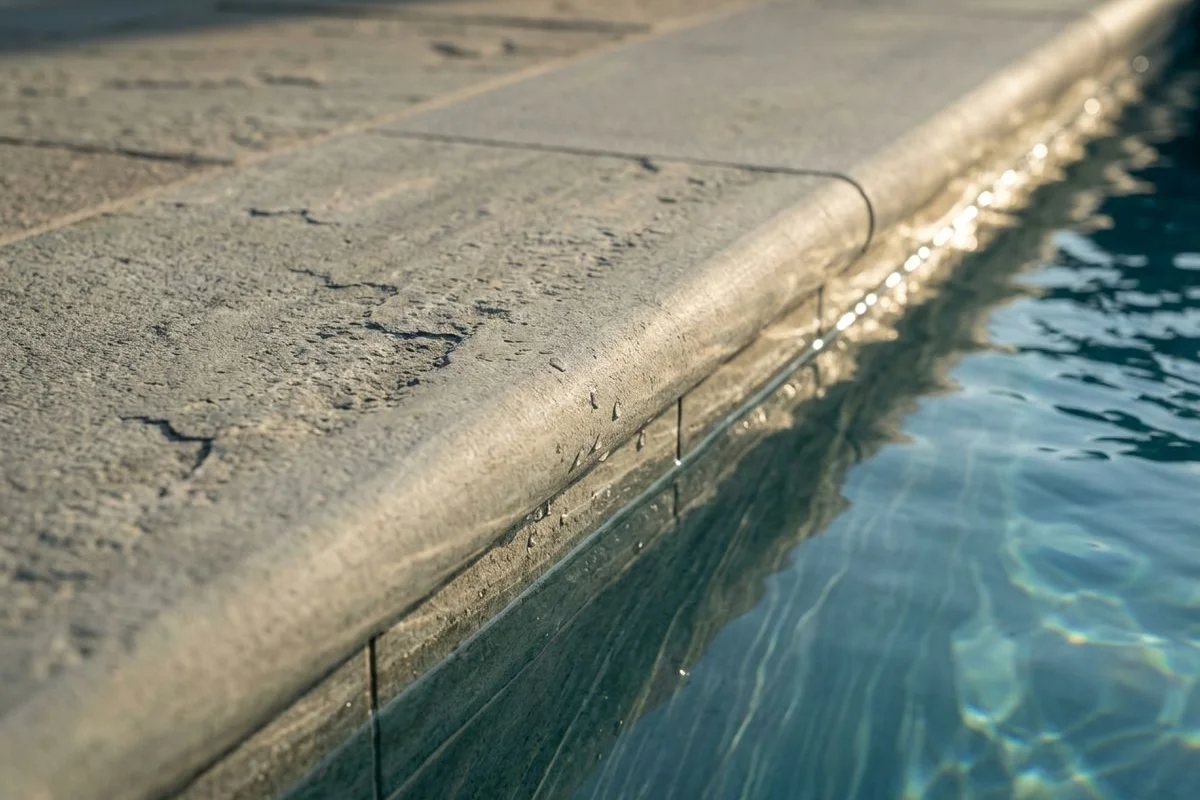
Coping is the edge that hugs the pool shell, making it the single most-touched material in any design. We specify premium materials like bluestone, travertine, or sandstone for this crucial boundary. Bluestone provides a hard and classic look, while travertine stays cooler underfoot and feels warmer visually. Sandstone offers a softer tone, though it requires regular sealing to prevent water damage.
Our team strictly uses paving materials with a P4 or P5 slip resistance rating to meet Australian Standard AS 4586. Safety is just as important as aesthetics when choosing the flooring beyond the water’s edge. Large-format honed bluestone and filled-and-honed travertine meet these strict slip ratings while looking fantastic.
| Stone Type | Best Feature | Maintenance Need |
|---|---|---|
| Bluestone | Highly durable and classic | Minimal |
| Travertine | Stays cool under the hot Australian sun | Requires periodic cleaning |
| Sandstone | Beautiful soft natural tones | Requires regular sealing |
Fencing and compliance
Victorian pool-barrier rules dictate the layout of every project. The Victoria Building Authority requires homeowners to lodge a fresh compliance certificate with their local council every four years, with 2026 seeing a huge wave of mandatory renewals. We design your entire area to easily pass these strict inspections the first time. Fence height must sit at a 1.2m minimum, and self-closing hinges are absolutely mandatory.
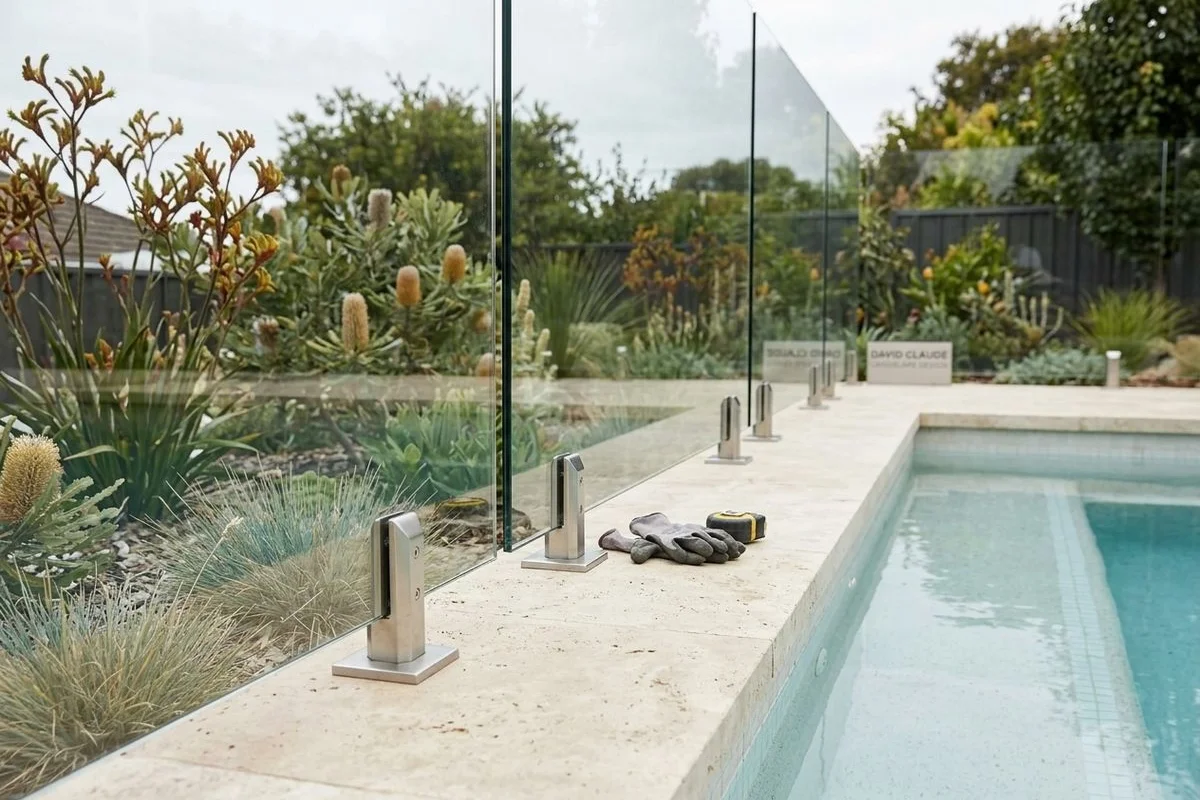
A major pitfall for homeowners is the 900mm non-climbable zone around the barrier. Our designs proactively account for external hazards like overhanging trees or a neighbour’s shed before construction begins. Visuals matter too, so the barrier should enhance the space rather than look like an afterthought. Here are the most common fencing choices:
- Glass Pool Fencing: Creates a visually open environment that shows off the water.
- Tubular Aluminium: Offers a classic feel that requires very little maintenance.
- Timber Fencing: Adds natural warmth to the garden, though it usually requires more upkeep over the years.
Planting and screening
Selecting the right greenery prevents major headaches down the road. Plants near the water must be low-litter, root-respectful, and highly salt-tolerant. We heavily rely on native species like Westringia and Dianella to handle splashing from salt-chlorinated pools. These tough varieties thrive in the heavy clay soils common across Melbourne’s inner-eastern suburbs.
Taller screening plants need to sit safely beyond the boundary line. Our team uses Pittosporum and climbing fig to provide excellent privacy without putting dangerous root pressure on the shell. Here are a few favorites for planting near the water:
- Westringia (Coastal Rosemary): Handles salt splash beautifully and needs little pruning.
- Dianella (Flax Lily): Provides great architectural structure with minimal leaf drop.
- Lomandra: Incredibly hardy ornamental grass that thrives in local clay soils.
- Syzygium (Lilly Pilly): Perfect for tall, dense privacy screening positioned safely away from the shell.
Lighting and equipment screening
Great illumination extends your swimming hours well into the night. Low-voltage LED lighting works best when placed in dedicated zones. We frequently install premium, Australian-made Spa Electrics fixtures for their proven reliability.
- Uplighters: Perfectly illuminate screening plants and feature walls.
- Path Lights: Safely guide travel lines from the house to the water.
- Feature Lights: Highlight coping steps and underwater ledges.
Handling the filtration equipment requires just as much thought to avoid annoying the neighbours. Our designs incorporate ventilated, sound-dampening enclosures to meet EPA Victoria’s strict residential noise limits between 10 pm and 7 am. These quiet boxes are typically finished in timber or rendered masonry. Tucking the hardware into a dedicated garden pocket looks much better than leaving it exposed in a raw service yard.
Coordination with your pool builder
Timing is everything when managing an outdoor construction project. Builders face constant weather delays during a typical Melbourne winter, which can push back completion dates. We prefer to join a project early to align the landscaping vision with the builder’s brief. Early coordination saves a tremendous amount of rework and prevents costly budget blowouts.
Agreeing on the coping height, the fall direction for drainage, and the skimmer locations before the initial dig is crucial. Our team can step in later if needed, though late coordination tends to require more remedial detailing. A standard surround takes between 4 and 12 weeks from the shell curing stage to the final planting installation. Glass fence lead times act as the most common schedule variable in the industry right now.
We help lock in those material orders quickly so your family is swimming by summer. Here is how the coordination process typically flows:
- Initial Consultation: Reviewing the property lines and structural plans.
- Level Agreements: Locking in the coping heights and drainage falls before digging begins.
- Material Ordering: Securing the stone and fencing materials early to beat long lead times.
- Construction Integration: Prepping the garden beds alongside the main shell installation.
A great swimming area requires careful thought, quality materials, and an understanding of the local landscape.
The right Pool Landscaping & Surrounds can truly transform how you use your property.
We are here to help you get every detail right, from the first paver to the final plant.
Contact David Claude Landscape Design today to schedule a consultation for your home.