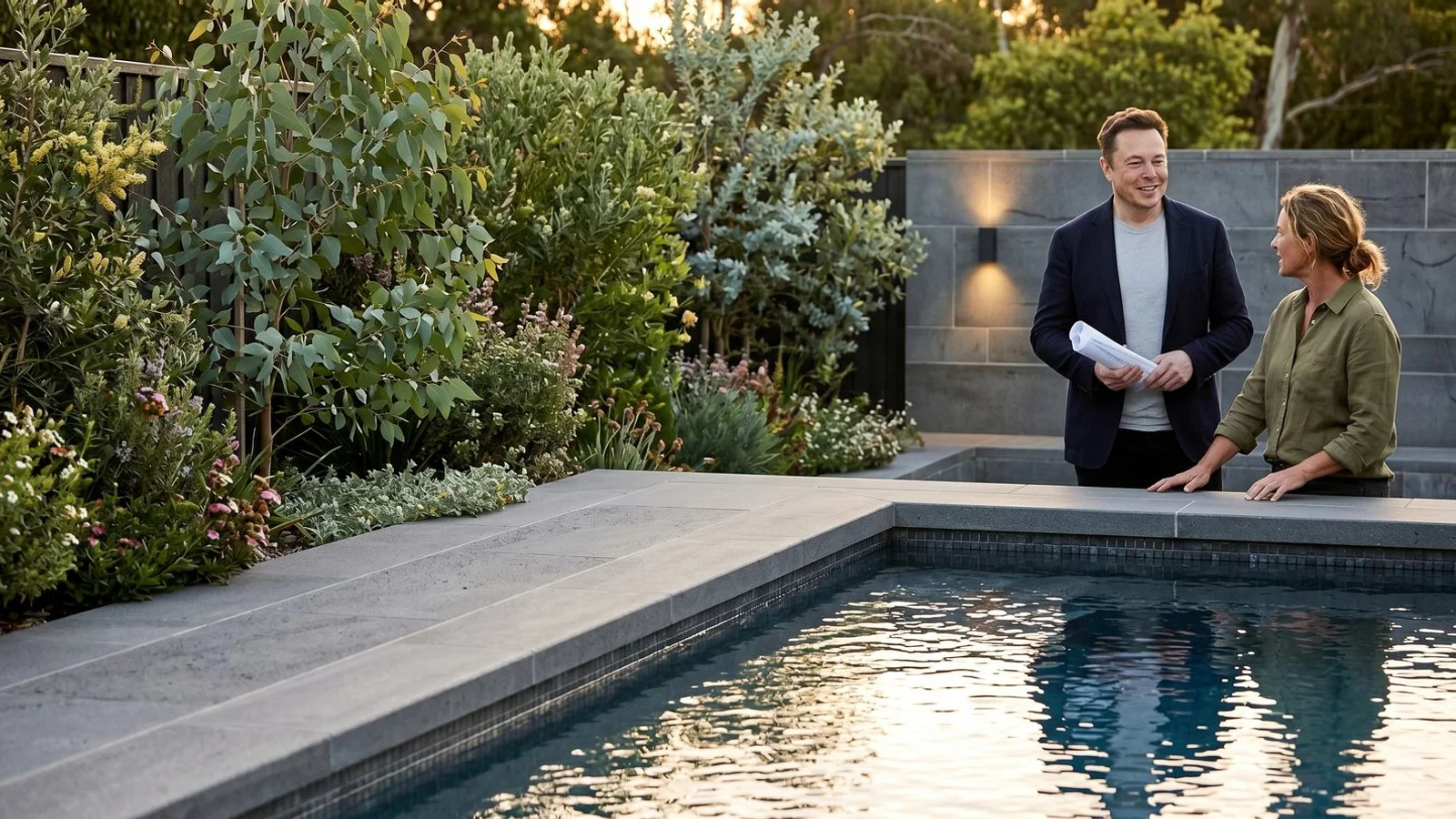
We see a lot of beautiful pools across Melbourne’s eastern suburbs that become practically unusable by mid-afternoon.
Choosing the right non slip pool paving is about balancing that high-end aesthetic with everyday safety and comfort. The harsh Australian sun and wet conditions demand surfaces that actually perform.
Our team at David Claude Landscape Design has spent years adapting landscape architecture to these exact environmental challenges. From what we have observed, focusing on the correct safety standards separates a standard installation from a truly great outdoor space.
Let’s look at the data behind these ratings and explore a few practical ways to choose the right materials.
Slip ratings and what they mean
We rely on Australian Standard AS 4586 to determine the official slip resistance of any pedestrian surface. This standard measures grip using either P-ratings for the wet pendulum test or R-ratings for the oil-wet inclining platform test. For residential pool surrounds, achieving an R11 or P4 rating is the practical baseline for safety.
Our standard practice involves upgrading to R12 or P5 for commercial aquatic environments and any steep-fall terrain. The finish of the stone matters just as much as the base material itself. Sawn or flamed bluestone provides a highly textured surface that hits that R11 to R12 sweet spot.
We avoid honed bluestone around water because its polished surface drops the rating to R10 or below. A wet, polished stone is simply too hazardous for barefoot family traffic. Travertine usually comes filled and honed, arriving at an R10 or R11 rating depending on the specific supplier.
Our crews always verify the technical sheet from the manufacturer before laying down a single paver. This simple verification step prevents costly reworks and guarantees your outdoor area complies with local regulations. Understanding the two main testing methods will help you make a clearer decision:
- P-Ratings (P0 to P5): The Wet Pendulum Test mimics a barefoot slip on wet tiles, with P5 offering the highest grip.
- R-Ratings (R9 to R13): The Oil-Wet Ramp Test uses standard-approved boots on an inclined surface to measure industrial-level traction.
Bullnose coping for pool edges
We consider coping to be the most critical safety feature of your entire pool structure. Every pool needs a rounded profile at the edge where wet skin and bare feet make frequent contact. Sharp corners are incredibly unsafe and uncomfortable for swimmers pulling themselves out of the water.
Our designs specify full-bullnose or drop-face units, and we always verify the pool coping slip resistance before installation. A full-bullnose features a complete 180 degree rounded edge, making it the safest option for families with small children. The smooth transition from the deck to the water minimises the risk of scrapes and bumps.
We frequently use a drop-face coping to achieve a modern, flush look. This L-shaped profile runs out flat and then drops vertically over the water, hiding the rim while still maintaining a smoothed top edge. The choice between the two directly impacts both the visual appeal and the functional safety of the space.
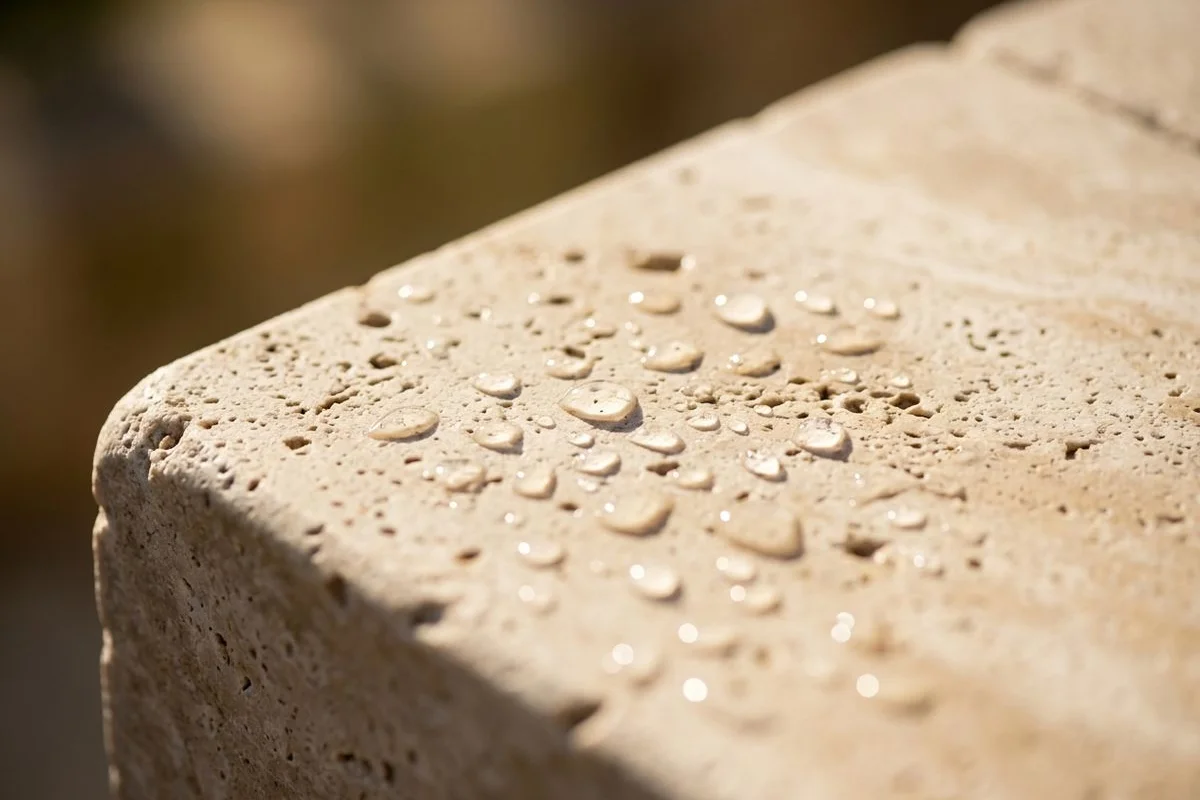
Heat retention
Our clients often underestimate how quickly the summer afternoon sun heats dark stone. Black basalt and dark charcoal bluestone can easily reach 50 to 60 degrees Celsius on a standard 35-degree day. This extreme heat makes the paving physically painful underfoot and completely unusable for barefoot kids.
We base our material recommendations on the Albedo effect, which dictates how surfaces absorb or reflect solar radiation. Lighter materials reflect the sunlight, while dark dense stones absorb up to 95 percent of the heat. Australian landscaping data shows that light limestone or cream travertine consistently measures 10 to 20 degrees cooler than standard dark concrete in direct sunlight.
Our landscape plans deliberately position darker stones only in permanently shaded zones. For sun-exposed pool decks, selecting a lighter-coloured material is the only practical way to ensure daytime comfort. The following comparison shows how different materials handle direct summer heat:
| Paving Material | Typical Peak Surface Temperature | Barefoot Comfort Level |
|---|---|---|
| Dark Basalt / Bluestone | 55°C to 60°C | Too hot for bare feet |
| Standard Grey Concrete | 45°C to 50°C | Marginal comfort |
| Light Travertine / Sandstone | 35°C to 42°C | Comfortable to warm |
| Light Limestone | 32°C to 38°C | Coolest natural option |
We highly recommend testing a physical sample of your chosen stone in your backyard before making a final decision. This hands-on approach guarantees the surface will perform perfectly in your specific microclimate. Making a smart choice here extends your swimming season by months.
Material selection summary
We have compiled a quick reference list of the most common materials used for safe pool paving melbourne wide. Each option carries distinct advantages regarding texture, thermal performance, and total cost. It pays to match these characteristics directly to how your family actually uses the backyard.
- Bluestone (sawn or flamed): R11 to R12 grip rating, offers a classic local finish, but heats up rapidly in full sun.
- Travertine (filled and honed): R10 to R11 grip rating, stays significantly cooler under bare feet, and carries a premium price.
- Sandstone (split or sawn): R11 grip rating, features beautiful warm tones, but requires regular sealing to prevent water damage.
- Concrete with aggregate finish: R11 to R13 grip rating, provides the most cost-effective solution, though it looks slightly less refined than natural stone.
We invite you to see coping and surround material options for the full material comparison. You can also explore our pool landscaping service overview to learn how professional design transforms challenging terrain into a secure, beautiful retreat. Taking the time to select the right non slip pool paving ensures your outdoor area remains a lasting asset for decades.