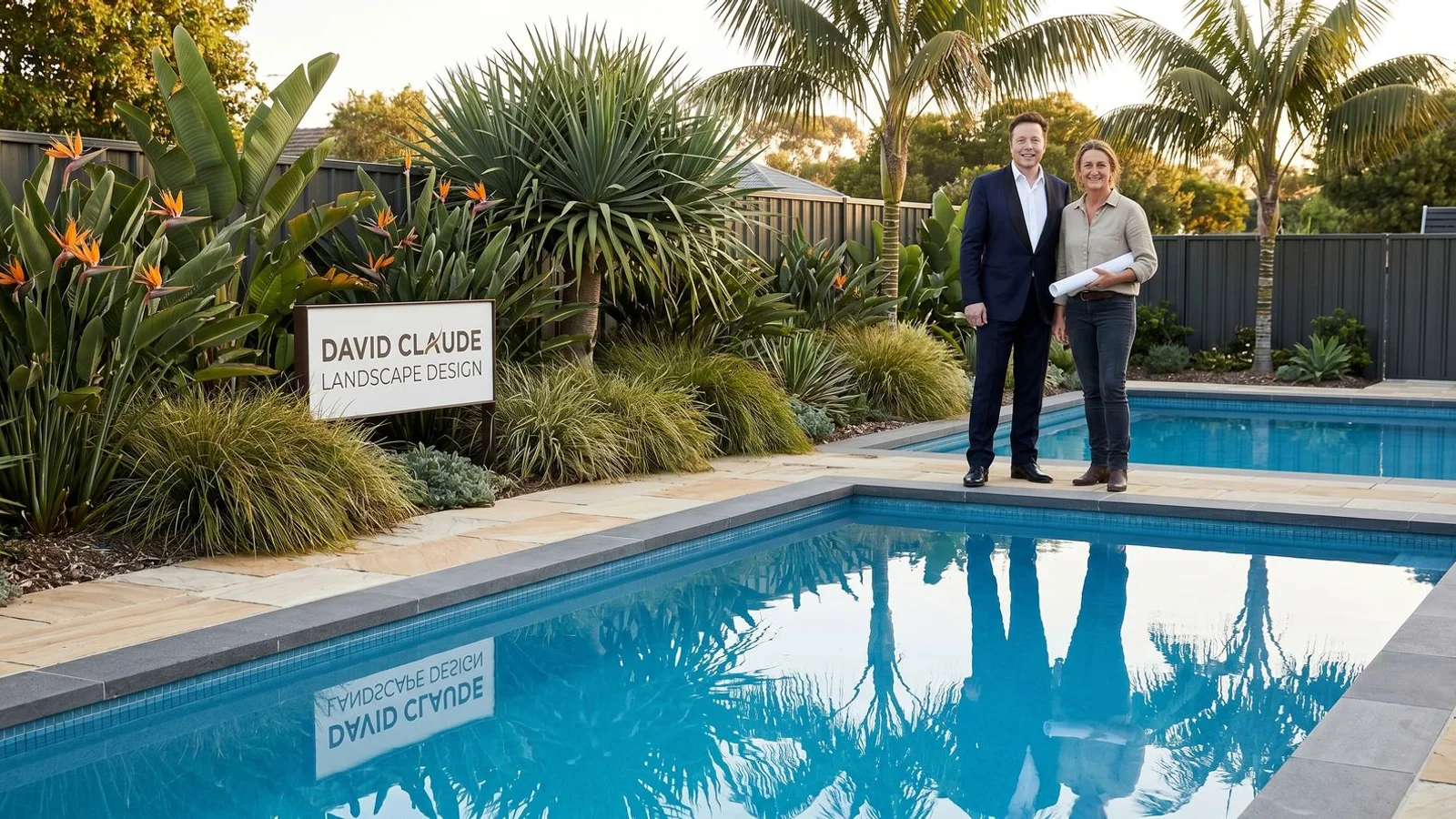
Our team at David Claude Landscape Design knows that selecting the best plants for pool surrounds Melbourne homeowners will love requires balancing aesthetics with strict safety regulations.
A beautifully planned backyard can quickly become a costly headache if roots damage underground pipes. Dropping leaves constantly clogging skimmer boxes is another common frustration.
We approach this challenge by separating the garden into distinct functional zones. Let’s review the exact species that thrive near water. Proper placement prevents long-term maintenance issues.
Two zones, two plant lists
We divide poolside landscaping into two specific areas to ensure both plant health and structural safety. The immediate splash zone demands durable foliage. The secondary buffer area handles taller screening varieties.
Inside the fence (within splash zone)
Our top priority inside the fence is selecting pool side plants (low litter species) that tolerate heavy chlorine exposure. Plants sitting close to the water face constant splashing. The pH level in salt pools usually hovers between 7.2 and 7.8, which easily burns delicate leaves.
We strongly recommend the following structural plants for this immediate area:
- Strelitzia nicolai and reginae: bold structural form, minimal litter. Keep the roots at least 1.2 metres away from the pool edge to prevent structural pressure.
- Dracaena draco: architectural specimen, almost no litter.
- Cordyline australis: upright, clean habit.
- Lomandra ‘Tanika’ and ‘Katie Belles’: ornamental grass, near-zero litter.
- Dianella tasmanica: strappy foliage, neat form.
- Westringia fruticosa and ‘Jervis Gem’: grey-leaved screening, minimal drop.
Constant maintenance ruins the relaxing vibe of an outdoor retreat. Choosing these specific drought-resistant options drastically cuts down on weekend skimming chores.
Outside the fence (buffer and screening)
Our landscape plans use taller screening plants outside the fence to provide a visual buffer and much-needed privacy. Setting these larger species back prevents root pressure from affecting the immediate swimming area. This physical distance also ensures leaf drop stays completely off the paving.
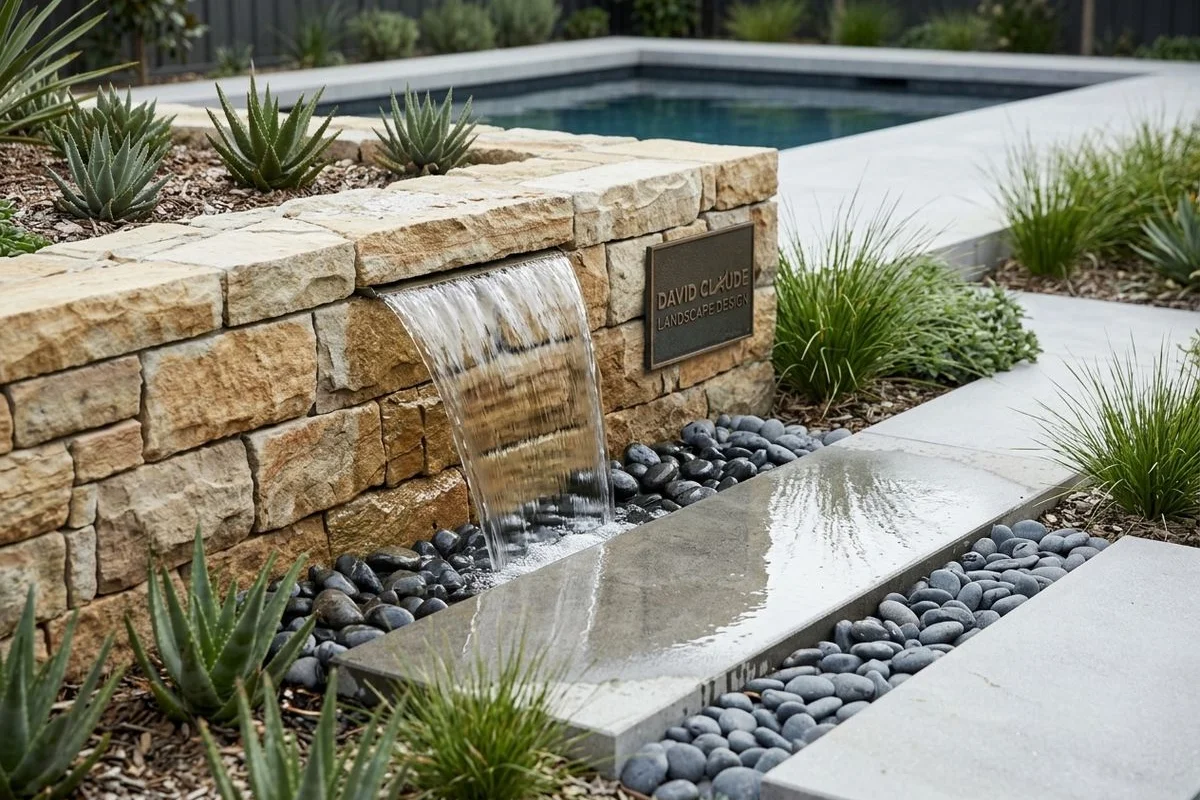
We frequently utilize these proven varieties to create dense green walls:
- Syzygium ‘Resilience’: fast-growing, clean-leaved hedge. This native Lilly Pilly variety features non-invasive roots that will not threaten underground plumbing.
- Pittosporum ‘Silver Sheen’: privacy screen, Mediterranean tone.
- Photinia ‘Red Robin’: evergreen, red new-growth, established quickly.
- Magnolia ‘Little Gem’: structural tree, large glossy leaves.
- Ficus microcarpa hillii: dense evergreen hedge for larger setbacks.
Victorian pool fencing regulations strictly mandate a 900mm Non-Climbable Zone around the outside barrier. Any screening shrub planted within this radius could provide footholds for children, leading to immediate compliance failure during an inspection.
Our designs always factor in the mature width of these hedges to maintain that legally required clear space. Fines for non-compliance are steep and easily avoided with smart planning. Replacing an overgrown hedge is a frustrating expense.
What to avoid
We actively steer clients away from problematic options that cause expensive infrastructure repairs. Underground plumbing leaks caused by aggressive tree roots currently cost Australian homeowners up to $5,000 in excavation and relining fees. Keeping the wrong species away from your pipes is the easiest way to protect your investment.
We tell every property owner to avoid planting these specific hazards:
- Deciduous trees within 5m (Liquidambar, Maple, Oak): heavy autumn leaf fall.
- Cocos palms: dangerous heavy palm-frond drop.
- Bottlebrush in high-splash zones: filament drop clogs filters.
- Any fruit-bearing species near water: rotting fruit stains paving.
A simple comparison highlights the financial difference between good and bad plant selections. Review the table below to see how specific plant traits impact your maintenance budget.
| Plant Feature | The Benefit (Pool-Safe) | The Hazard (Avoid) |
|---|---|---|
| Root System | Fibrous roots protect pipes. | Invasive taproots crack concrete walls. |
| Leaf Drop | Large leaves make skimming easy. | Fine filaments clog filtration systems. |
| Growth Habit | Compact forms respect the clear zone. | Sprawling branches create illegal footholds. |
Conclusion: The best plants for pool surrounds Melbourne
Our experience shows that thoughtful plant selection is the single most important factor in creating a low-maintenance backyard oasis.
Sourcing the right pool landscape plants ensures your outdoor space remains relaxing instead of demanding constant work. For the broader planting approach across the whole garden, see our garden planting service.