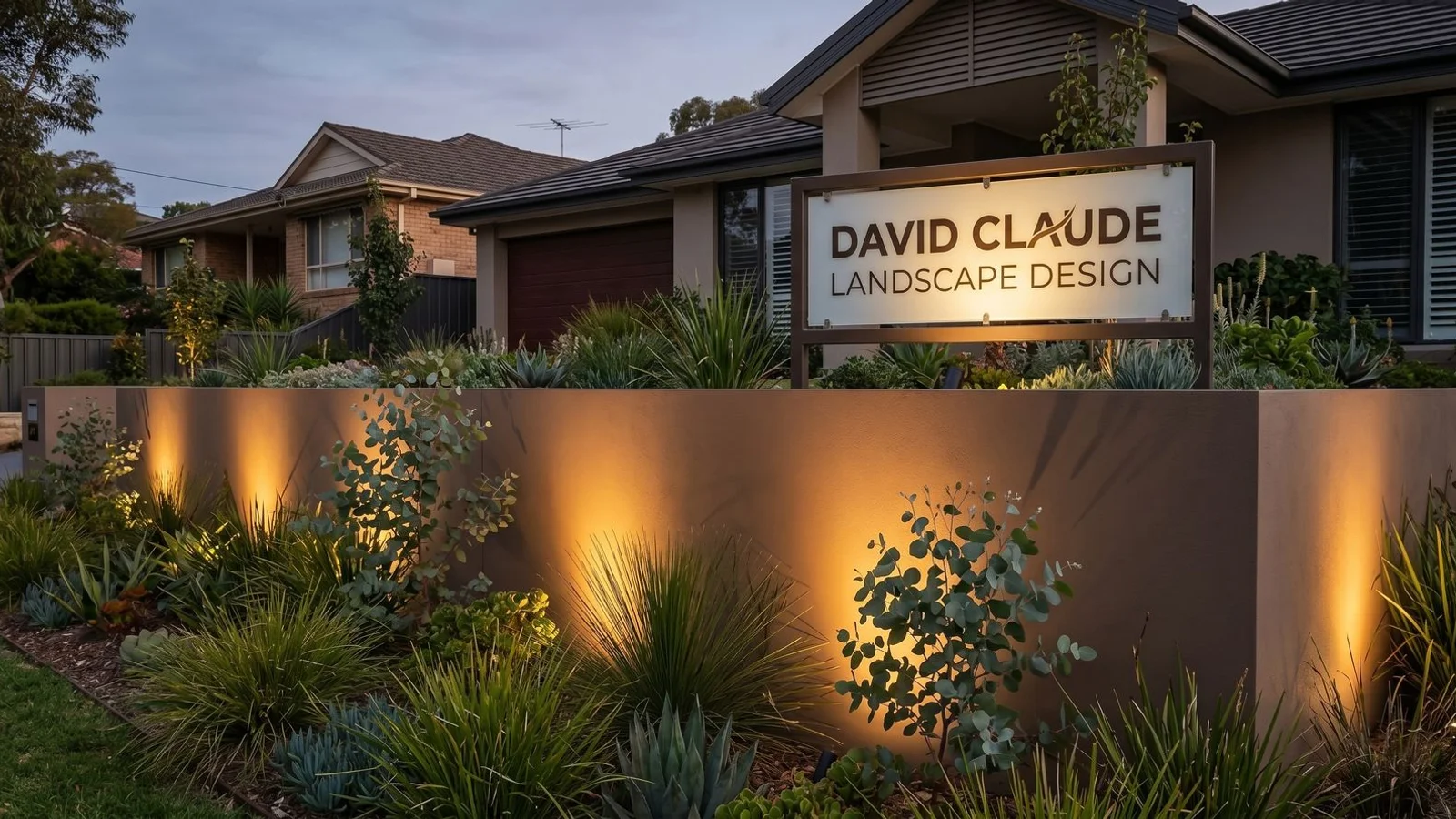
Are you dealing with a sloping block that feels more like a headache than a relaxing backyard?
At David Claude Landscape Design, we completely understand how challenging the terrain in Melbourne’s north-eastern and inner-eastern suburbs can be.
The right barrier actually transforms a steep, unusable hill into a highly functional outdoor living space.
Let me walk you through everything you need to know about proper retaining wall construction.
Why retaining walls get a whole service line
In Melbourne’s north-east, retaining walls are not an occasional feature.
They form the absolute foundation of almost every landscaping project we tackle.
Getting the wall right determines whether the beautiful garden above it holds up or slowly collapses into the yard.
Height, soil type, and drainage all interact to put immense stress on the structure.
We constantly see walls fail within three to five wet winters simply because previous builders skipped proper drainage.
Heavy clay soils trap moisture quickly, making the situation even worse.
Taller walls collapse even faster without correct engineering.
Here are the three invisible forces constantly pushing against your garden walls:
- Hydrostatic Pressure: Saturated soil can weigh up to 50% more than dry soil, creating a massive load.
- Surcharge Loads: Driveways, swimming pools, or even two-story homes sitting above the wall add extreme downward weight.
- Soil Expansion: Clay soils expand when wet, pushing outward against the barrier.
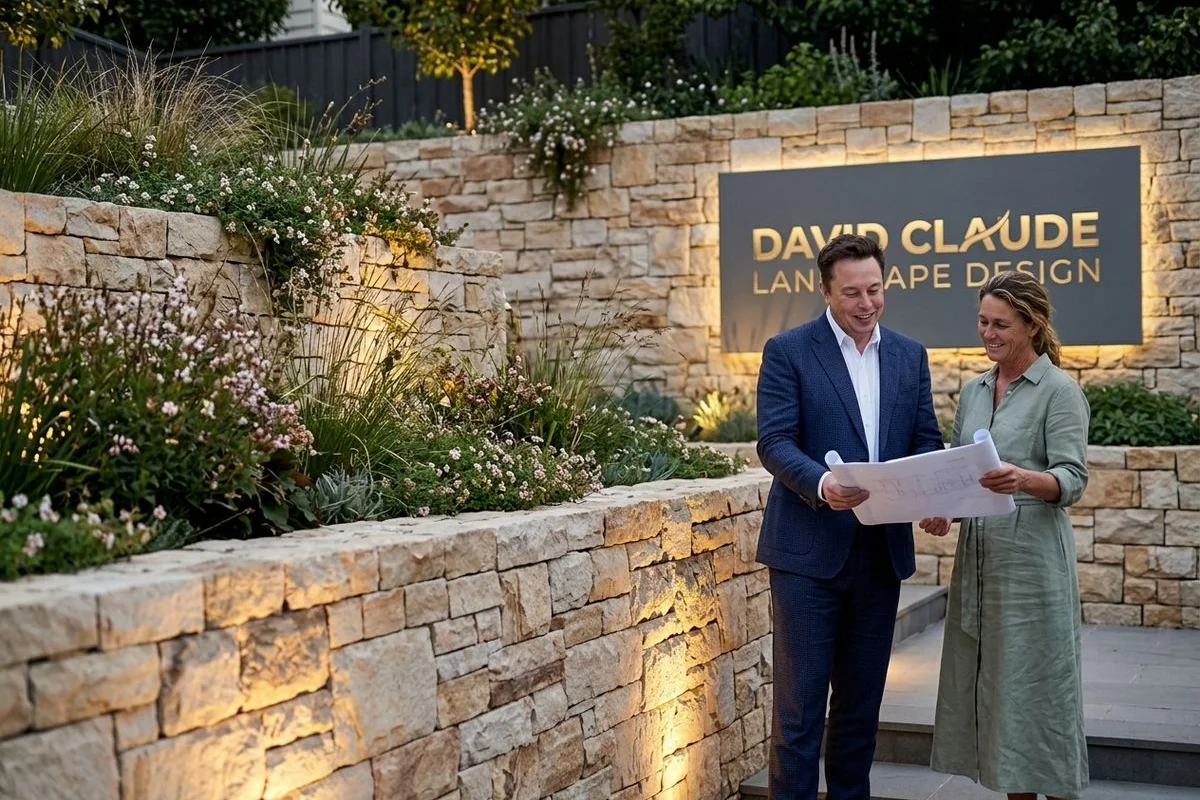
Our final touches ensure the completed structure perfectly matches your home.
Skipping the aesthetic finish means the wall never quite reads as a natural part of the garden.
Materials we build in
Selecting the right material comes down to balancing your budget, required lifespan, and visual preference.
We use a variety of options to suit different structural needs and architectural styles.
To help you decide, here is a quick look at how the most popular options compare for Melbourne homes in 2026.
| Material Type | Estimated Lifespan | Average Cost (2026) | Best Application |
|---|---|---|---|
| Timber Sleeper | 15-20 years | $220-$500 per sq/m | Low garden walls and terracing |
| Concrete Sleeper | 30-50+ years | $300-$500 per sq/m | Tall, structural walls |
| Rendered Masonry | 50+ years | $550-$850 per sq/m | Modern homes and pool surrounds |
Timber sleeper
Treated hardwood or softwood sleepers usually sit perfectly at the 900mm to 1m height mark.
These provide an economical, honest-looking finish with a 15 to 20-year service life in typical Australian weather.
Our teams recommend timber for mid-height walls where rustic character and lower initial costs matter more than permanence.
Termites and wood rot are the biggest enemies of this material.
We always stress that proper gravel backfill is absolutely vital to slow down moisture damage.
Treated pine or hardwood remains a fantastic choice for simple garden terracing.
Concrete sleeper
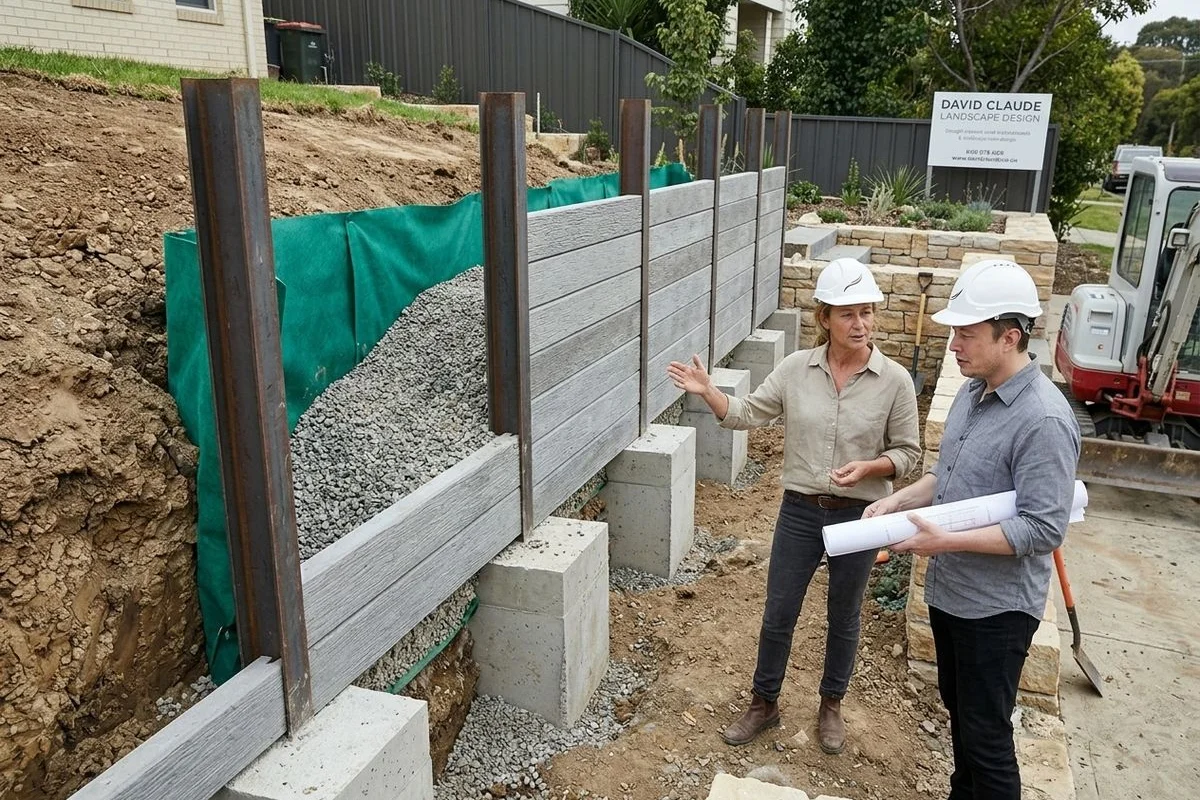
Steel-post-and-concrete-sleeper systems deliver serious strength for your property.
These engineered walls easily handle heights of 2 metres and beyond in their standard configuration.
Our most-specified option for taller structural walls boasts a 30 to 50-plus year service life.
Galvanised steel H-posts ensure the concrete panels stay locked securely in place.
We can source these sleepers in sleek grey, dark charcoal, and beautiful exposed-aggregate finishes.
They resist pests and rot completely, making them incredibly low maintenance.
Rock
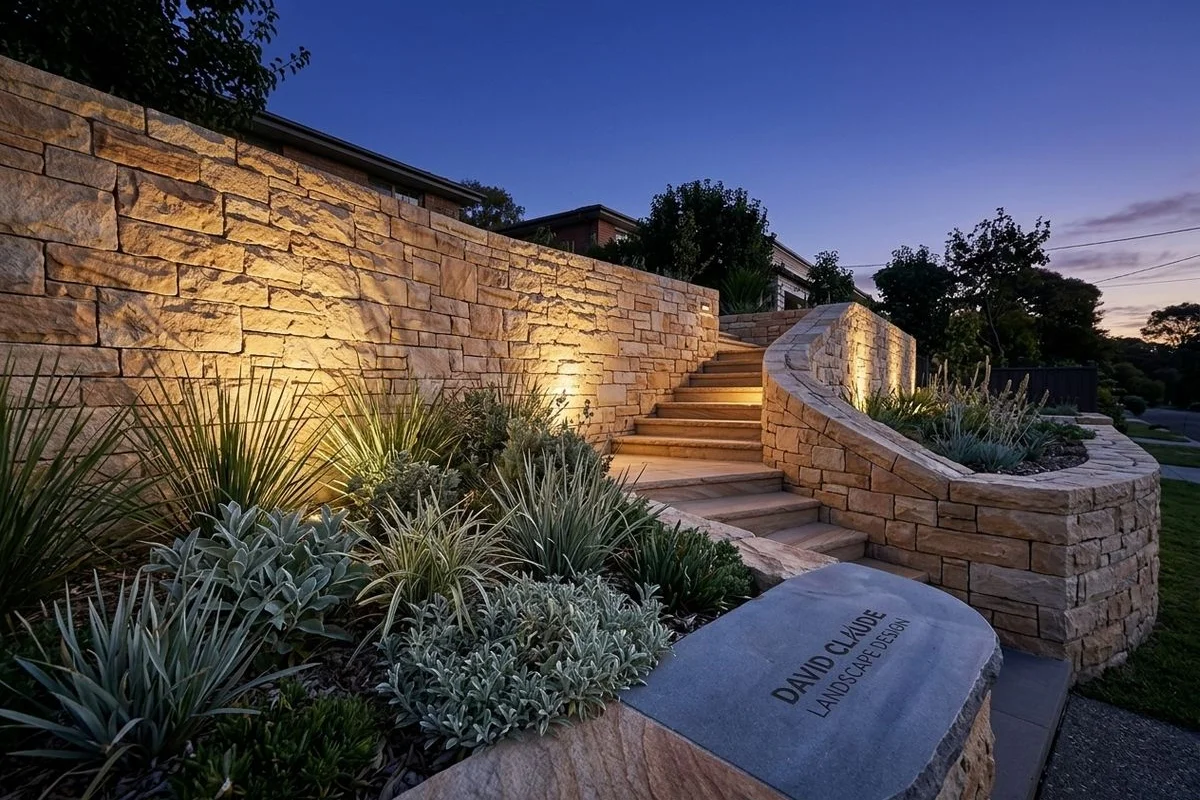
Boulder and random-rubble rock walls perfectly suit bush-block sites and river-valley aesthetics.
Each stone is hand-placed with extremely careful base preparation and drainage.
We only build lower-height walls with this method, as natural rock does not receive standard engineer sign-off.
The final result reads as entirely natural on the right site.
Placing these natural boulders on a highly modern, flat block often looks strained and out of place.
Our designers will happily tell you if a rock wall suits your specific landscape plan.
Rendered masonry
Block core walls rendered with acrylic or traditional finishes offer the most refined look available.
Builders create these strong structures using core-filled Besser blocks reinforced with steel bars.
Our clients love how a smooth, colour-matched render ties directly into the architecture of the house.
Prices generally run higher than sleeper walls, often sitting between $550 and $850 per square metre.
You are paying for a premium structure that reads as a genuine extension of your home rather than just a soil barrier.
We find these solid walls work beautifully around pool surrounds, modern architecture, and formal entry terraces.
Drainage: where walls really succeed or fail
The number one cause of retaining wall failure in Australia is inadequate sub-soil drainage.
We include a comprehensive base drainage system in every wall to prevent this exact nightmare.
An ag-line, which is a flexible, slotted agricultural pipe, sits directly along the footing.
This critical pipe is carefully wrapped in geotextile fabric and surrounded by free-draining gravel.
Our installation method stops fine clay and silt from washing in and clogging the system over time.
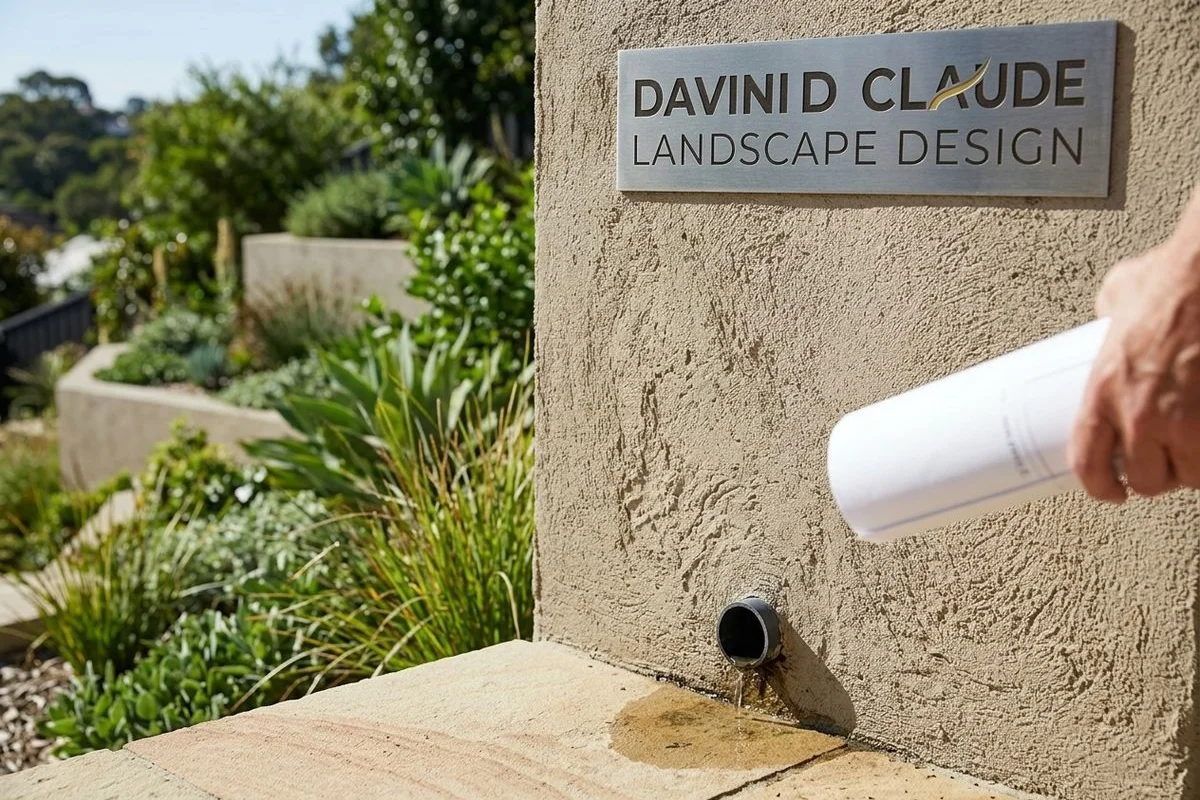
Collected water then exits safely through dedicated weep holes or ties directly into your site’s stormwater network.
Here are three clear warning signs that an existing wall has failing drainage:
- Soggy Patches: Water constantly pooling at the base of the structure after rain.
- Mineral Stains: White, powdery marks appearing on the face of the masonry.
- Visible Bowing: The barrier visibly leaning forward under the immense weight of wet earth.
The underlying engineering principle is remarkably simple.
Hydrostatic pressure behind a barrier is the leading cause of structural blowouts.
We remove the trapped water, and the wall lives a long, healthy life.
Leaving that moisture untouched means even a heavily engineered wall will inevitably move or collapse.
Permits and compliance
Victorian building regulations are very clear about when you need official approval.
You must obtain a building permit for most retaining walls over 1 metre from the finished ground level.
We also handle permits for lower walls built on or near a property boundary that might affect a neighbor.
Significant Landscape Overlays or Bushfire Management Overlays can trigger even lower height thresholds in certain council areas.
Structural walls are strictly designed to comply with the AS 4678 earth-retaining structures standard.
Our team manages all the heavy documentation for you.
Let’s break down the typical compliance workflow for a new project:
- Engineering Design: Securing structural drawings and calculations that meet safety codes.
- Permit Application: Submitting forms and coordinating with a private or municipal building surveyor.
- Construction Inspections: Having the surveyor check the steel and footings before the concrete pour.
- Final Sign-Off: Receiving the certificate of final inspection to officially close the permit.
You get to enjoy the beautiful new garden feature.
Our administration staff ensures the official paperwork sits quietly in the back of your handover folder.
Typical retaining wall projects run 4 to 10 weeks from approval to completion.
Large structural projects requiring complex engineer coordination will extend the timeline to 12 to 16 weeks.
If you are ready to secure your landscape, reach out today to discuss your next retaining wall construction project.