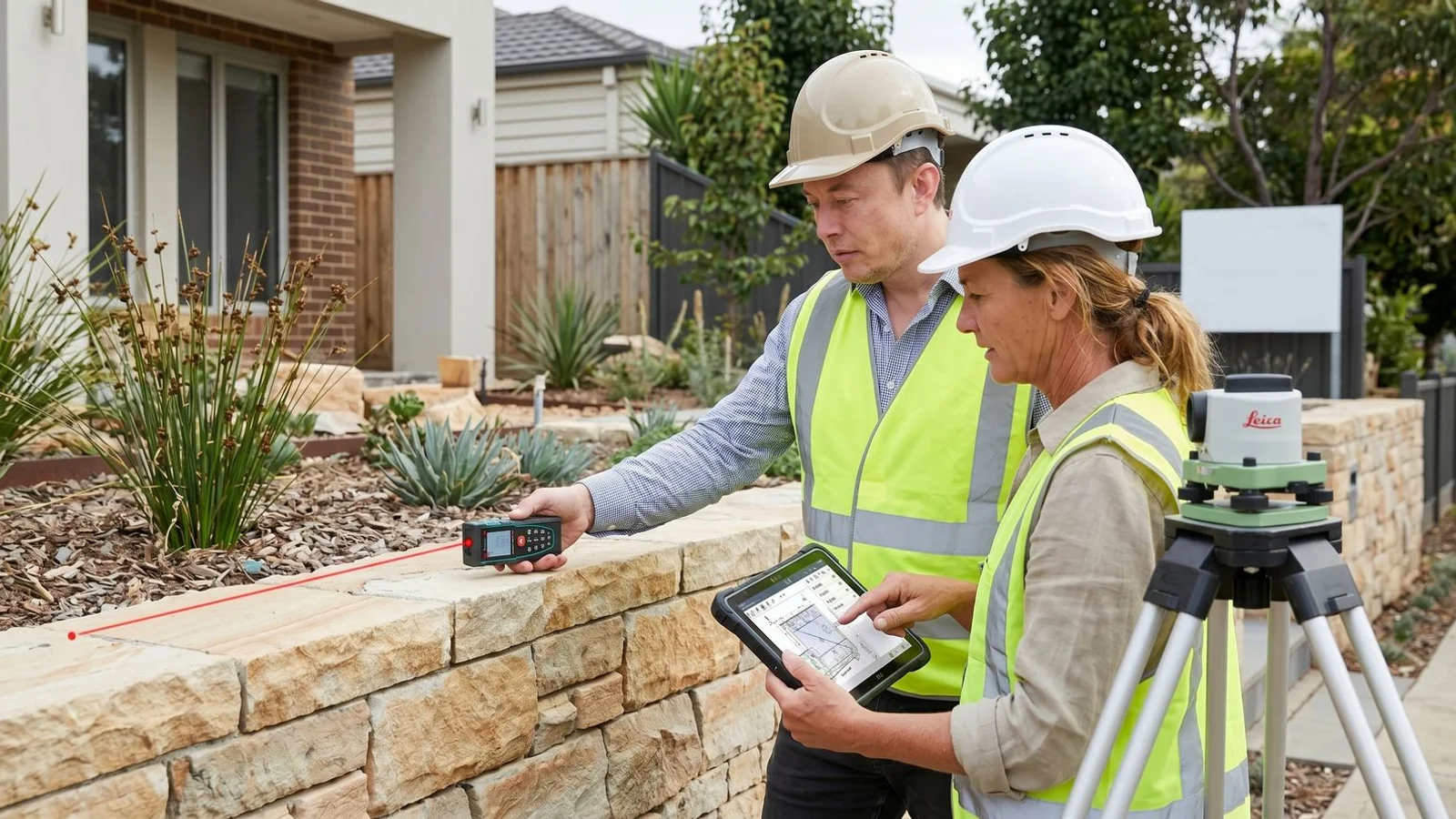
You know how quickly a simple garden upgrade can turn into a bureaucratic headache.
Retaining wall regulations trip up more homeowners in the eastern suburbs than almost any other landscaping issue. Our team at David Claude Landscape Design provides premier landscape architecture, design, and construction services customised to the unique needs of every homeowner. Sloping blocks present distinct challenges that require specific engineering answers.
We will break down the exact retaining wall height limit Victoria enforces through the state authority. This guide outlines the local council overlays and practical steps to keep your project compliant.
The height thresholds
The Victorian Building Authority dictates that retaining walls reaching one metre or more in height legally require a building permit. State regulations divide these structures into three distinct categories based on their physical height and potential risk.
Under 1m
Walls below 1m on unoverlaid residential land are generally exempt from building permit requirements. Good construction practice still applies, including proper drainage, solid footings, and durable materials, but no permit paperwork is needed.
Our landscape architects see many people assume a small wall is always exempt. The 1m retaining wall rule has a massive exception regarding boundaries.
We highly recommend checking your property lines before turning the first patch of soil. The state code specifies that any retaining wall built on or near a site boundary requires a permit if there is a risk of damage to the adjoining property. A 500mm wall supporting soil directly against a neighbour’s fence line triggers mandatory Protection Works Notices.
1m to 3m
Walls between 1m and 3m require a building permit in Victoria. Engineering design is mandatory for this height bracket.
Our structural engineers must lodge detailed drawings with a registered building surveyor for formal assessment. Sloped sites in areas like Doncaster and Ringwood often feature reactive clay soils rated as Class H or M-H.
We must design deep concrete piers and advanced agricultural drainage systems to prevent the expanding clay from crushing the structure. Retaining walls in these hilly, reactive areas typically cost between $400 and $800 per square metre.
Here is a breakdown of the standard compliance documents required for this tier:
- Geotechnical soil classification report
- Structural engineering certification
- Building surveyor approval paperwork
- Mandatory stage inspection sign-offs
Above 3m
Over 3m walls trigger more extensive engineering, often requiring deep geotechnical investigation, and can demand planning approval regardless of zoning. The sheer volume of earth retained at this scale presents massive hydrostatic pressure risks.
Our crews treat these major structures as commercial-grade civil projects. Soil bore logs must determine the bedrock depth to anchor the wall safely. The local council will heavily scrutinise the visual impact of a three-metre sheer face on the neighbourhood character.
Heavy rainfall significantly increases the weight of retained soil. Proper agricultural drainage behind massive walls prevents the water pressure buildup that causes major structural failures.

Overlay complications
Significant Landscape Overlay (SLO), Bushfire Management Overlay (BMO), Heritage Overlay, and Environmental Significance Overlay can all lower the permit threshold. A 700mm wall that would be exempt on an ordinary lot might need planning assessment on an overlay lot.
Our experience with councils like Manningham and Boroondara highlights how strict these local rules get. Manningham alone enforces seven different SLO schedules across its suburbs in 2026.
We frequently encounter environmental guidelines designed to protect native tree roots from excavation damage. If your proposed wall sits within the structural root zone of a significant canopy tree, the council will demand a detailed arborist report before approving any soil movement.
| Property Zoning | Wall Height | Expected Permit Requirement |
|---|---|---|
| Standard Residential Zone | 800mm | No permit required (if off boundary) |
| Significant Landscape Overlay | 800mm | Planning permit likely required |
| On Property Boundary | 500mm | Building permit mandatory |
Measuring “height”
Height is measured from finished ground on the low side to the top of the wall. Surcharge, which is the physical weight placed on top of the retained soil, adds to the design height for engineering purposes.
Our teams must calculate the load of anything sitting within the active wedge behind the wall. A 900mm wall with a concrete driveway directly above it is treated as significantly taller for engineering than the physical measurement suggests.
We refer to a one-to-one angle of repose to determine if an upper structure impacts the wall below. The pressure from parked cars or buildings transfers diagonally down through the soil.
Common examples of surcharge loads include:
- Concrete driveways and parked vehicles
- Swimming pools located near the boundary
- House foundations within the angle of repose
- Steeply sloping soil positioned above the wall
What the permit process involves
Securing a retaining wall permit Melbourne councils approve requires submitting engineered plans to a registered building surveyor. The surveyor acts as the independent authority ensuring your design meets the current state building codes.
Our administrative team processes these applications through the Victoria Building Approvals Portal. The statutory timeframe for a planning permit decision is 60 days, but 2025 data shows real-world averages across Melbourne stretch closer to 155 days.
We strongly advise starting the paperwork months ahead of your intended construction date. Delays in gathering the right technical reports can push back your entire landscaping schedule.
The permit process involves these specific steps:
- Structural drawings from engineer
- Site plan showing the wall location and relationship to boundaries
- Surveyor input where the wall sits near setback lines
- Lodgement with registered building surveyor
- Inspection during construction at defined hold-points
- Final inspection and certificate of occupancy/compliance
We handle all of this as part of our retaining wall service. Engineering requirements cover the structural side in more detail.