Our team at David Claude Landscape Design frequently inspects structural failures across Melbourne’s eastern and north-eastern suburbs. You know how quickly those steep blocks in places like Eltham and Templestowe can turn a heavy downpour into a landscaping disaster. The core issue almost always points back to a failure in the retaining wall drainage system.
We find that proper water management is the true secret to longevity for any sloped property. Recent 2026 industry data highlights the financial risk of ignoring these systems:
- Minor remedial drainage fixes average $800 to $1,000.
- Full structural replacements easily exceed $600 per square metre.
This guide breaks down exactly why water causes these failures and explores the standard drainage details required to protect your investment. We always recommend dealing with water issues before they compromise the entire structure.
Water, not load, kills most walls
Failure inspections on older retaining walls overwhelmingly trace back to water damage. A wall designed for earth pressure alone handles dry soil loads perfectly fine. We consistently see this problem magnified by the highly reactive clay soils common throughout Melbourne’s eastern suburbs.
Add saturated backfill into the mix and the same wall sees two to three times the load before it eventually fails. Clay absorbs heavy rainfall, swells significantly, and exerts massive hydrostatic pressure against the back of the structure. Our preferred approach catches this water before it builds pressure and routes it directly to the legal point of discharge.
This lateral pressure forces the wall to lean, crack, or completely blow out. The remedy is proactive water management and proper drainage behind the wall. Common signs of critical hydrostatic pressure include:
- Bulging or noticeable leaning in the wall structure.
- Cracked mortar joints in masonry block walls.
- Water pooling consistently at the base of the footing.
Our crews use these warning signs to determine if immediate intervention is necessary. Catching these issues early prevents catastrophic structural failure.
The standard behind-wall drainage detail
Ag-line at the base
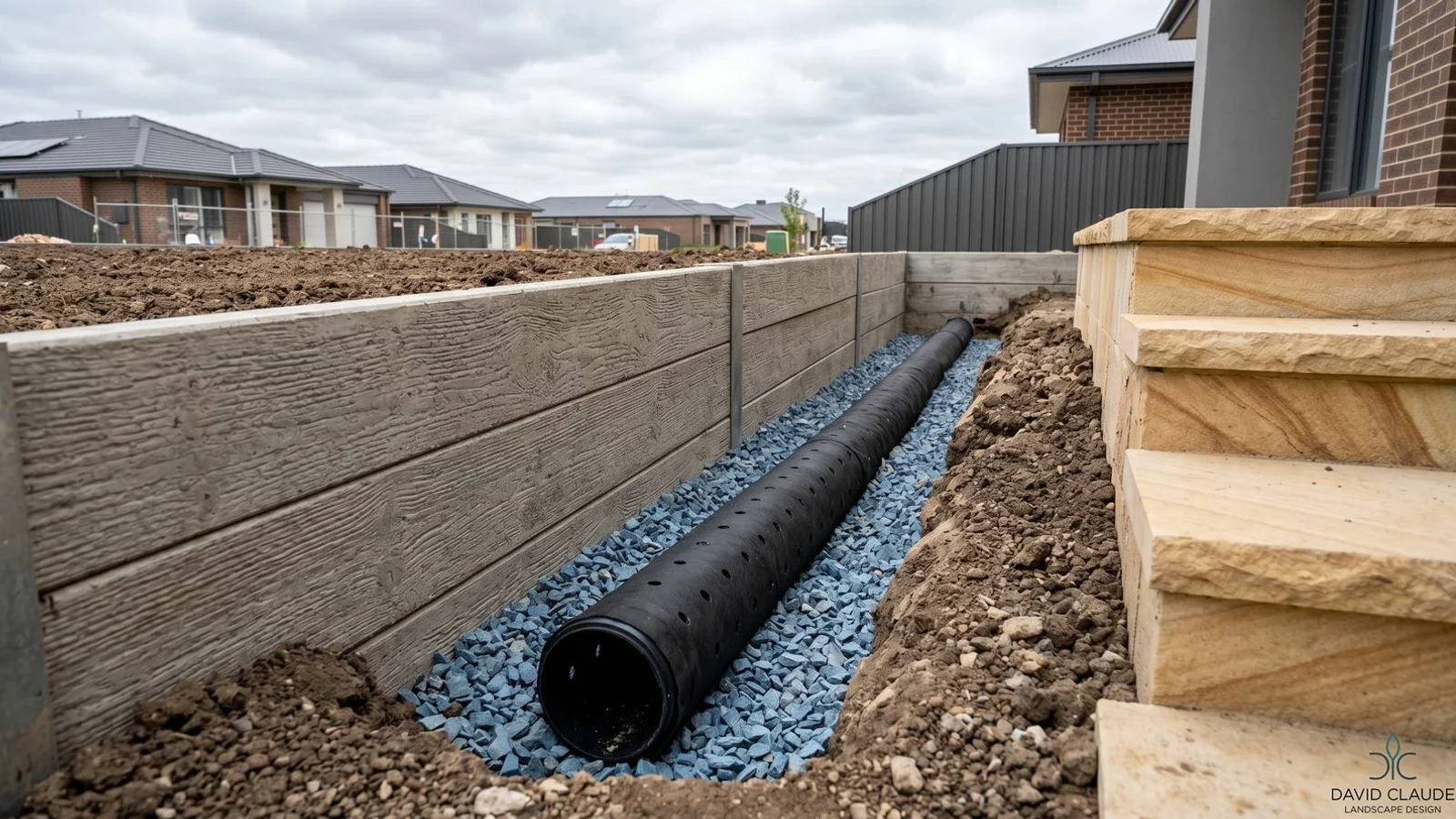
We heavily rely on a 100mm slotted pipe, commonly known as an ag-line. This agricultural pipe runs along the base of the wall at the footing level. It sits wrapped in a protective geo-fabric sock and rests securely inside a bed of 20mm crushed rock.
Our team ensures every single metre of the wall features this continuous drainage line. Installing it only at the ends or in specific trouble spots is a common, costly mistake. The 2025 National Construction Code updates heavily emphasize comprehensive water management to prevent structural degradation.
We often show clients this simple financial breakdown of wall management in Melbourne. The numbers clearly demonstrate why upfront ag line behind wall installation is essential.
| Wall Management Phase | Average Estimated Cost (Melbourne 2026) | Primary Benefit |
|---|---|---|
| Proper Ag-Pipe & Gravel Setup | $35 to $70 per lineal metre | Prevents hydrostatic pressure buildup. |
| Minor Remedial Drainage Fix | $800 to $1,000 flat rate | Addresses small cracks and minor leaning. |
| Full Structural Replacement | $150 to $600+ per square metre | Rebuilds a completely collapsed wall. |
Gravel backfill
Our crews always place a 200mm to 300mm thick band of 20mm drainage gravel immediately behind the wall. This porous layer allows rainwater to move freely downward toward the ag-line. Sitting water against the wall face causes rapid material deterioration and immense lateral pressure.
We view this gravel investment, which typically costs just $20 to $40 per lineal metre, as incredibly cheap insurance. Without it, heavy clay soils will simply pack tight against the structure and suffocate the drainage path.
Geo-fabric separation
Our construction process includes a dedicated geo-fabric layer to separate the drainage gravel from the native soil or retained fill above. This physical barrier prevents fine silt and dirt particles from migrating downward into the gravel. Clogged drainage rock completely neutralizes the effectiveness of the entire system.
We have dug up countless failed walls where missing geo-fabric caused the ag-pipe to fill entirely with solid mud. Applying this simple fabric wrap guarantees the crushed rock remains clean and fully functional for decades.
Weep holes
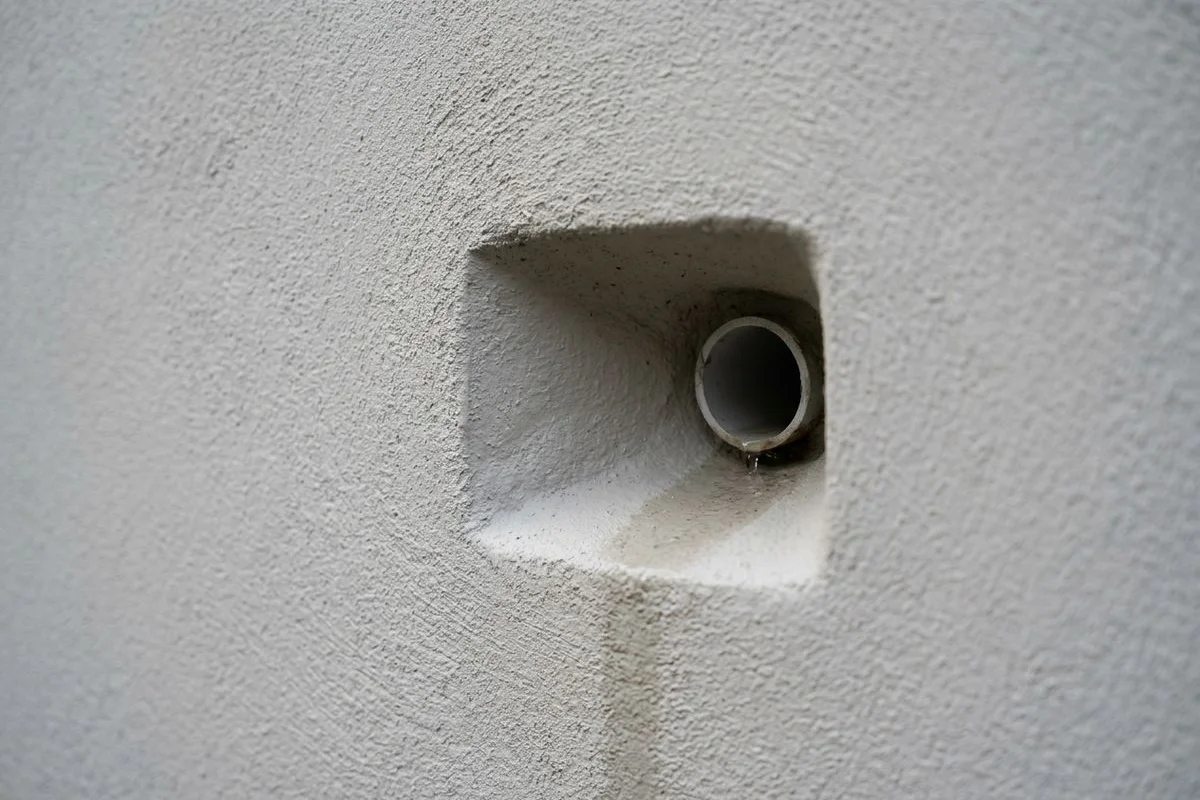
Our designs often incorporate secondary relief drainage directly into the wall face. These small openings, functioning as a weep holes retaining wall addition, usually measure 50mm and sit spaced every 1 to 2 metres. They allow any trapped water that bypasses the primary system to safely exit the structure.
We treat these holes as a vital belt-and-braces addition to the main ag-line. They are absolutely not a substitute for proper underground drainage routing.
Outfall to legal point of discharge
Our installed ag-lines must always direct the collected water somewhere safe and compliant. On most suburban residential sites, this pipe terminates at a designated pit that connects directly to the site’s main stormwater network. Victorian building regulations strictly govern how this water is captured and diverted.
We handle acreage properties a bit differently depending on the natural topography. The system may discharge into a natural watercourse, provided appropriate erosion protection and rock beaching are installed at the outfall.
Waterproofing the wall itself
Our approach to waterproofing varies significantly based on the chosen construction material. For rendered masonry walls, contractors apply a heavy-duty waterproof membrane directly onto the retained face. This crucial step prevents ground water from soaking through the blocks and ruining the visible painted finish.
We must clarify the strict differences between these two protection methods:
- Waterproofing membranes block moisture from entering the wall material itself.
- Gravel and ag-lines actively prevent hydrostatic water from building up behind the structure.
- Neither system can fully replace the structural function of the other.
Our landscape architects rely entirely on the drainage system to handle the water loads for timber and concrete structures. These materials tolerate damp conditions quite well, making an applied liquid membrane unnecessary. Concrete sleepers, which typically last over 50 years in Australian conditions, remain the top choice for heavy clay sites.
We are ready to assess your property if you notice any warning signs of water pressure. Ignoring these early indicators almost always leads to expensive structural replacements. Review our broader drainage service for comprehensive site solutions.
Our final recommendation is to always prioritize a certified installation. You can also explore our retaining walls service which includes proper engineered drainage by default.