Have you ever noticed how the best gardens always seem perfectly dry after a heavy storm?
It is no accident.
Drainage is the part of the landscape you never see when it works.
It is the part everyone remembers when it fails.
We see this every day at David Claude Landscape Design.
Managing the tricky, sloping blocks across Melbourne’s north-east requires serious planning.
In these clay-heavy areas, practical drainage solutions separate a thriving garden from a muddy bog.
Our team is going to walk you through the exact steps to keep your property dry.
The hidden half of every landscape project
We design drainage first, not last.
This proactive strategy prevents the most common cause of retaining wall failure in Victoria.
A smart layout requires sketching the water network before choosing the first paving stone.
“Water pressure from saturated clay can easily double the force pushing against a new retaining wall. Planning ahead is non-negotiable.”
Our crews start every retrofit site walk in the pouring rain.
Seeing where the water naturally flows tells us much more than any printed site plan.
The common network
A solid drainage plan acts like the circulatory system of your property.
It relies on a few core components working together to protect your home.
Ag-line drainage
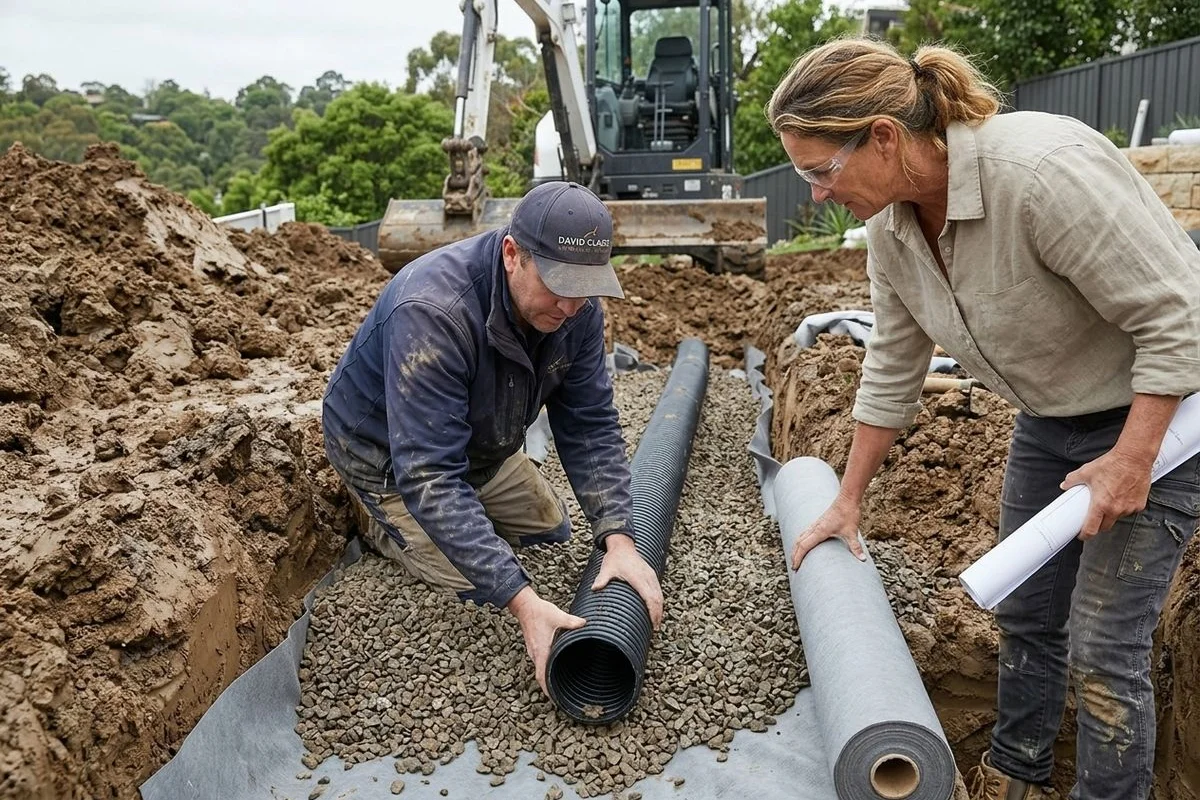
We use agricultural pipe as the core of most garden drainage setups.
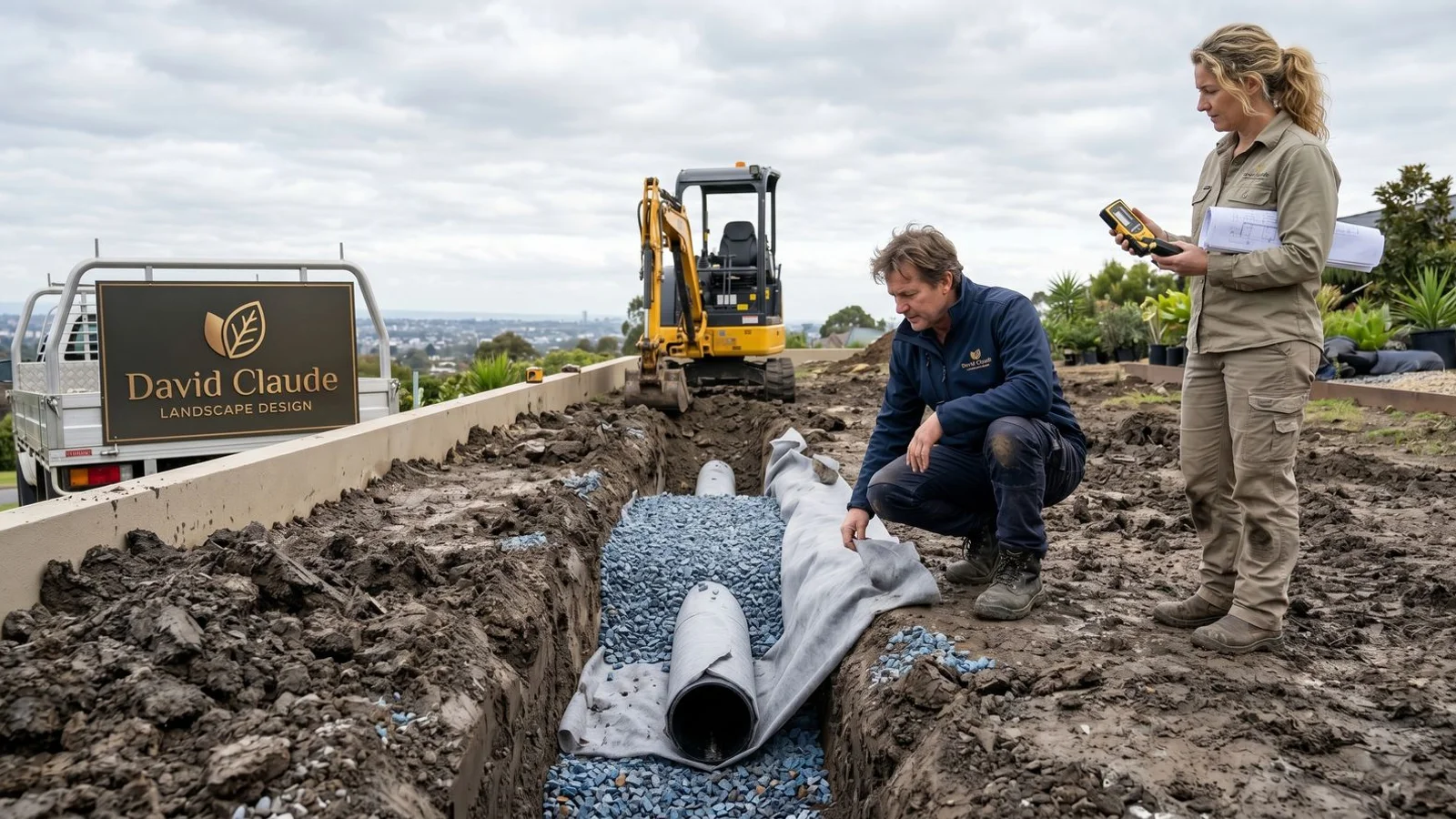
This flexible tubing, usually 100mm slotted PVC or corrugated plastic, rests in a gravel-filled trench.
Skipping a proper filter wrap is a common trap that causes gravel to clog with fine clay particles within just five to ten years.
Our installation process always includes wrapping the gravel in a non-woven geotextile fabric like Bidim to create a protective barrier.
The slots collect sub-surface water, while the gravel keeps the trench completely free-draining.
We run ag-line in several critical locations:
- Along the high side of sloping blocks to catch overland water
- Directly behind every retaining wall to relieve hydrostatic pressure
- Underneath soggy lawns and heavy planting zones
- Against the uphill face of the house for structural protection
Pits and risers
Standard 300x300mm or 450x450mm grated inspection pits from brands like Everhard can easily handle around 45 litres of water per minute.
These basins collect the sub-surface flow and connect through sealed pipes to your property’s Legal Point of Discharge.
Our team closely follows local regulations, as councils like Nillumbik and Banyule strictly monitor these discharge connections at the kerb.
Risers above the pits make future inspections and cleanouts incredibly simple.
This small addition saves you from digging up a beautiful lawn later.
Surface drainage
We install specific solutions because surface water moves much faster than sub-surface seepage.
It requires dedicated handling to prevent immediate pooling near your foundation.
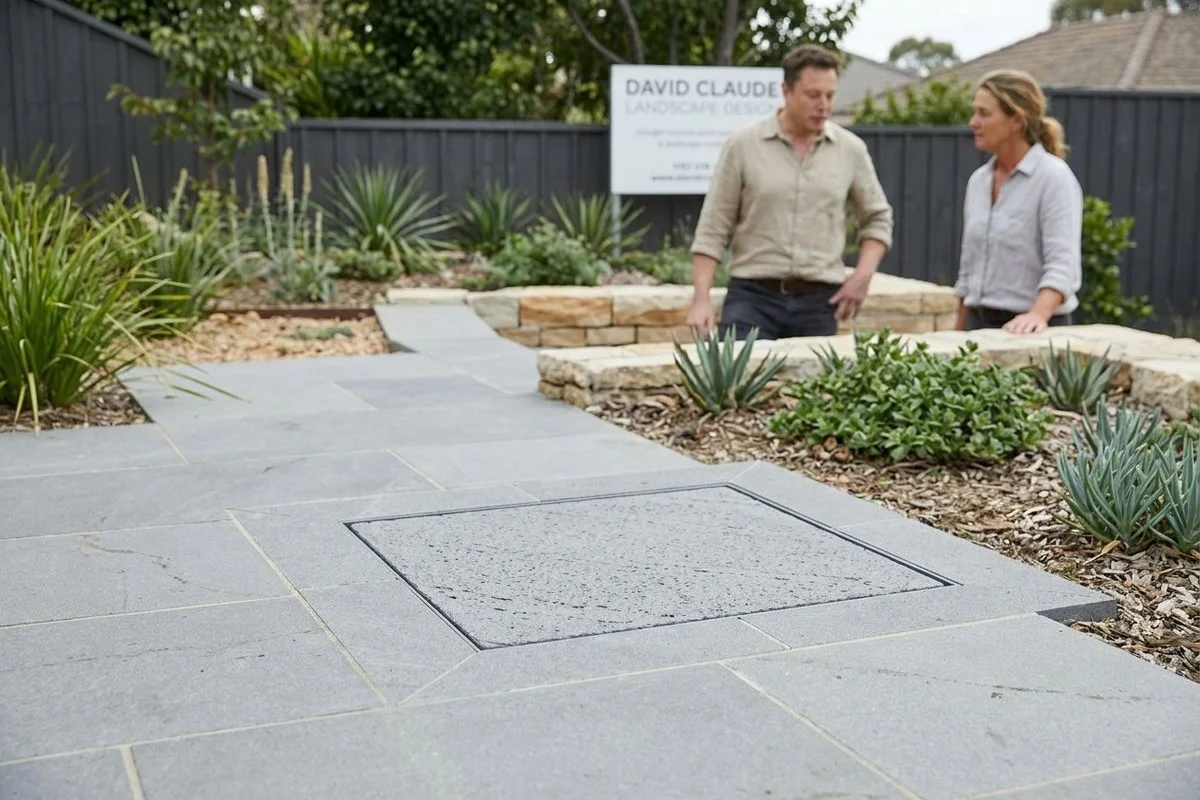
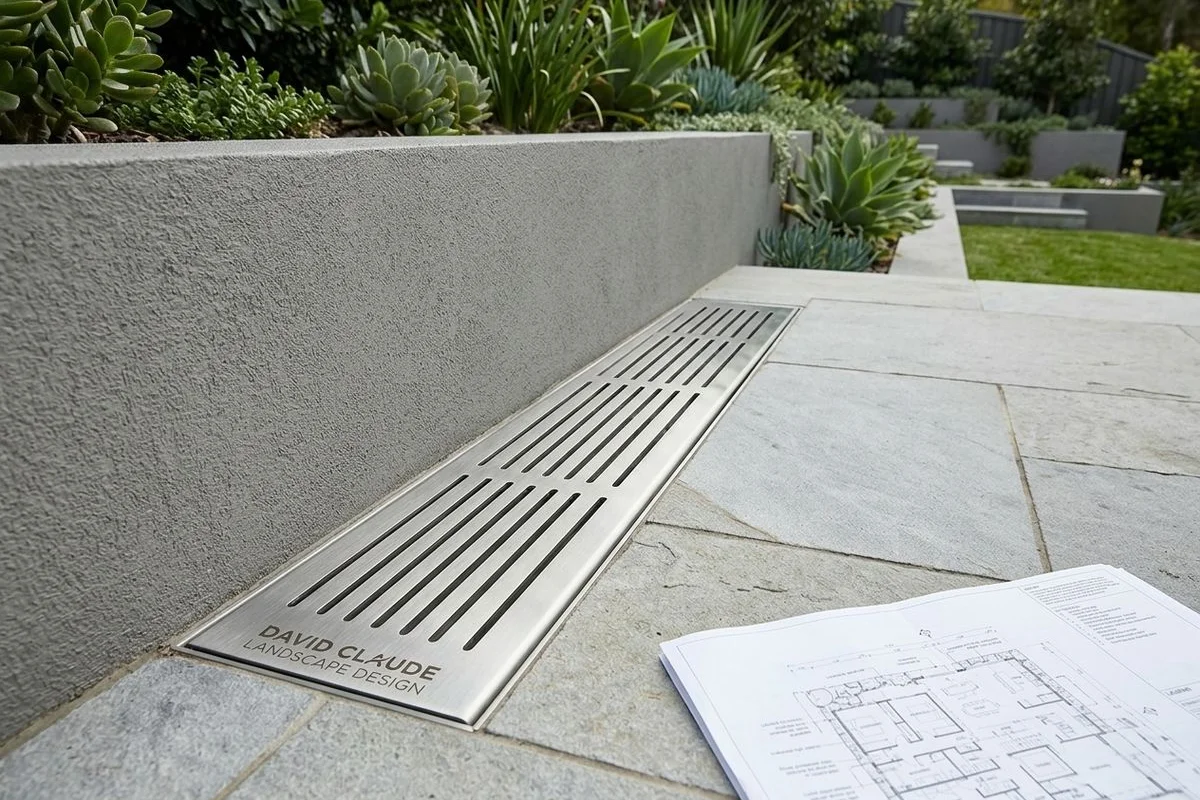
Sleek strip drains, such as Lauxes or Aquabocci grates, process this surface runoff up to three times faster than ground absorption.
Our team places these flush-mounted channels across pedestrian paving and patios.
Slot drains against the house and channel drains at driveways intercept heavy flow during sudden summer downpours.
The goal is to stop the water before it ever reaches your doorway.
Catch drains
We rely on catch drains as the first line of defence on the high side of sloped blocks.
These surface channels intercept fast-moving overland flow, capturing hundreds of litres during a short storm before the water reaches your garden beds.
A well-designed capture-and-route detail safely directs this heavy runoff directly into a grated pit.
Our builders use this setup to keep water far away from vulnerable retaining walls.
Clay soils and Melbourne reality
Most suburbs across Melbourne’s north-east, including Eltham and Diamond Creek, sit on heavy basalt clay.
This dense material drains poorly, expands by up to 10 percent when wet, and holds water at the root zone much longer than plants can handle.
We treat drainage on a clay-soil garden as an absolute necessity.
It is the single biggest factor that determines whether your new plants survive their first winter.
Our standard clay-soil strategy involves a very specific approach:
- Digging trenches to 600mm depths to bypass the most reactive top clay
- Using free-draining aggregate gravel for fast water movement
- Lining trenches with geotextile fabric to stop clay ingress
- Maintaining a minimum 1:100 fall ratio throughout the entire pipe network
Retrofit drainage
About half of the projects involve retrofitting existing gardens where initial drainage solutions were skipped or poorly designed.
Recent inspection data shows that roughly one in five Australian homes will experience structural issues, often triggered by poor water management.
Common warning signs include standing water a full day after rain, boggy lawn patches, paving shifts, and recurring plant deaths in specific spots.
Our clients are usually surprised to find that retrofit drainage is much less disruptive than they expect.
A clear timeline helps you plan the process:
| Project Type | Average Timeframe | Impact |
|---|---|---|
| Standard beds and lawns | 1 week | Low disruption, fast recovery |
| Whole-site networks | 2 to 4 weeks | Complete yard overhaul |
We always remind homeowners that ignoring the problem allows trapped moisture to damage foundations over time.
The alternative is living with a swampy yard or losing expensive plants year after year.
This delay is always more expensive in the long run.
If you are ready to fix your yard, reach out to our team today to schedule a comprehensive site assessment.