We know exactly how tricky it can be to manage water runoff on steep or uneven properties across Melbourne’s eastern suburbs.
Mastering proper garden drainage terminology is actually the first step to protecting your home’s foundation. At David Claude Landscape Design, the team has spent years designing premier landscape architecture that turns these challenging terrains into functional spaces.
Our approach focuses on using the right materials to prevent costly soil erosion. Let’s break down the essential vocabulary and explore what the updated AS/NZS 3500.3:2025 standards mean for your yard. Knowing these basics helps you make informed choices about your property.
We will show you exactly how these elements connect to form a reliable network.
The common vocabulary: garden drainage terminology
Properly having ag line drainage explained prevents costly misunderstandings during site excavations. These definitions cover the core components found in modern residential water management systems. Our team always starts by clarifying these terms before breaking ground.
Ag-line
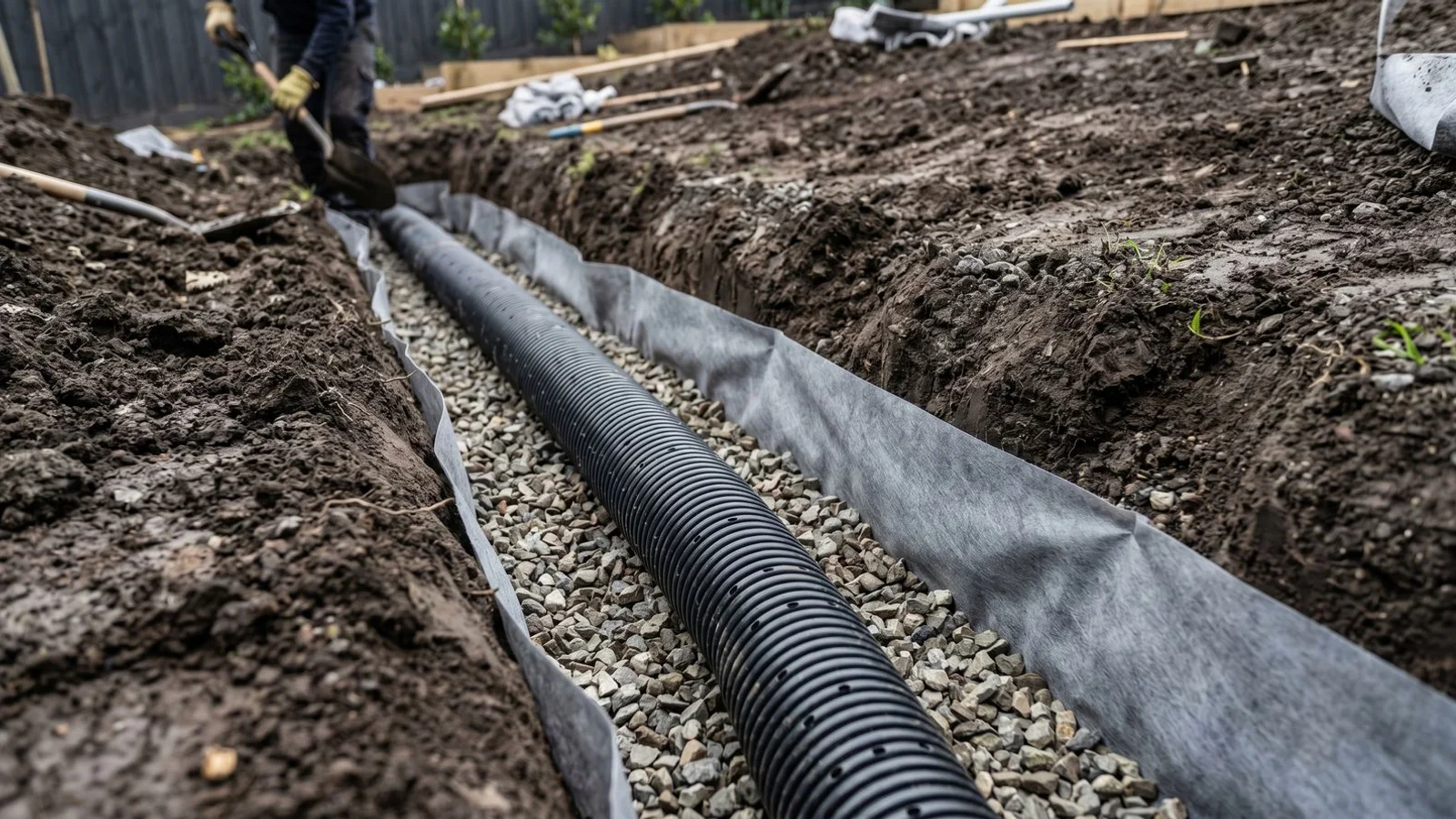
Agricultural pipes are 100mm slotted plastic tubes usually wrapped in a geotextile fabric and laid out in gravel-filled trenches. This critical component collects subsoil water through narrow slots, drains the moisture along the pipe, and delivers it safely to a junction box.
We typically install these with a minimum 1:100 fall gradient to ensure gravity keeps the moisture moving efficiently. The surrounding gravel acts as a primary filter to keep heavy mud away from the plastic slots.
Following the updated AS/NZS 3500.3:2025 guidelines guarantees the trench depth provides adequate cover against surface pressure. Our installations always prioritize this standard to prevent crushing under heavy foot traffic.
- Correct gradient for moisture prevention
- Slot protection against root intrusion
Verifying the gravel depth before laying the pipe is an essential next step. Maintaining structural integrity requires the geotextile fabric wrap. We guarantee these steps ensure the system functions smoothly for years.
Pit
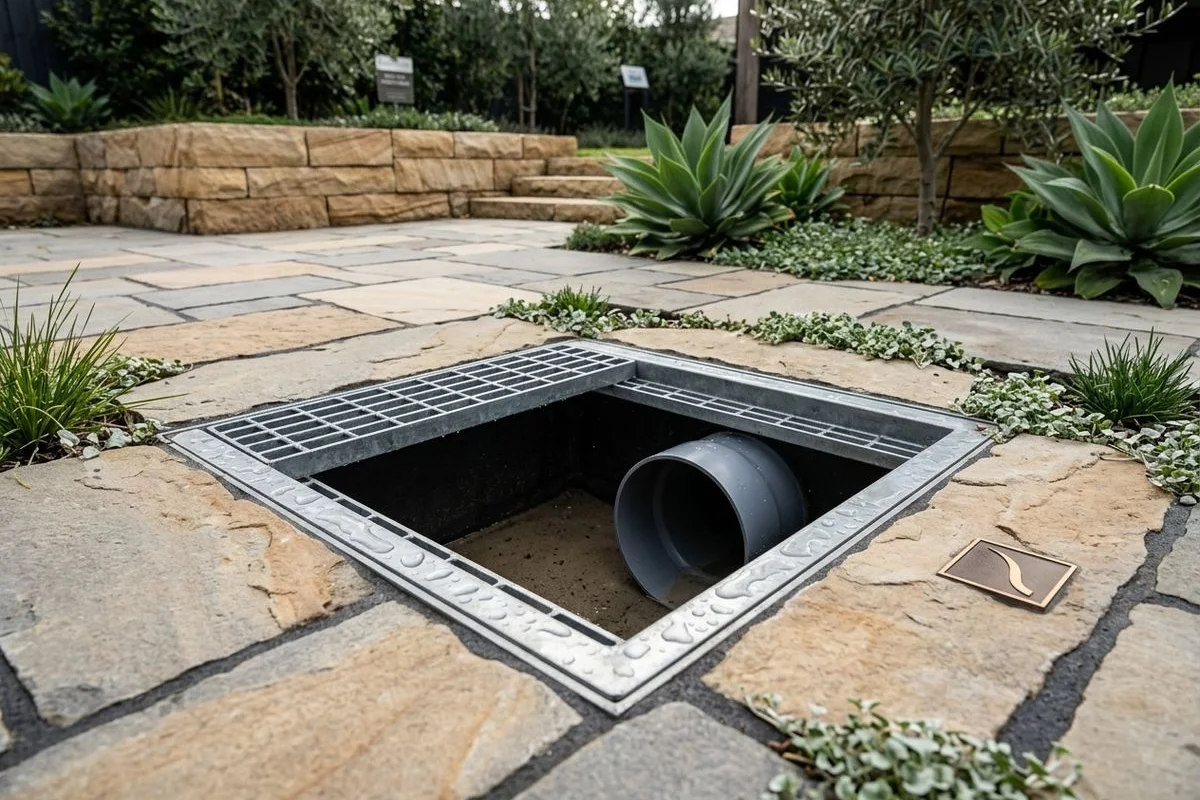
Polymer or concrete units usually serve as the preferred junction boxes in the network, measuring 300x300mm or 450x450mm. These pits feature a grated top with a strong outlet situated right at the base.
Our team regularly reviews specific regulations for the drainage pits Melbourne councils mandate based on catchment area. Standard residential properties in Melbourne often utilize the 300mm size for garden beds. Larger 450mm versions handle massive deluges near driveways or patios.
We incorporate concrete pits in high-traffic zones for maximum durability. Polymer varieties offer excellent resistance to harsh soil chemicals. Both options provide essential access for future high-pressure water jetting.
Riser
Our experts define a riser as the vertical section above a pit that brings the grated cover perfectly flush with the finished ground level. These extensions allow immediate visual inspection and fast cleanout access. Adding this component prevents mulch or loose topsoil from washing directly into the grate during heavy rainfall.
We use heavy-duty plastic risers that lock securely into place. A tight seal stops surrounding dirt from infiltrating the main chamber. Gardeners appreciate how neatly these blend into surrounding paving or lawns.
Our maintenance routines rely heavily on these accessible points to clear seasonal debris. They act as a critical buffer zone above the main junction box. Adjusting the final height is much simpler with modular extensions than excavating the entire system.
Stormwater pipe
We utilize sealed, non-slotted PVC tubes to safely convey water without collecting any extra moisture from the surrounding soil. These solid conduits run between junction boxes and continue straight to the final property exit. While 100mm PVC has been the standard diameter for decades, many newer Melbourne homes built in the past five years feature 90mm options.
Our specialists strongly advise using 100mm pipes because the slightly narrower 90mm versions are notoriously difficult to clear around ninety-degree bends. That tiny 10mm difference frequently dictates whether a blocked drain takes one hour or three hours to clear. The thicker 100mm diameter provides significantly higher flow capacity during intense thunderstorms.
We bury these conduits with at least 100mm to 300mm of cover to comply with local regulations.
- Protection from heavy landscaping equipment
- Safety against accidental shovel strikes
Legal point of discharge
Finding the legal point of discharge is the mandatory first step for any valid site design. This nominated location on your title specifies exactly where collected rain exits the property.
Our initial site assessments always involve applying for this specific information directly from the local municipal council. Common destinations include the street kerb connection, a shared easement, or a dedicated council reserve. The Building Regulations 2018 require formal approval from a building surveyor to ensure consistent discharge locations.
We verify the exact invert levels to ensure gravity will successfully pull the water all the way to the street.
- Accurate gravity flow calculations
- Pumped system identification for low-lying blocks
Directing runoff anywhere else risks severe fines and structural damage to neighbouring retaining walls. Knowing this constraint early prevents expensive redesigns later in the project.
Surface drainage
Our complete solutions incorporate surface channels and slot drains to collect rapidly pooling above-ground water. This visible network operates separately from the subterranean agricultural lines. Most challenging sites absolutely require both systems working in tandem to handle sudden downpours.
We install linear grates flush against patios to intercept sheets of rain before they reach doorways. These narrow channels feature removable tops for rapid leaf extraction. Regular sweeping prevents autumn foliage from clogging the narrow entry points.
Our custom setups often utilize sleek, marine-grade stainless steel covers for a modern aesthetic. High-heel friendly grates provide safety in entertaining areas. Durable plastic options work perfectly for hidden functional zones along side fences.
Catch drain
We construct catch drains specifically to intercept overland flow along the high edge of a sloping block. Positioned at the uphill boundary of a garden, they stop a neighbour’s runoff from washing away topsoil. These shallow, wide trenches often feature a concrete or heavy clay lining to resist aggressive scouring.
Our landscaping projects in the hills rely on these barriers to protect freshly planted garden beds. A well-placed interceptor trench handles the initial surge of a heavy storm. Grassed swales serve a similar purpose while blending naturally into the lawn.
We shape the sides with a gentle one-in-four batter so mowers can safely pass over them.
- Elimination of sheer-sided safety risks
- Smooth contours for steady water movement
Proper shaping stops stagnant mosquito breeding pools from forming. Constant edge trimming is completely avoided with this gentle slope.
Silt pit
Our team installs a silt pit whenever a site experiences significant soil movement or heavy leaf drop. These specialised units feature an internal trap containing a small sump that collects heavy sediment before the liquid flows out. This settling process completely prevents disastrous downstream pipe blockages.
We recommend inspecting and clearing these specific traps at least twice a year, particularly right before Melbourne’s autumn storm season. Environmental Protection Authority Victoria guidelines suggest proactive maintenance reduces total repair costs by up to fifteen percent over a decade. Ignoring the accumulated sludge eventually causes raw mud to spill into the clean stormwater pipes.
Our maintenance visits often involve scooping out thick, caked sediment from the bottom chamber.
- Quick five-minute filter basket clearing
- Prevention of foul-smelling organic gases
Some advanced models make this cleaning process incredibly simple. Consistent attention keeps the underground chambers completely fresh.
How they connect: ag line drainage explained
We structure a typical network to follow a very specific gravity-fed sequence. Subsurface moisture enters the agricultural pipe and flows straight into a junction pit.
Surface channels also feed their collected runoff into these same junction boxes along the route.
Our sealed stormwater tubes then carry this combined volume safely to the final legal point of discharge. This coordinated handover ensures nothing overflows during peak rainfall. Every component relies completely on the one positioned directly downstream.
| System Component | Primary Role | Downstream Connection |
|---|---|---|
| Agricultural Pipe | Collects subsoil moisture | Junction Pit |
| Surface Channels | Captures rapid overland flow | Junction Pit |
| Stormwater Tubes | Conveys combined water volume | Legal Point of Discharge |
We test the entire pathway with a high-pressure hose before finalizing the landscaping. A single misaligned join creates a frustrating bottleneck.
For a comprehensive look at how these garden drainage terminology elements protect your property, read more about the full system design approach on our drainage service page.