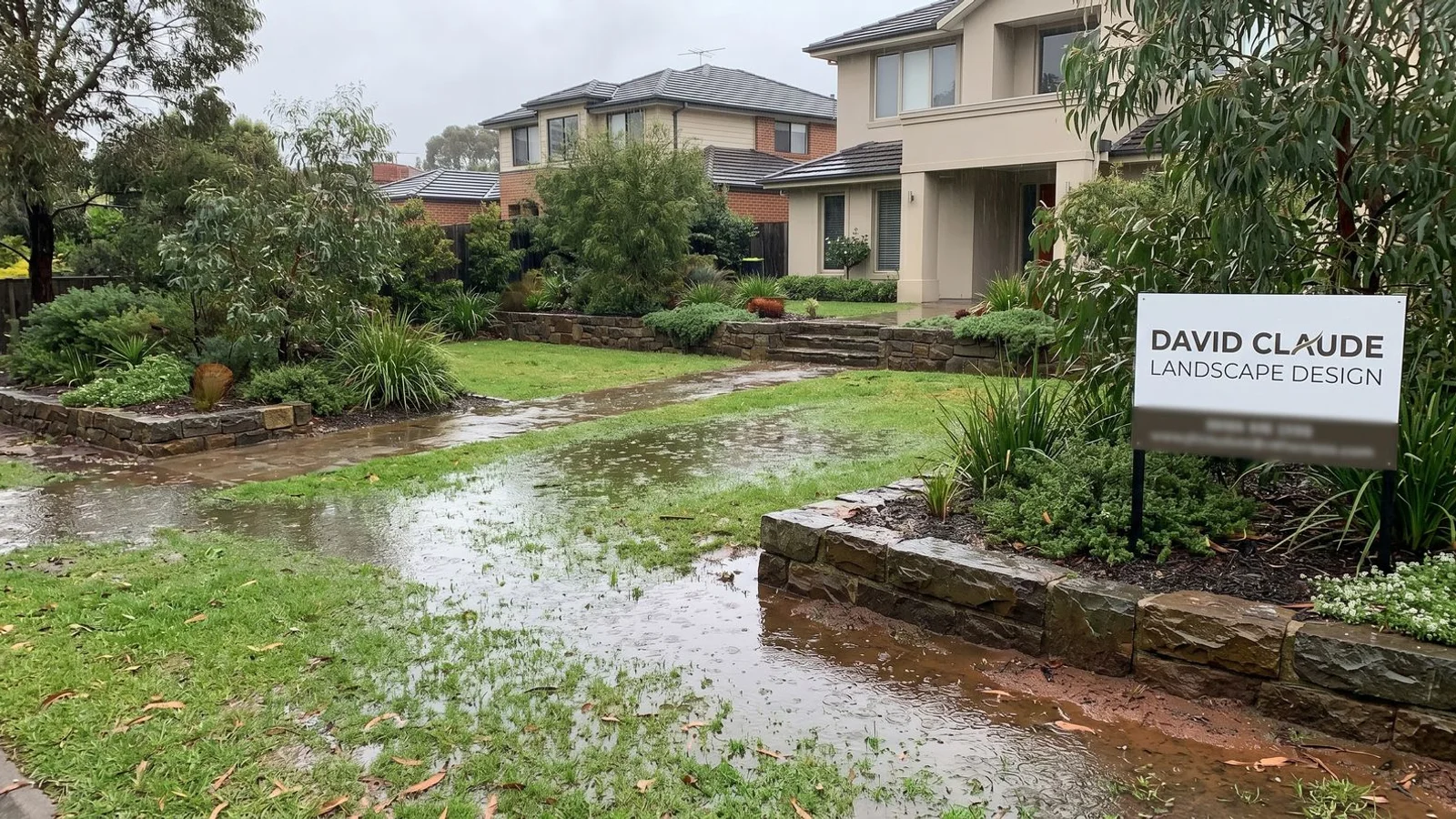
When evaluating the signs garden needs drainage, we constantly see how a heavy downpour exposes the hidden weak points in a property’s grading. The line between a lush landscape and a muddy headache comes down to effective water management.
Our team at David Claude Landscape Design tackles these challenging terrain issues across Melbourne’s eastern suburbs every day. Taking early action prevents minor annoyances from escalating into expensive structural repairs.
We will break down the eight most common indicators of system failure and outline the practical steps to resolve them.
Eight warning signs garden needs drainage
1. Standing water 24+ hours after rain
We consider lingering puddles the most obvious red flag for grading issues. Puddles that remain a full day or more directly indicate a blocked or non-existent runoff system.
Melbourne receives around 650 millimetres of rain annually. Intense seasonal downpours easily overwhelm flat clay surfaces.
Our preferred fix often involves installing French drains to give the water a clear underground path. This stops the pooling and prevents plant roots from suffocating.
2. Boggy lawn patches
Our boots sinking into the grass is one of the most reliable poor drainage signs. Specific areas where grass struggles and moss appears usually point to a localised failure or a groundwater seep.
The eastern suburbs are notorious for reactive clay soil that acts like a sponge and traps moisture just below the topsoil. We often see this lead to lawn diseases and severe soil compaction.
Common indicators of subsurface pooling include:
- Squishy turf underfoot.
- Thick moss replacing healthy grass.
- Mud sticking heavily to shoes.
- Foul odours from rotting organic matter.
3. Dank smell near the house wall
We treat any moist soil resting against a foundation wall as a serious structural threat. A dank smell indicates water is flowing in the direction of the house rather than away from it.
This trapped moisture often blocks the weep holes required by the Victorian Building Authority. Our inspections frequently reveal that this pooling water creates the perfect environment for rising damp to enter the subfloor.
Subfloor ventilation fails when exterior soil stays saturated.
4. Paving movement or efflorescence
We know that lifted or cracked paving means water is trapped beneath the surface. This happens because the base preparation failed or the surface fall is incorrect.
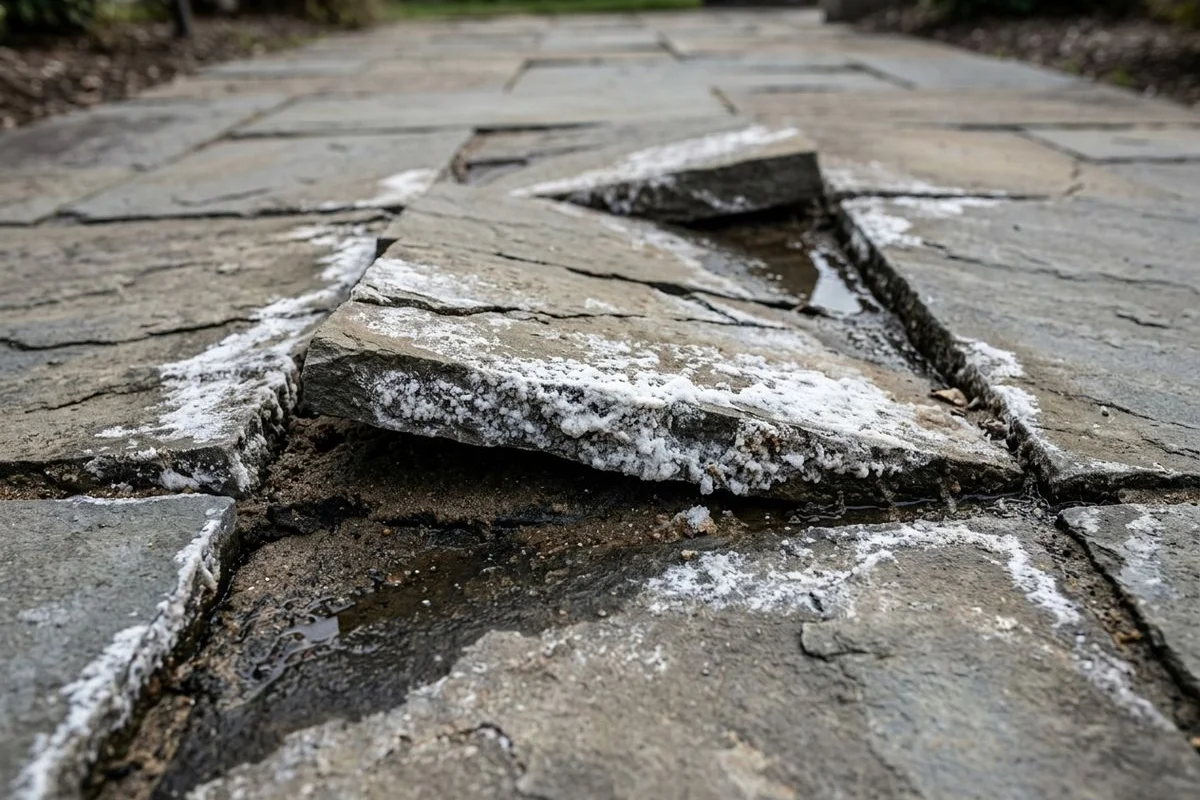
Highly reactive clay soils cause a phenomenon called slab heave. Our concrete specialists note that as the clay absorbs excess water, it swells and physically pushes the paving upwards.
Efflorescence appears as a white powdery salt deposit on the surface. This powder is dragged up through the concrete by the escaping moisture.
5. Retaining wall lean or bulge
Our retaining wall assessments focus immediately on signs of outward leaning or bulging. Water trapped behind a retaining wall creates immense hydrostatic pressure.
Walls that lean outward are releasing that pressure dangerously and require urgent attention. In Victoria, retaining walls over one metre high require an engineer’s design specifically to handle this wet soil weight.
We always install agricultural pipes and gravel backfill to relieve this pressure safely. Here is how different drainage elements protect your wall:
| Drainage Element | Primary Function |
|---|---|
| Ag Pipes (Perforated) | Collects and directs subsurface water away. |
| Gravel Backfill | Allows water to drop quickly to the base pipe. |
| Weep Holes | Provides an immediate exit for trapped surface water. |
6. Recurring plant death in specific spots
We identify recurring plant death in the exact same location as a severe soil issue. Fixing a waterlogged garden melbourne locals frequently deal with prevents plants from quickly dying from a fungal infection known as root rot.
If the same spot keeps killing plants, it is a drainage failure and not a poor plant choice.
The water mould Phytophthora cinnamomi thrives in these wet conditions. Our horticulturalists see native plants like Banksias and imported favourites like Daphne succumb to this pathogen rapidly.
If you keep replacing dead plants without fixing the ground moisture, the new additions will face the same fate.
7. Silt or soil deposits downstream
Our team looks for silt at the bottom of a slope as a primary indicator of active erosion. Mud deposits mean your valuable topsoil is physically moving away from your garden beds.
This sheet erosion strips vital nutrients from the soil surface during heavy rain. We recommend checking these vulnerable zones first:
- The base of steep retaining walls.
- Driveway edges where runoff gathers.
- Garden beds adjacent to paved surfaces.
Capturing this water early prevents your landscaping investments from washing into the stormwater system.
8. Mushroom rings or unusually lush patches
We often spot unusual circular fungal growths as a hidden sign of trapped moisture. These fairy rings, caused by fungi like Marasmius oreades, thrive where organic matter breaks down in constantly damp soil.
Sometimes you will notice the opposite pattern. Our crews find isolated spots of over-rich growth resulting from standing nutrients in poor-draining areas.
Both extremes point to an imbalance in your soil’s moisture capacity.
What to do
Our best advice is to start with a site walk during or immediately after a heavy rainstorm. Identifying the signs garden needs drainage gives you a clear baseline for repairs.
Issues you can safely ignore in dry weather become glaringly obvious when water is actively moving across the property. Our drainage service includes comprehensive diagnostic site walks as part of the initial consultation.
A properly designed system protects your landscape year-round. Reach out today to schedule your assessment.