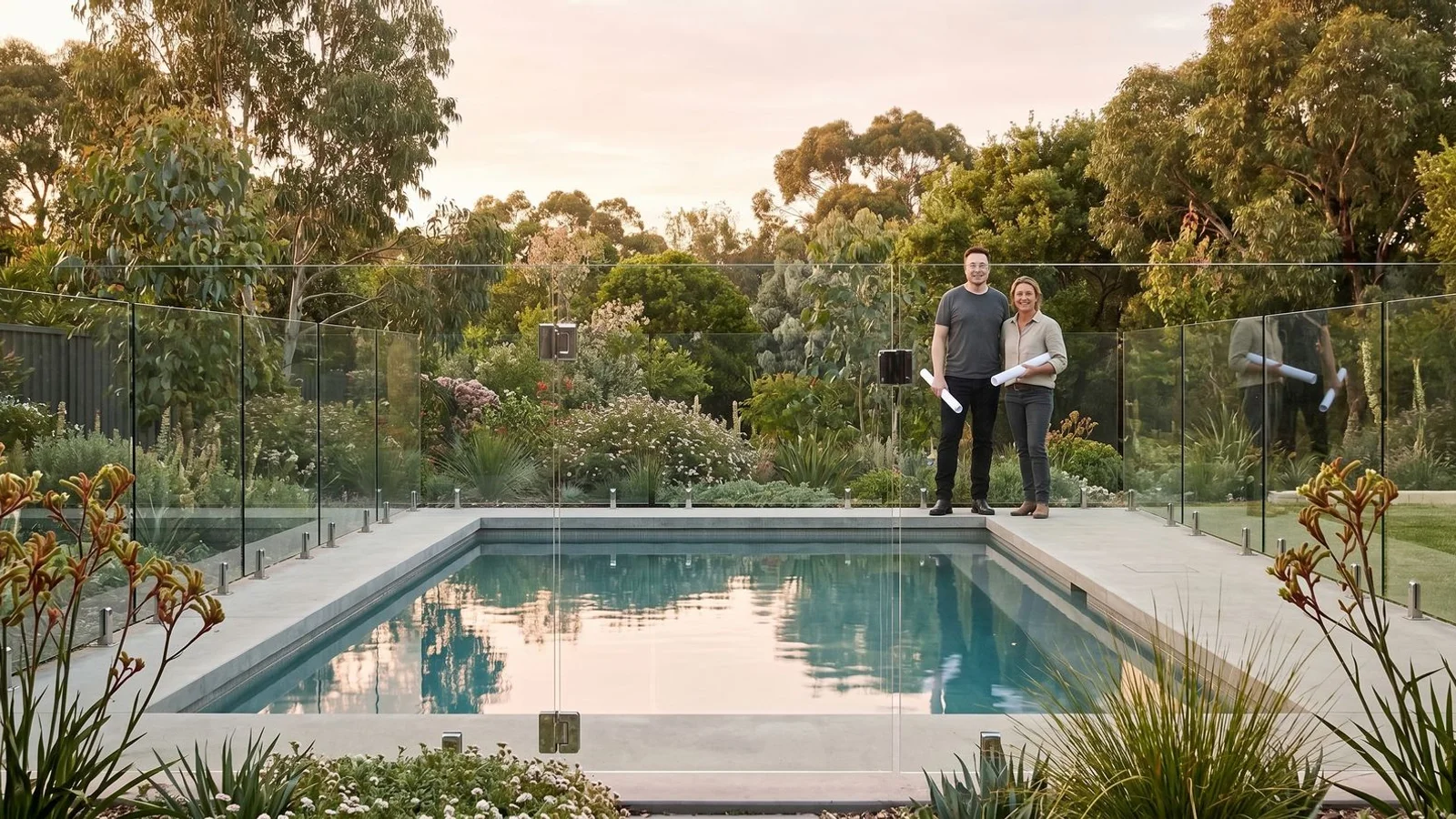
Understanding the rules for glass pool fence Victoria compliance often feels like a frustrating guessing game. At David Claude Landscape Design, our team consistently sees stunning backyard designs delayed because a minor fencing detail fails the final check.
The Building Regulations 2018 establish strict baselines, and getting these details right the first time saves thousands in rework.
Let’s look at the exact specifications required, what the common pitfalls look like, and how you can prepare your glass barrier for its first assessment.
The Victorian rules at a glance
We design every project to meet the exact specifications of the Australian Standard AS 1926.1-2012 enforced across the state. Victoria pool barrier rules dictate that glass fences must stand a minimum of 1.2 metres from the finished ground level on the access side, with gaps no larger than 100mm. These specific dimensions stop small children from squeezing underneath or climbing over the top.
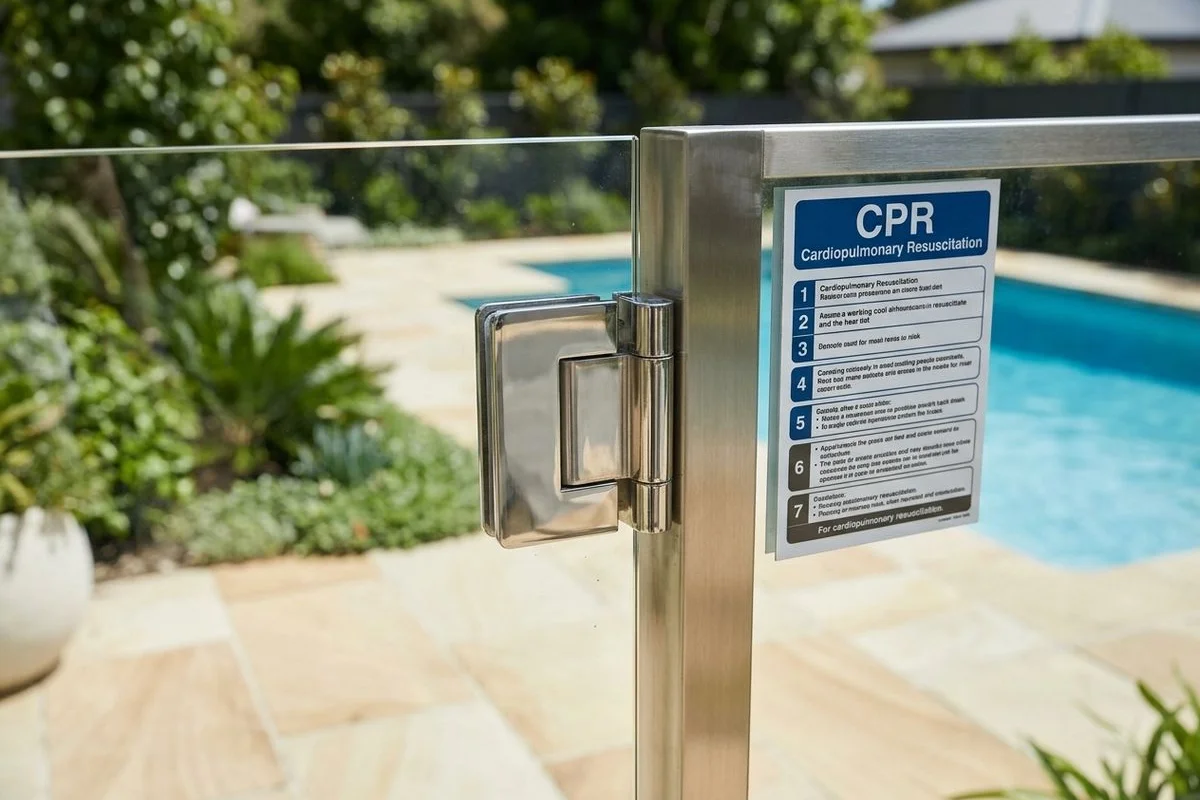
Our standard practice involves using 12mm toughened safety glass for frameless setups and 10mm for semi-frameless designs. These materials must comply with AS 1288 glazing standards to guarantee structural integrity against wind and impact. A compliant barrier also requires a prominently displayed CPR sign located directly near the water.
We have summarised the critical requirements you need to reference below.
| Feature | Minimum Specification | Practical Purpose |
|---|---|---|
| Height | 1.2m minimum | Prevents access over the top. |
| Bottom Gap | Maximum 100mm | Stops small children squeezing through. |
| Climbable Zone | 900mm horizontal clearance | Removes external footholds. |
Proper compliance requires attention to both the glass thickness and the surrounding landscape features. The Victorian Building Authority conducts regular audits, making precise measurements essential.
Climbable-zone traps
Our landscape architects treat the 900mm Non-Climbable Zone (NCZ) as the most critical constraint in any backyard layout. This rule catches many homeowners mid-build when a harmless garden feature suddenly becomes an illegal climbing surface. The law states that no objects, branches, or horizontal surfaces can exist within a 900mm arc on the outside of the barrier.
We frequently see common landscaping choices cause failed inspections because they breach this zone within a few months. Fast-growing hedges like Lilly Pilly represent a major risk. Retaining walls, benches, and even large decorative pots also classify as immediate hazards.
Our design process actively avoids these common NCZ traps from day one. You must eliminate these specific hazards near your barrier:
- Tall shrubs: Plants like Lilly Pilly that grow quickly.
- Climbable hardscaping: Raised garden beds and retaining walls.
- Movable objects: Heavy pots, outdoor furniture, and BBQ units.
- Fixed structures: Low window sills or nearby air conditioning units.
Keeping this space completely clear remains a strict, non-negotiable requirement.
Gate hardware
We consider the gate the most critical inspection point, as self-closing hinges and self-latching mechanisms are completely mandatory. Premium magnetic latches, like those from D&D Technologies, ensure consistent closure. The latch itself must sit at a minimum height of 1.5 metres above the ground.
We typically locate the latch on the outside face of the gate with an appropriate setback during our installation process. Standard spring-loaded hinges work well, but hydraulic options provide a softer close. Soft-close hydraulics prevent heavy 12mm glass doors from slamming, extending the lifespan of the hardware.
We recommend comparing the two main hinge types before making a final decision.
| Hinge Type | Mechanism | Best Application |
|---|---|---|
| Spring-Loaded | Tension coil | Budget-friendly standard installations. |
| Hydraulic | Fluid dampening | Heavy frameless doors requiring a soft close. |
A slamming gate can cause micro-fractures in the glass over time. Hydraulic hinges eliminate this risk entirely while easily passing the self-closing test.
Inspection and certification
Our full service covers the final certification steps so you do not have to worry about the paperwork. A registered building inspector must attend post-install to check every dimension against the regulations. A comprehensive pool fence inspection Melbourne locals rely on typically costs between $200 and $400.
The Lodgement Process
We coordinate the inspector appointment as part of our pool landscaping service handover. A successful assessment results in a pool barrier compliance certificate. You have 30 days to lodge this document with your local council to avoid enforcement actions.
Our documentation package arrives ready for this exact lodgement process. You must follow a specific sequence to finalise your legal obligations:
- Step 1: Complete the physical build to AS 1926.1 standards.
- Step 2: Clear the 900mm non-climbable zone of all hazards.
- Step 3: Pass the formal inspection and receive your certificate.
- Step 4: Lodge the certificate with your local council within 30 days.
Failing to register a pool or ignoring a non-compliance notice can trigger individual fines up to $1,652 under current 2026 Victorian rules.
Final Next Steps
We build your barrier correctly the first time to bypass these costly delays.
Homeowners must renew this compliance every four years to maintain a safe environment.
Contact our team today to review your backyard plans and secure a certified, beautiful glass fence.