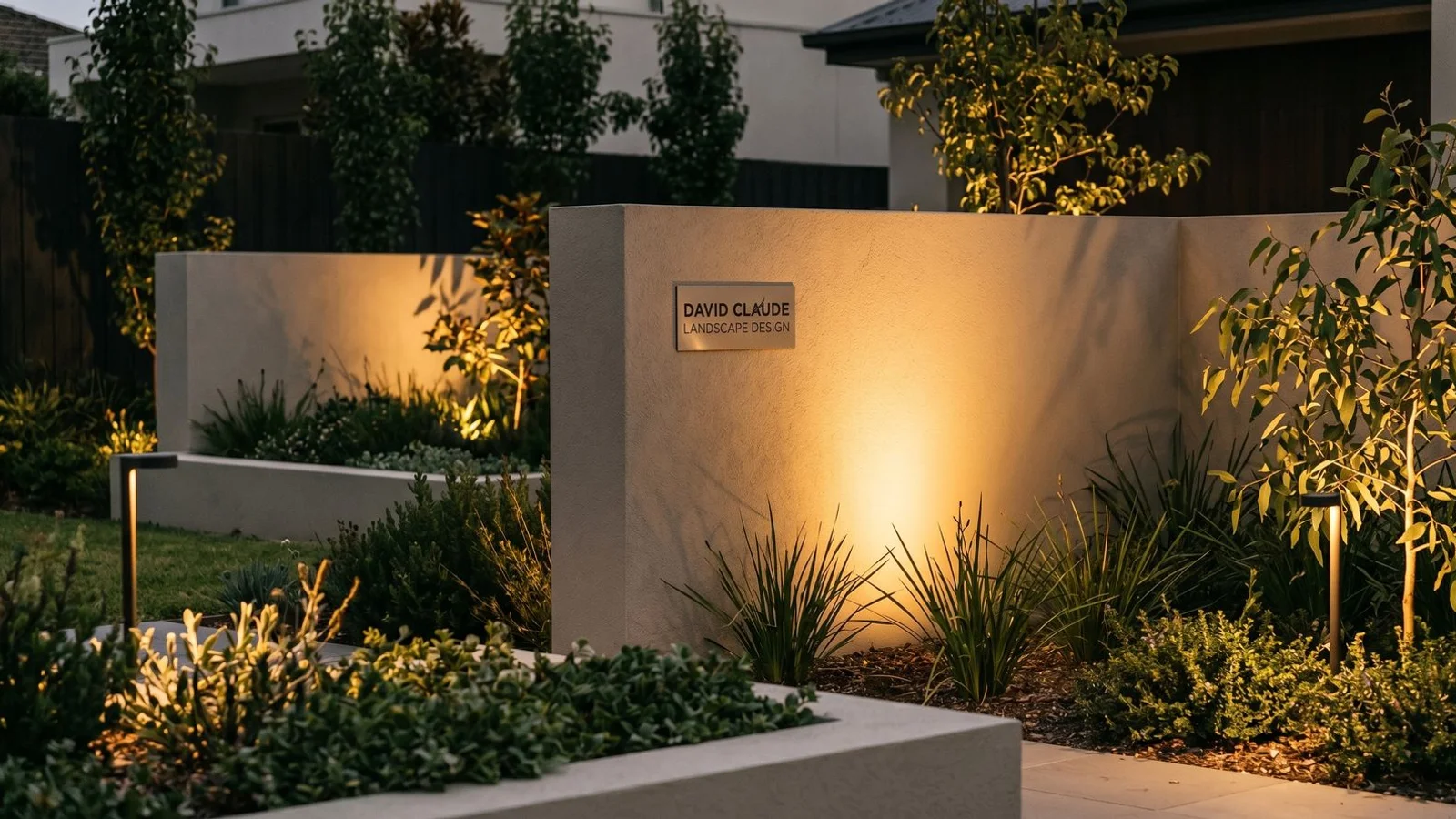
Do you ever look out the window after dinner and see absolutely nothing?
By the time June rolls around in Melbourne, the sun drops around 5:15 PM, leaving your backyard completely in the dark. That means you lose a massive part of your property for half the year.
We completely understand how frustrating it feels to have a beautiful outdoor space you can only enjoy on weekends. Fixing this issue is one of our favorite transformations at David Claude Landscape Design. A well-lit yard instantly becomes a space you actually want to use at night.
You might think you need giant floodlights to see anything, but that is a common mistake. The secret is actually using fewer, softer fixtures placed exactly where they make a difference. Let’s walk through the exact steps for planning a garden lighting layout that brings your property to life after dusk.
Lighting as a landscape decision
It is so easy to design a layout in the bright afternoon sun and treat the dark as an afterthought. This approach leaves steep blocks in the inner-eastern suburbs feeling completely disconnected from the house after dark. You end up staring at a black window instead of a garden.
Our team approaches lighting as a fundamental part of the landscape, not an add-on. Proper illumination highlights your favorite plants and makes negotiating terraced steps incredibly safe. Studies from smart platform leaders like Casambi show that a well-lit, adaptive setup can even reduce property crime by up to 39%.
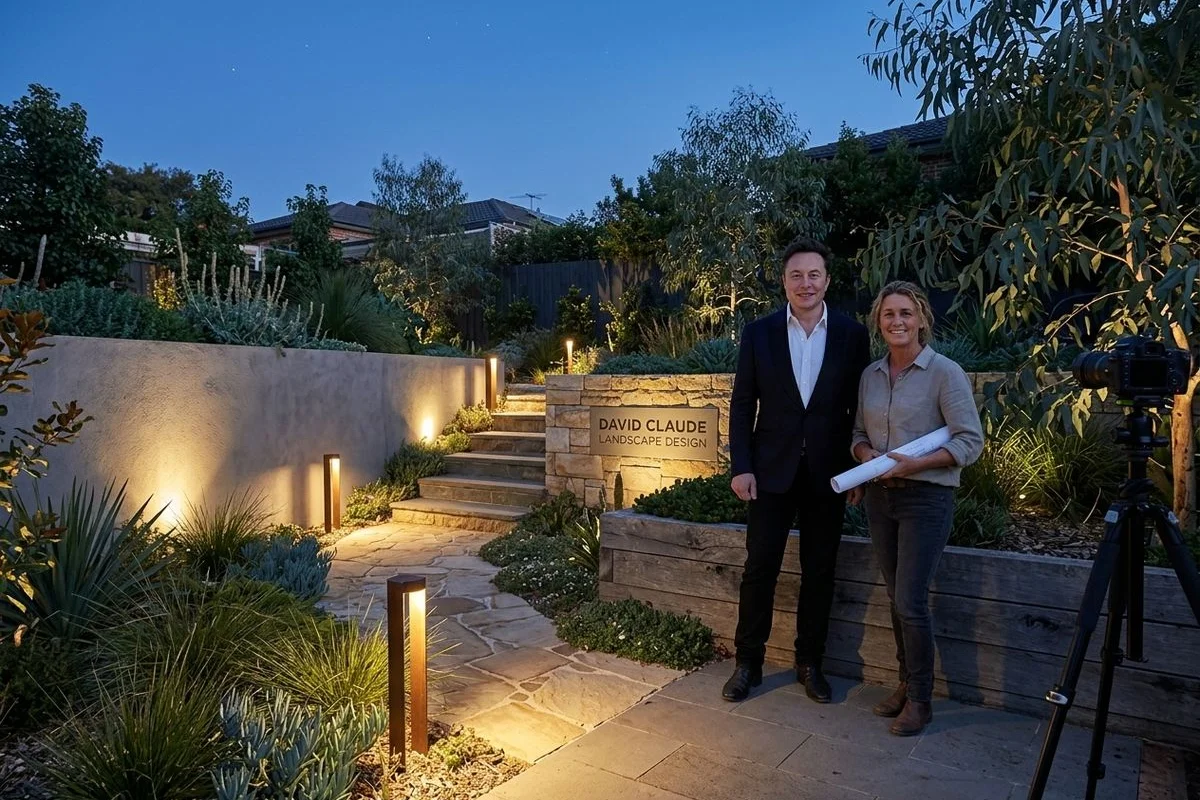
We focus on creating a subtle, inviting atmosphere rather than flooding the area with harsh bulbs. The trick is balancing warm fixtures with natural shadows. This gives your property depth and makes the space feel like a natural extension of your living room.
| Approach | Typical Result | Our Recommended Result |
|---|---|---|
| Afterthought Lighting | Glaring floodlights, flat appearance, manual switches. | Warm accents, beautiful shadows, automatic sensors. |
| Winter Usability | Garden disappears by 5:15 PM. | Yard becomes an inviting outdoor room all evening. |
| Safety on Slopes | Dark, dangerous stairs and retaining walls. | Clearly illuminated paths and level changes. |
Zones we plan for
Every successful project breaks the property down into distinct areas. Treating the entire block as one single space is a guaranteed way to over-light it. Let’s look at the specific areas that need attention.
Entry and arrival
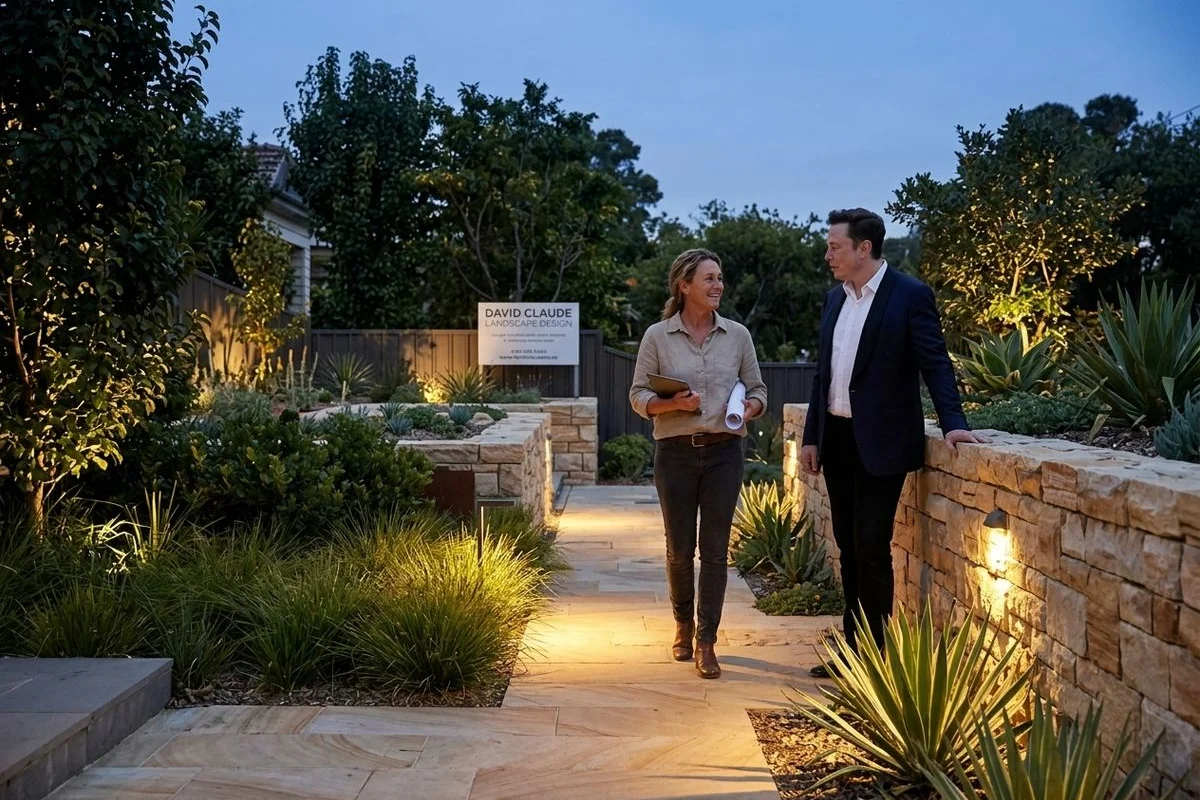
The first glow a visitor sees sets the tone for your entire home. Soft path fixtures from the front gate create an immediate sense of welcome. You want legibility and warmth, never a blinding glare.
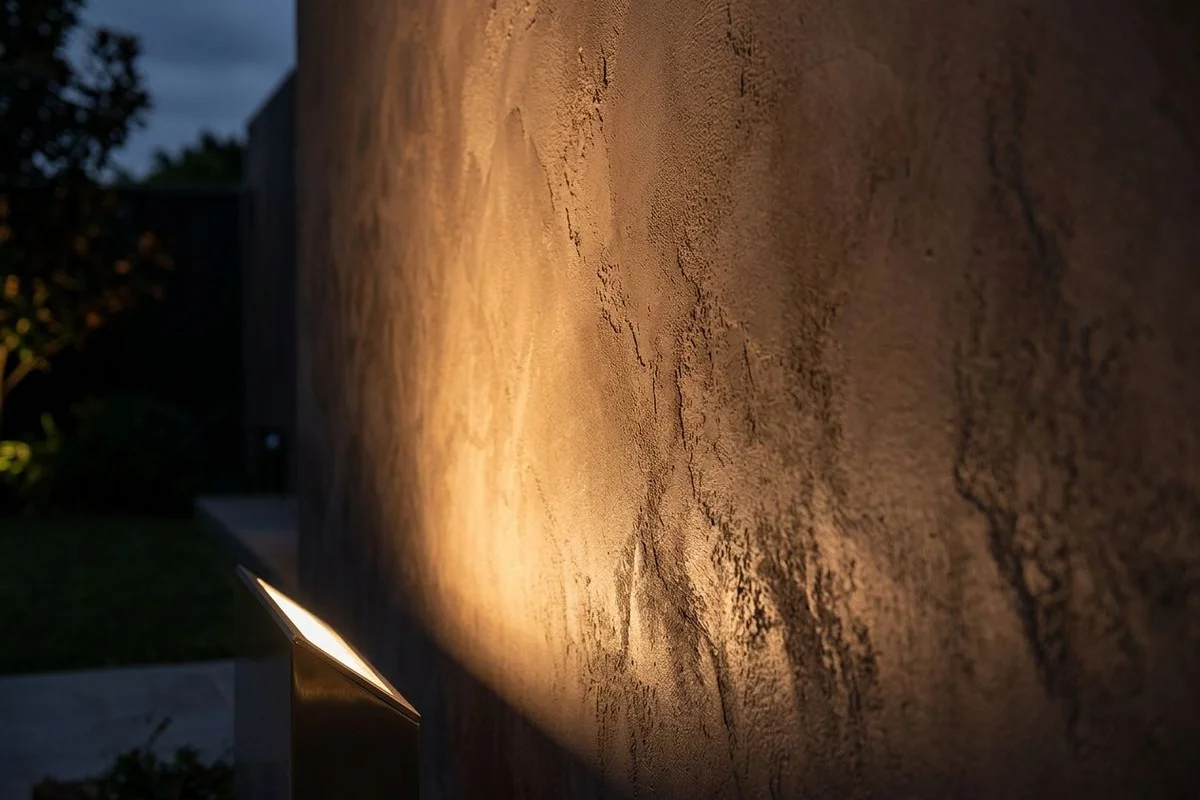
Our strategy often includes a subtle uplight on a feature tree near the driveway. A gentle wash on the front door helps guests find their way easily. Designers frequently use high-quality Australian brands like Aqualux, specifically their AQL-514 surface grazing fixtures, to highlight textured brickwork or stone columns.
Here are the key elements for a welcoming entrance:
- Low-glare path lights guiding the way.
- Gentle uplighting on a signature tree.
- Warm washes on architectural textures.
- Clear visibility for stairs or uneven ground.
Path and circulation
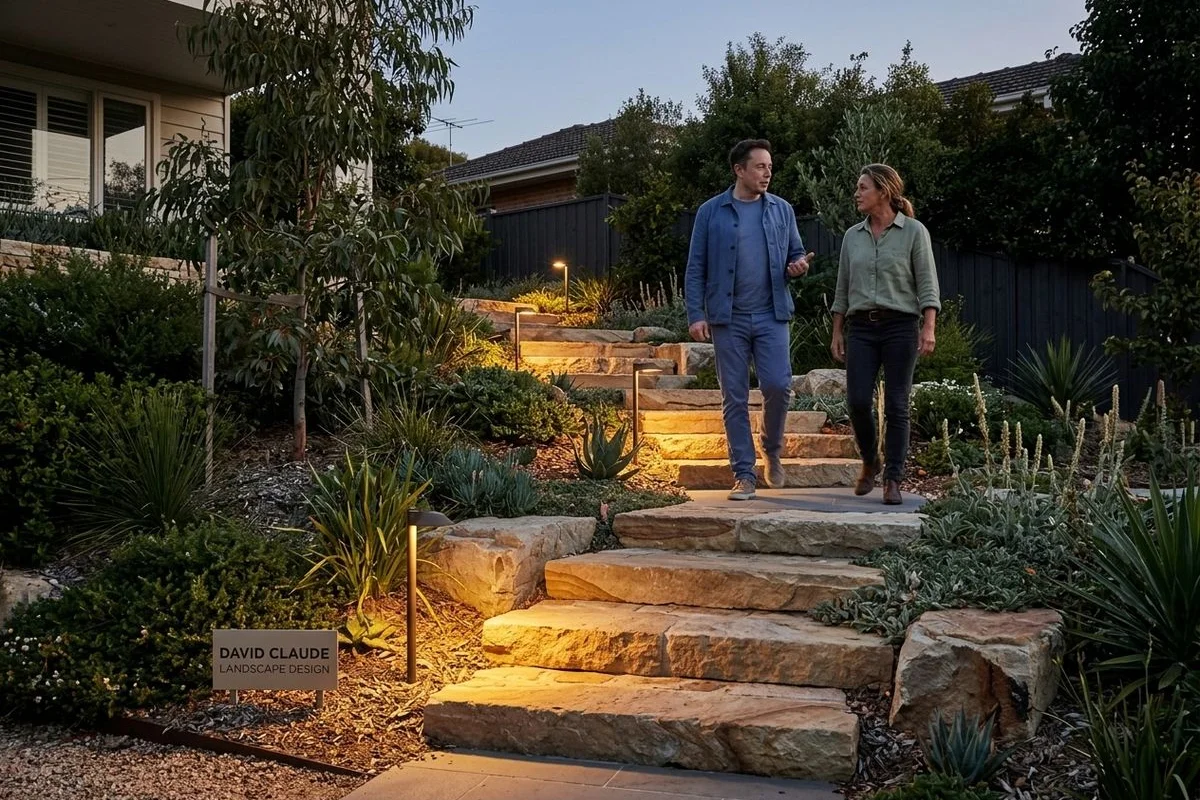
Travel routes require careful attention, especially on properties with challenging, sloping terrain. Primary paths to the back, stepper stones around the pool, and steps between terraces all need clear visibility. Low fixtures sitting 300 to 500 millimeters high work perfectly.
We space these units every two to three meters. This distance keeps your feet safe without blasting your carefully chosen plants with excess brightness. A staggered layout feels much more natural than lining them up like an airport runway.
Feature lighting
Mature trees, sculptures, water features, and textured retaining walls deserve to be the stars of the show. Spike spots and buried ground fixtures direct a warm glow upward to highlight these beautiful details. A single, high-quality solid copper Hunza uplighter on an old Gum tree does more for your yard than ten generic path markers.
Our designers love using feature illumination to draw the eye out into the distance. This technique makes a tight, sloping block feel significantly larger. The goal is to create focal points that capture your attention from the kitchen or living room window.
Popular focal points for feature illumination include:
- Large, established canopy trees.
- Textured brick or bluestone retaining walls.
- Water features or fountains.
- Architectural sculptures and garden art.
Ambient and overhead
Pergola and overhead structure installations completely change how you use your deck. Soft downlights or string lights instantly turn an outdoor dining space into an evening room. A gentle washlight on the underside of a canopy creates a wonderfully cozy atmosphere.
We often integrate these overhead options with your main house system for easy operation. This allows you to step outside with your dinner and enjoy the fresh air long after the sun goes down. A well-lit patio is perfect for entertaining guests year-round.
Zones to leave dark
The single most important decision you can make is choosing what to leave dark. Black, unlit areas provide essential contrast to the illuminated features. A garden with every corner lit up reads completely flat and boring.
Our layouts use shadows strategically to make the space feel three-dimensional. Leaving darker pockets also reduces light pollution, which is much better for local birds and nocturnal wildlife. This careful balance is what makes an evening landscape look truly magical.
The technical detail
Getting the technology right ensures your setup lasts for years without constant maintenance. Water, soil, and electricity are a tough combination. Picking the right components is absolutely crucial for safety and reliability.
| Component Type | Recommended Specification | Why It Matters |
|---|---|---|
| Wiring System | 12V Extra Low Voltage. | Highly safe for wet environments and complies with AS/NZS 3000. |
| Garden Fixtures | IP65 Splash-rated. | Protects against rain and irrigation sprinklers. |
| Pool Surrounds | IP67 Submersion-rated. | Legally required for safety near standing water. |
Low voltage and fittings
Our standard choice is an Extra Low Voltage system running on 12V. They comply easily with strict AS/NZS 3000 wiring rules for outdoor environments. Systems operating under 50 volts are much safer for wet gardens, posing far less risk to children and pets.
We mount transformers against the house with proper ventilation to ensure they run cool. Cable runs tuck neatly along bed edges and hide safely under the mulch. This protects the wiring from accidental shovel strikes while keeping your garden beds looking clean.
Fixture placement dictates the required waterproof rating for each unit. Landscape-grade IP65 fixtures handle splashes perfectly for general garden use. We strictly use IP67 submersion-rated units for any pool surrounds, ensuring total compliance with Australian equipotential bonding laws.
Colour temperature
Warm white between 2700K and 3000K is the absolute default for our designs. This range flatters timber, stone, and green foliage beautifully. It feels very close to the natural, comforting glow of firelight at dusk.
We actively avoid cooler temperatures above 4000K. Those harsh, blue-white bulbs make a beautiful residential yard look like a commercial car park. Warm tones create the relaxing atmosphere you actually want at home.
Control
Dusk-sensor activation paired with a switch-off timer is the standard recommendation. The system wakes up automatically as the sun sets. It runs until 11:00 PM or midnight, then quietly puts itself to sleep.
Our clients love avoiding the hassle of manual switches entirely. Smart home integration is incredibly popular right now for anyone who wants scene control from their phone. Modern setups often utilize reliable Holman Wi-Fi or Bluetooth controllers, which handle up to 60W and connect straight to an app for easy scheduling. Advanced systems like Casambi offer wireless Bluetooth mesh platforms for larger, more complex properties.
Popular automatic control options include:
- Simple dusk-to-dawn sensors.
- Timers set to specific switch-off hours.
- Wi-Fi controllers managed via smartphone apps.
- Bluetooth mesh systems for large properties.
Combining with other services
Proper garden lighting works best when planned alongside the rest of your landscape construction. Adding wires and fixtures after the concrete pours and plants settle is always harder. Thinking ahead saves you time, money, and frustration.
We route cables right alongside retaining wall bases and agricultural drain trenches before the soil goes in. Fixtures are positioned perfectly to highlight built elements like stairs and bench seating. Co-trenching your electrical conduit with your drainage makes the entire build much more efficient.
Our quotes usually include this scope as part of a complete project rather than a standalone retrofit. A fresh install ensures every wire is hidden and every fixture has a purpose. Retrofitting is still completely practical for established gardens, provided the existing planting allows for careful trenching.
If you are ready to transform your outdoor space, please reach out to the David Claude Landscape Design team. A well-planned garden lighting system will completely change how you use your property. Let us help you bring your backyard to life after dusk.