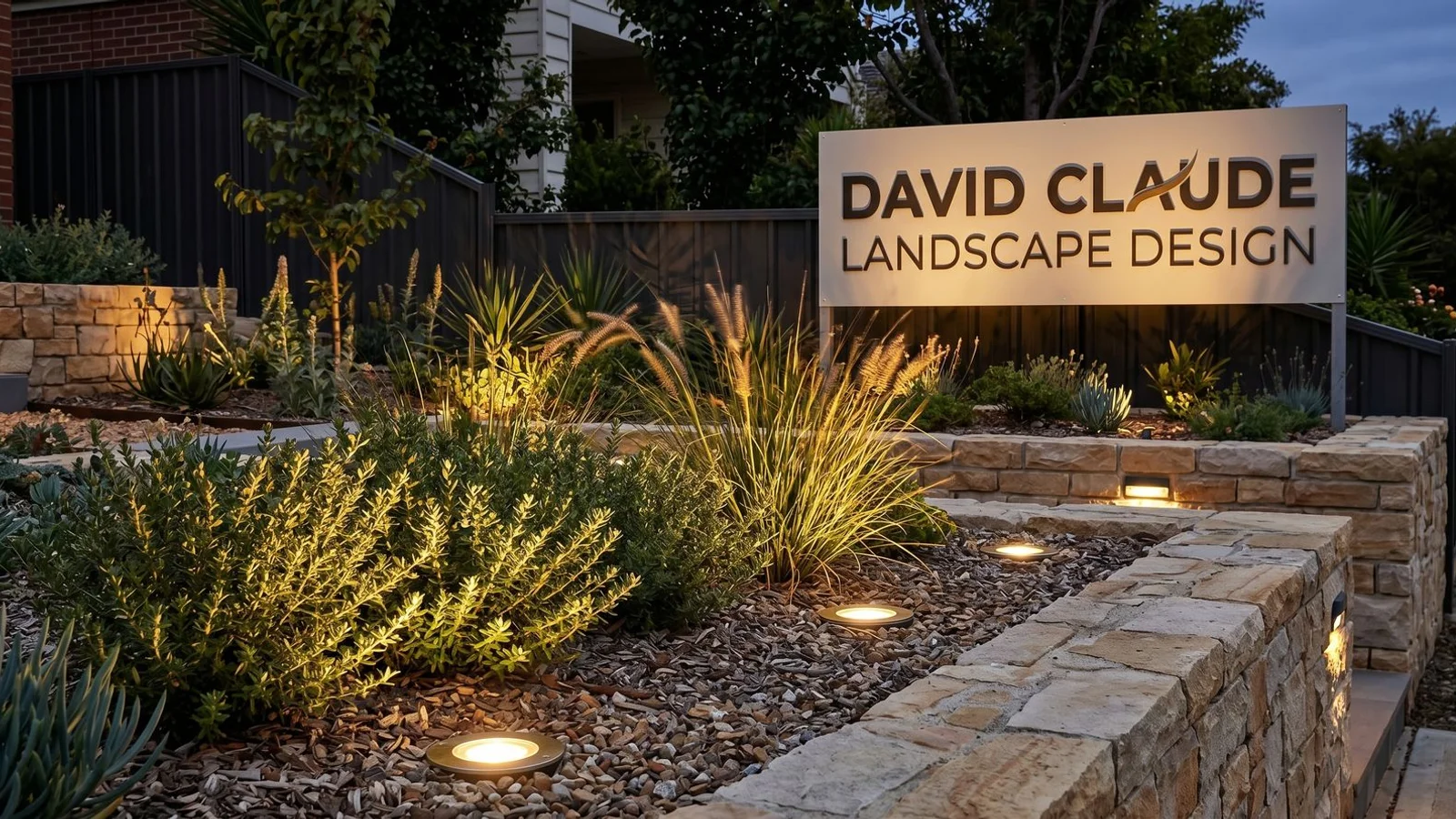
Finding reliable exterior fixtures that survive Melbourne’s unpredictable weather remains a constant challenge for property owners. Our team at David Claude Landscape Design regularly replaces cheap plastic retail lights that have flooded after a single heavy storm.
The dividing line between a temporary glow and a permanent architectural feature always comes down to specific manufacturing standards.
We know that the heavy clay soils and sloping blocks in areas like Kew and Eltham demand exceptionally resilient hardware. Designing led garden lighting melbourne residents can rely on requires careful attention to weatherproofing codes and material science. Let’s look at the exact data behind ingress ratings, examine what defines a true landscape-grade fitting, and walk through the best color temperatures for native plants.
IP ratings explained
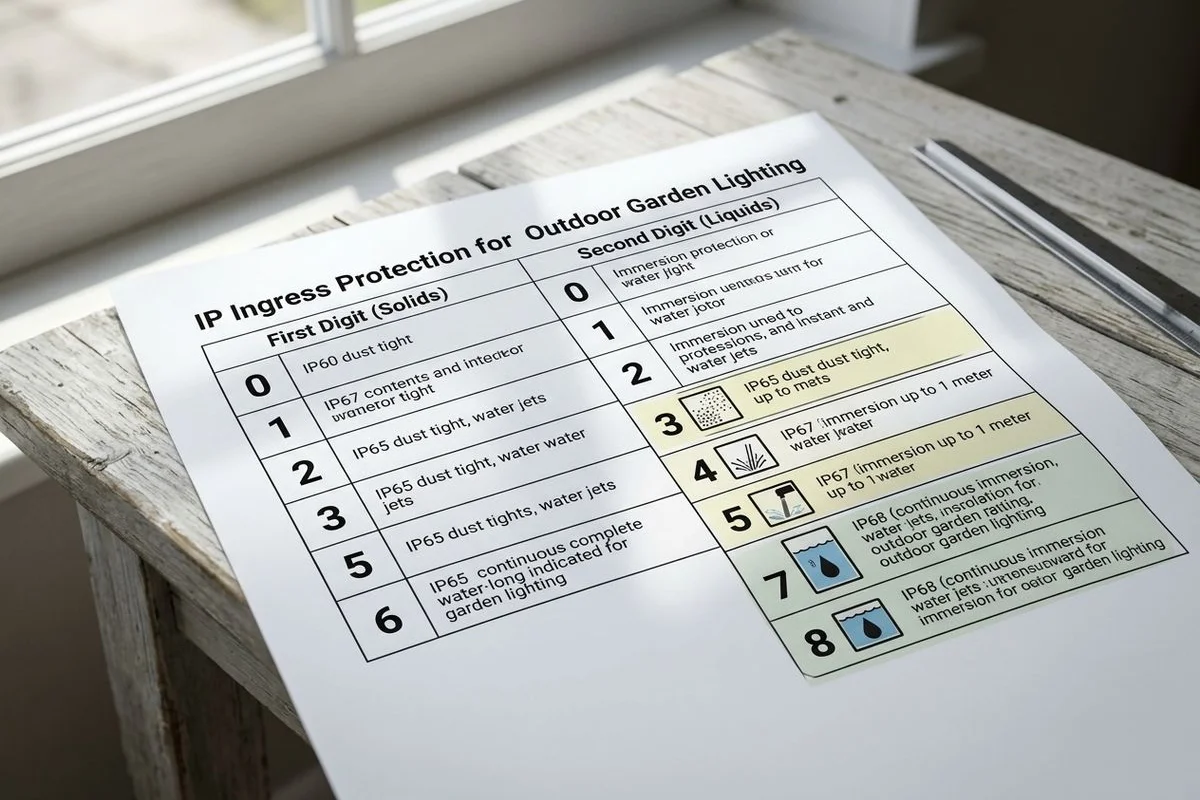
Our experience shows that the IP (Ingress Protection) rating is the most critical two-digit code for predicting water and dust resistance. The first number indicates protection against solid objects like dirt. The second digit reveals how well the fixture handles moisture.
We adhere strictly to the AS/NZS 3000:2018 electrical guidelines for all outdoor installations across Victoria. This specific standard ensures your weatherproof outdoor lights remain completely safe during extreme downpours. A quick breakdown clarifies the exact requirements for different backyard zones:
- IP44: Basic splash protection serves covered patios well. It is not suitable for fully exposed outdoor use despite frequent marketing claims.
- IP65: Dust-tight construction protects against low-pressure water jets. This rating stands as the gold standard for garden lighting in non-submerged Melbourne positions.
- IP67: Complete dust protection meets temporary submersion capabilities. This level is absolutely required for pool-adjacent or irrigation-zone fittings.
- IP68: Continuous submersion ratings allow for deep underwater placement. Ponds and water features demand this specific grade.
Our electricians always insist on IP65 as the absolute minimum for exposed garden beds. Installing anything lower simply invites electrical faults when the heavy rains hit.
What makes a fixture landscape-grade
Landscape-grade fixtures feature premium materials and replaceable internal components to survive decades of harsh exposure. Our installations prioritize high-quality construction over temporary aesthetic appeal. Coastal or bayside environments absolutely require marine-grade 316 stainless steel to prevent rapid salt corrosion.
We see too many cheap plastic fittings degrade under the intense Australian sun. UV-stable lens materials like polycarbonate prevent the severe yellowing that ruins light output. Professional units also use thick silicon or EPDM gaskets at every single joint to block moisture.
Our comparison below highlights the structural differences between commercial units and budget alternatives.
| Feature | Landscape-Grade Fixture | Budget Retail Fitting |
|---|---|---|
| Housing Material | 316 Marine-grade stainless steel or aluminium | Flimsy plastic or cheap composite metals |
| Water Seals | Thick silicon or EPDM gaskets at every joint | Thin rubber rings that crack within months |
| Lens Quality | UV-stable polycarbonate | Standard plastic that yellows in direct sun |
| Serviceability | Replaceable LED modules | Sealed single-use units (throwaway design) |
| Internal Tech | Quality drivers with over-voltage protection | Basic wiring prone to short circuits |
Investing in commercial quality prevents the frustrating cycle of digging up dead lights every spring. Quality drivers with over-voltage and temperature protection keep the internal electronics functioning perfectly.
Colour temperature
We recommend a 2700K to 3000K warm white color temperature for 95% of garden applications. This specific range beautifully highlights natural foliage without washing out the landscape.
Choosing the wrong Kelvin rating completely changes the nighttime atmosphere of a property. Our designers rely on a few strict guidelines for residential projects:
- 2700K (Warm White): This intimate, golden illumination works perfectly for wooden decks and woodland-style garden beds.
- 3000K (Soft White): The natural-appearing light enhances the textures of native plants like eucalyptus and kangaroo paws.
- 4000K+ (Cool White): These harsh tones make residential spaces feel like commercial car parks and should be strictly avoided.
- 2400K (Ultra Warm): While highly atmospheric, this extreme end of the spectrum reads too orange for safe pathway navigation.
Research consistently shows that night-flying bugs are highly drawn to the blue light emitted by cooler globes. We always pair high-quality ip65 ip67 garden lighting fixtures with these warmer bulbs to naturally reduce the number of insects swarming your entertaining areas.
Brand and cost
Landscape-grade fittings typically cost between $80 and $250 each, but they reliably perform for more than 10 years. Our long-term data proves that budget outdoor fittings priced between $20 and $50 almost always fail within two to three years. Over a single decade, the expensive fitting always works out to be the cheaper financial option.
“A quality 10-watt LED fixture completely replaces the light output of an old 60-watt halogen bulb, cutting energy consumption by up to 80%.”
True value is accurately measured in operating hours and energy efficiency. We source modern LED fixtures that are officially rated to last between 25,000 and 50,000 hours. If a homeowner runs their garden lights for eight hours a night, that lifespan translates to roughly 10 to 17 years of continuous service.
The ongoing power savings further justify the initial commercial investment. We invite you to explore your property’s potential and plan your next upgrade with complete confidence. See our garden lighting service for installed cost and fitting specification details.