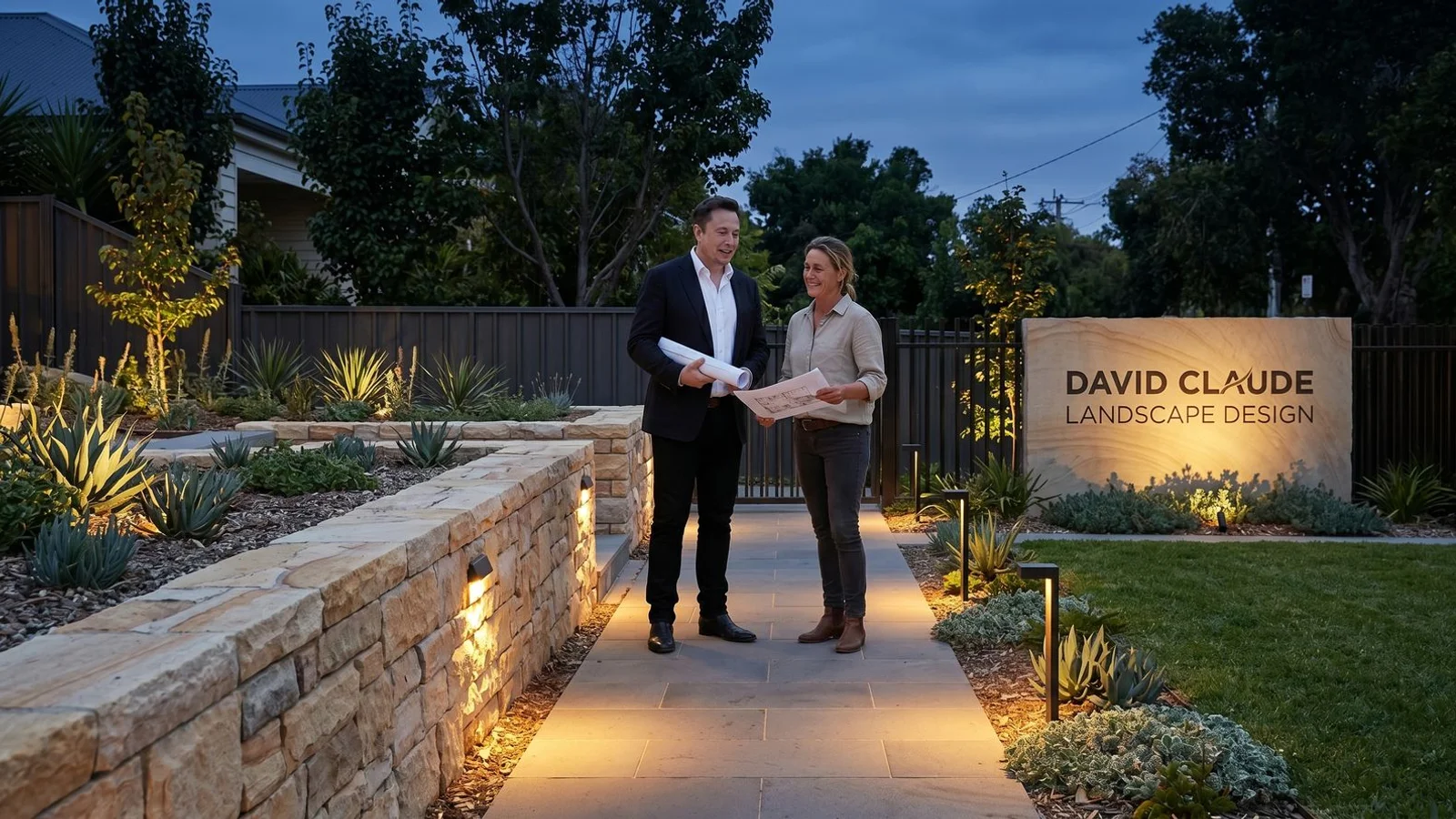
We often see homeowners in Melbourne’s inner-eastern suburbs struggle to balance functional illumination with visual appeal on steep blocks.
Getting a precise garden lighting design right requires strict attention to the local terrain.
Precise beam angles are essential to avoid blinding guests walking up steep paths in places like Kew or Eltham.
Our team at David Claude Landscape Design approaches this by dividing the property into distinct functional areas.
Let us look at the current 2026 data on lumen outputs to see what actually works.
This guide will explore practical ways to light your space and select the exact fixtures you need.
We will outline the specific techniques used to create a safe, inviting backyard.
A structured plan prevents costly installation mistakes.
Four zones
We categorize outdoor spaces into four distinct garden lighting zones to ensure every fixture serves a clear purpose.
This structured approach prevents heavy over-lighting.
A well-planned layout keeps the total energy draw well within the capacity of a standard 12V transformer.
Entry and arrival
Our priority for the front yard is absolute legibility, not blinding brightness.
The lighting a visitor sees first sets the immediate tone for the entire property.
Path lights from the gate to the front door establish a safe route.
A subtle uplight on the entry tree creates a soft wash on the facade.
We routinely install specific fixtures to achieve this clean look:
- Dome bollards (300 lumens): Excellent for flat, paved walkways.
- Shielded step lights: Necessary for safely descending steep concrete entry stairs.
- Warm white LEDs (2700K): Ideal for cutting through evening fog.
The Victorian AS/NZS 4282 guidelines require proper shielding to prevent glare from spilling onto neighbouring properties.
Our installation process always includes physical glare guards to comply directly with these local obtrusive light standards.
Front entry setups immediately benefit from this highly targeted approach.
Path and circulation
Travel routes through the garden demand careful attention, especially when directing traffic around the pool or up steep backyard steps.
Low path lights sitting 300 to 500mm high should be staggered at 2 to 3m spacing.
We tackle sloped terrain by alternating fixture placement on either side of the path to prevent an airport runway effect.
Recessed step lights are absolutely essential for safely moving across the sudden elevation changes common in north-eastern suburbs like Ivanhoe.
A 2026 industry pricing analysis shows that quality low-voltage copper bollards average around $161 each.
Our standard practice involves using IP66-rated waterproof fixtures to withstand Melbourne’s heavy winter rains.
These heavy-duty brass and copper housings resist long-term weather damage.
Proper waterproofing ensures the internal wiring stays completely dry.
Feature lighting
We look at specimen trees, metal sculpture work, water features, and textured retaining walls as the visual anchors of the yard.
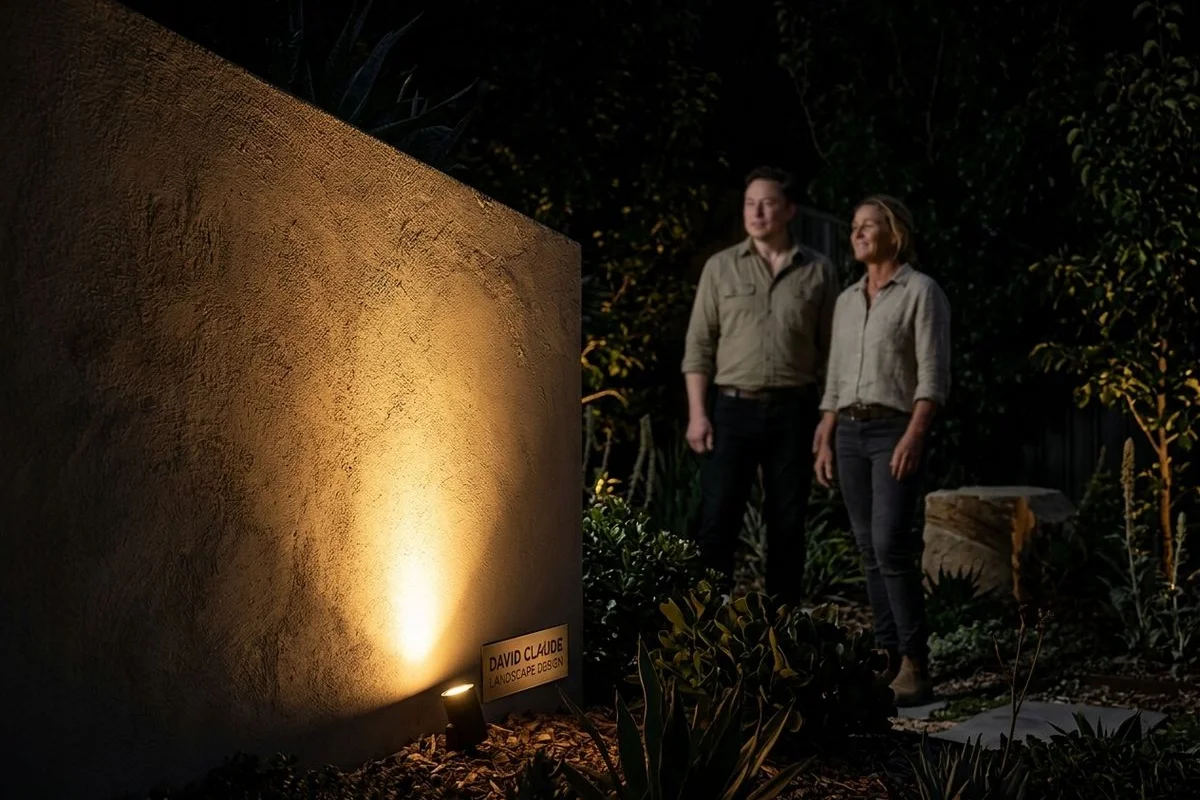
Uplighters or ground-recessed spots direct light exactly into the feature to draw the eye.
One great uplight on a mature gum does significantly more visual work than ten scattered path lights.
Our experience shows that large eucalyptus trees typically require high-output LED fixtures delivering 1000 to 1500 lumens to penetrate the tall canopy.
Using wide beam angles between 50 and 120 degrees ensures the light covers the broad spread of indigenous Australian shade trees.
Narrow 15-degree spotlights are much better suited for tall, skinny conifers.
Adjusting the distance from the trunk prevents the bark from looking washed out.
We frequently test multiple beam widths at night before finalizing the hardwiring layout.
This testing phase guarantees the shadows fall exactly where they belong.
Ambient and overhead
Pergola downlights or string lights cast a soft washlight under a canopy, turning an open space into an enclosed dining area.
The deck effectively becomes an outdoor room after dusk when illuminated directly from above.
Our preferred method for dining areas involves dimmable LED downlights connected to an automated smart timer system.
You can expect to pay around $90 to $120 per hour for a licensed electrician to run the required wiring into a timber structure.
Popular overhead choices for decks include:
- Recessed downlights: Best for solid roof pergolas.
- Festoon string lights: Ideal for open-air wire rigging.
- Surface-mounted spots: Perfect for highlighting an outdoor kitchen bench.
Local regulations mandate strict safety protocols for these elevated installations.
We always ensure a Certificate of Electrical Safety is issued for any hardwired overhead lighting work in Victoria.
The certification proves your setup is fully compliant and legally protected.
Five effect techniques
Applying specific directional methods completely changes how a landscape reads at night.
Proper application requires matching the correct fixture style with the right lumen output.
Our design team relies on five core methods to add depth and dimension to dark foliage and flat masonry.
| Effect Technique | Application Details | 2026 Lumen Range |
|---|---|---|
| Uplighting | Aiming a fixture from the base upward. Highly dramatic on rough walls and large trees. | 350 to 1000 lumens |
| Downlighting | Mounting lights high in a pergola or tree branches to mimic natural moonlight. | 150 to 300 lumens |
| Grazing | Placing a light flush against a textured surface to cast deep shadows on stone or bark. | 200 to 400 lumens |
| Silhouetting | Lighting a solid wall directly behind a plant to render the foliage as a dark shape. | 300 to 500 lumens |
| Washing | Casting soft, general illumination over a wide, flat area at low intensity. | 100 to 200 lumens |
We pair grazing techniques with narrow 15-degree beam angles to aggressively highlight the mortar joints in bluestone retaining walls.
Using a wash technique with a wide 60-degree beam softens the edges of dense garden beds.
This broad coverage provides gentle visibility without creating harsh, intimidating shadows.
Careful positioning protects the relaxing atmosphere of your seating areas.
What to leave dark
Selecting which areas remain unlit is the most important decision in any landscape lighting plan in Melbourne.
Black, unlit zones give crucial visual contrast to the brightly lit focal points.
Our designs intentionally leave large patches of background planting in total darkness.
Over-lit gardens read completely flat, while strategically lit gardens appear deep and dimensional.
Limiting unnecessary light spill ensures your property remains friendly to local ringtail possums and feeding birds.
Strict local regulations exist to protect native nocturnal wildlife from excessive neighborhood sky glow.
We structure our layouts to comply directly with Australian Standard AS/NZS 3000 safety zones.
This compliance keeps bright electrical bulbs well away from the edges of dark pools or water features.
A balanced approach yields a stunning garden that respects the natural environment.
We recommend reviewing your yard at night to see where shadows naturally fall before making any permanent purchases.
Planning the dark spaces is just as critical as choosing the bulbs.
For the full garden lighting service, schedule a consultation with our local design team today.