We constantly see clients struggling to choose between different power systems for their outdoor spaces. This low voltage vs mains garden lighting debate usually pops up right after we finalise a planting layout.
At David Claude Landscape Design, we provide premier landscape architecture and construction services for Melbourne properties with challenging terrain. Sloping blocks and established roots in the eastern suburbs make electrical choices incredibly important.
Our team has found that making the wrong power choice can add thousands to your landscaping bill.
You will want to understand exactly what each system requires before you break ground. Let’s look at the data, outline the rules, and explore exactly which setup works best for your property.
12V low-voltage systems
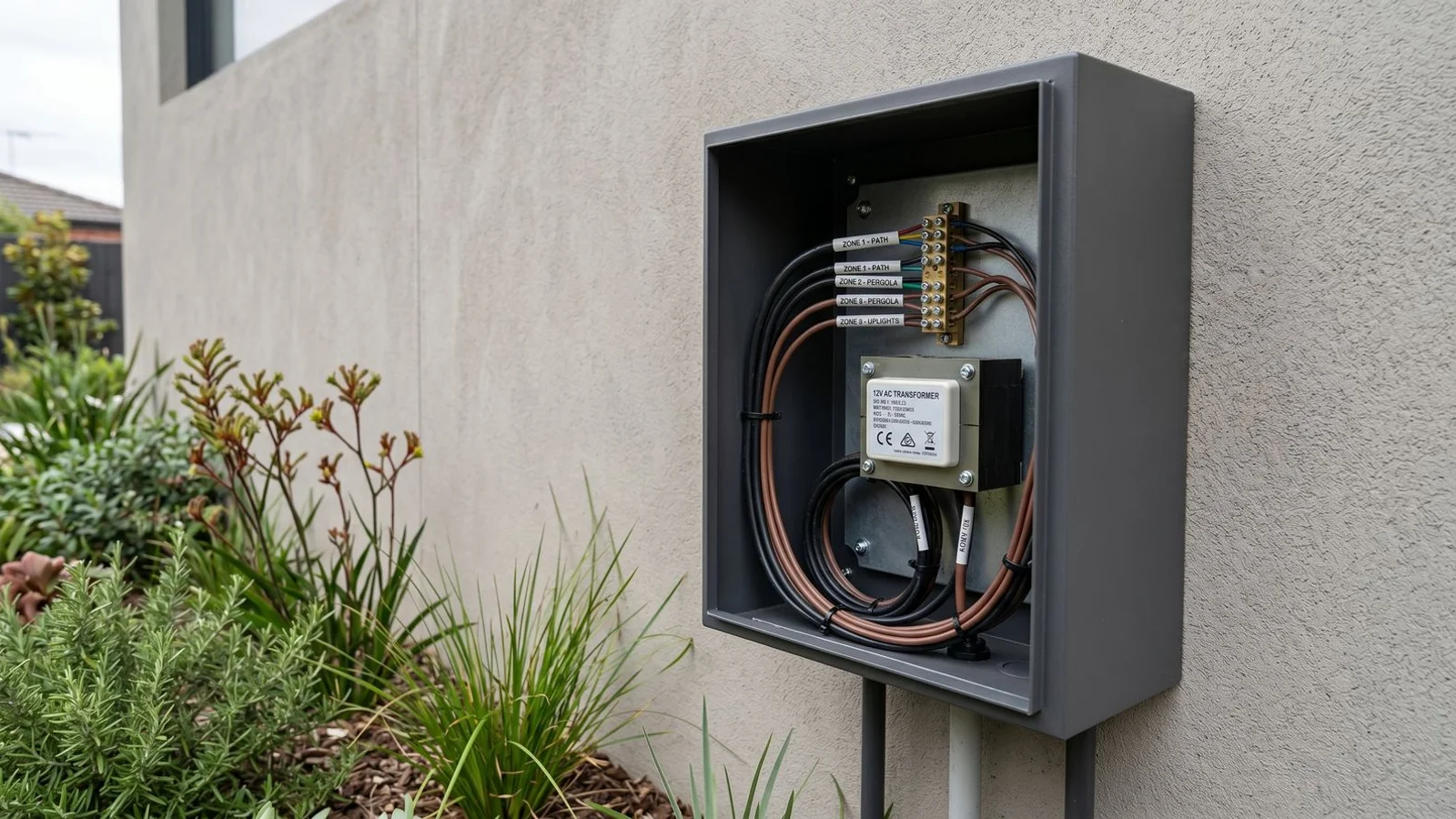
12V low-voltage systems run off a plug-in transformer that reduces your standard house power down to a safe level. These setups represent the standard choice for residential 12v garden lighting because they combine safety with simple installation.
We use these systems extensively across residential projects. Their low power draw makes them highly efficient. Homeowners often wonder why this matters for their specific garden design. A quick comparison makes the choice obvious.
Advantages
You get massive benefits when using low-voltage cables in a standard residential setting.
- Electrically safe to handle: These systems carry no shock risk for humans or pets.
- Can be installed without an electrician: You avoid paying the average $120 hourly rate that Melbourne electricians charge in 2026 for standard residential work.
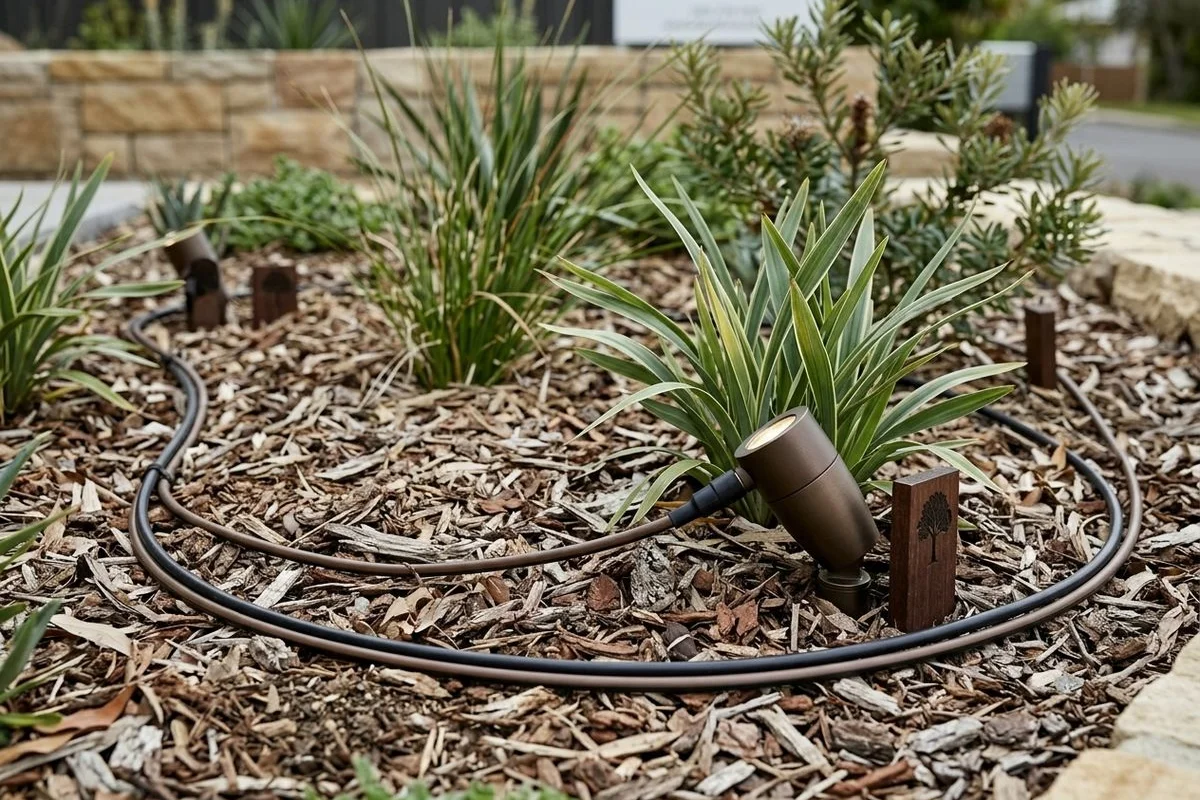
- Cable runs under mulch without conduit: Standard 0.5mm² or 1.3mm² flexible cables sit right on the dirt.
- LED modules run efficiently from 12V: Modern fixtures consume very little energy.
- Fittings easier to reposition: You can simply pick up a spike light and move it as your plants grow.
Disadvantages
We must point out a few limitations before you buy your fixtures. The main issue involves distance and capacity.
- Voltage drop over long runs: This matters beyond 30m of standard cable. Industry guidelines warn that lights near the 75m mark on a single run will look noticeably dim due to voltage drop.
- Transformer needed: You must mount a weatherproof transformer box (like an Aqualux or Havit unit) on a wall near a power point.
- Lower-capacity circuits: Large gardens need multiple zones to prevent overloading a single transformer.
240V mains systems
240V mains systems use the same high-voltage current found in your interior wall sockets. This 240v outdoor lighting configuration provides immense power but requires strict adherence to safety regulations.
We reserve this voltage level exclusively for heavy-duty applications. Heavy equipment demands consistent power delivery across the entire property.
Advantages
Certain landscape features absolutely require direct mains power to function properly.
- No voltage-drop issue over long distances: Power remains constant whether the cable runs 10 metres or 100 metres.
- Higher power availability: You can run hundreds of bright lights on a single circuit.
- Suitable for high-draw equipment: Pool pumps, large feature pumps, and heating units need this level of power.
Disadvantages
Our crews avoid using high voltage for simple lighting because the compliance rules are incredibly strict. Digging deep trenches on sloped Melbourne blocks is very expensive.
- Electrically dangerous in damp environments: High voltage combined with water poses a serious fatal risk.
- Requires licensed electrician for all work: You cannot legally modify or repair these systems yourself.
- Cable must be in conduit, buried to depth: The Australian Standard AS/NZS 3000:2018 explicitly requires 240V cables to sit inside heavy-duty orange PVC conduit buried at least 500mm deep in residential gardens.
- Higher install cost: Hand-trenching 500mm through established tree roots in the eastern suburbs will cost thousands in labour alone.
- Fittings more complex, heavier: The light housings must be heavily sealed and grounded.
Default recommendation
We recommend 12V low-voltage systems for garden lighting in almost every residential scenario. The safety, installation cost savings, and flexibility advantages are simply too significant to ignore when choosing between low voltage vs mains garden lighting.
Mains voltage should stay dedicated to pool equipment, feature pumps, and anything else that actually needs massive power.
You will save money and sleep better knowing your garden is completely safe.
For professional installation help on your property, check out our garden lighting service.