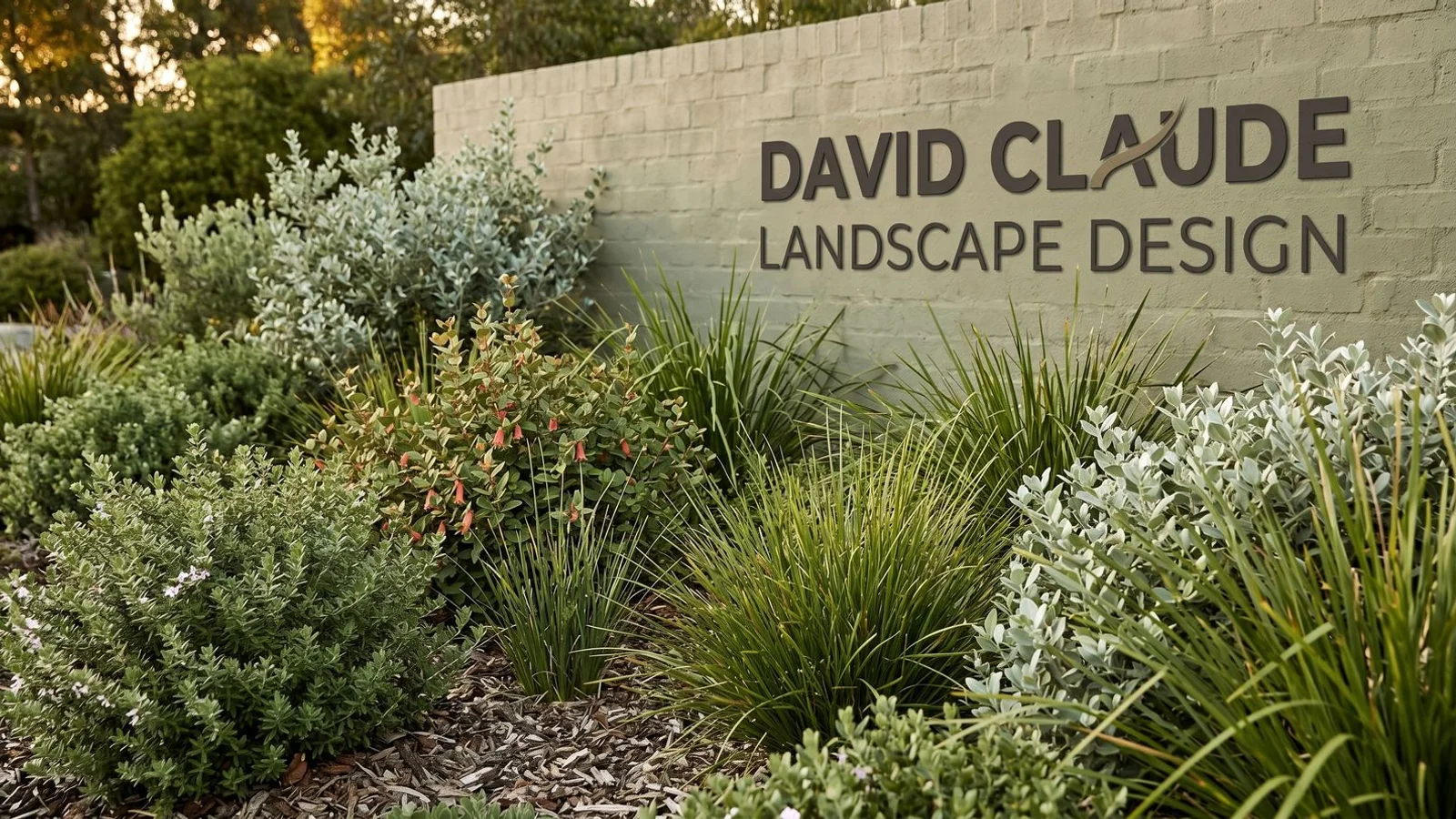
We know that finding the best drought-tolerant plants for Melbourne gardens usually involves a tough battle against dense clay soil and sloping terrain. The reality is that the local microclimate has been exceptionally challenging lately.
A recent 2026 Bureau of Meteorology report shows rainfall dipping to 73% of the long-term average in parts of Greater Melbourne. Our team at David Claude Landscape Design has spent decades developing landscape architecture and construction solutions specifically for these exact conditions.
Choosing the right flora means finding species that survive hot summer dry spells and winter waterlogging. That 600mm annual rainfall mark is really the dividing line between standard plants and the truly resilient ones.
We have structured this guide to explore the essential native foundation plants, the ideal Mediterranean companions, and the living groundcovers that replace traditional mulch.
Core native palette
We consider the core native palette to be the structural foundation of a resilient garden. These specific water wise plants in Melbourne are chosen because they actively thrive in heavy clay soils and withstand long periods without water.
A 2026 update on local planting confirms that species like the Silver Banksia provide critical winter nectar for native birds while handling alkaline soil stress. Our experience shows that breaking this palette down into functional groups makes planting much easier.
The species below highlight the specific growth habits and benefits of our top recommendations. Many of these plants require little more than a yearly prune to maintain their shape.
Structural Shrubs and Trees
| Plant Name | Typical Height | Key Benefit for Clay and Slopes |
|---|---|---|
| Banksia marginata (Silver Banksia) | 2.0m to 5.0m | Frost-hardy evergreen tree; attracts birds by filling the winter nectar gap. |
| Banksia integrifolia (Coastal Banksia) | 4.0m to 15.0m | Extremely tough structural tree; thrives in poor, sandy, or clay soils. |
| Westringia fruticosa ‘Jervis Gem’ | 1.0m to 1.5m | Neat grey ball shrub with white flowers; highly salt and drought-tolerant. |
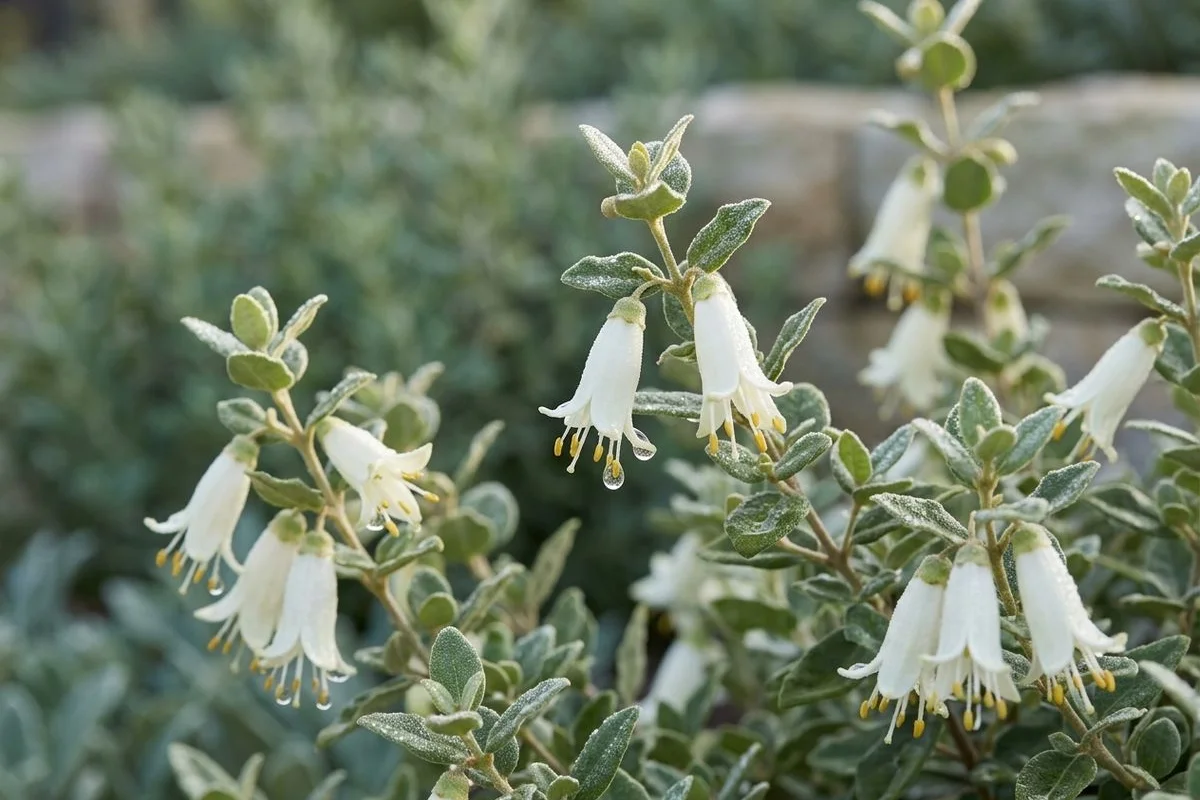
| Correa alba (Coastal Rosemary) | 1.0m to 1.5m | Features grey-green foliage and white tubular flowers; excellent structural border. |
Accent Shrubs and Flowering Plants
- Callistemon ‘Little John’: This compact dwarf bottlebrush reaches about 1.0 metre tall and features striking red blooms. It is highly resistant to Phytophthora root rot, which is a common issue in wet clay.
- Correa reflexa: A shade-tolerant native fuchsia that produces distinct red bell-shaped flowers. It adapts well to tricky transition zones in the garden.
- Grevillea ‘Lady O’: A low-growing, bird-friendly shrub that provides long-flowering red blooms throughout most of the year.
Grasses and Strappy Accents
- Lomandra ‘Tanika’: A fine-leaved native grass that is exceptionally hardy. It tolerates frost, heat, and heavy clay without complaint.
- Dianella tasmanica: Features strappy foliage, purple flowers, and ornamental blue berries. It thrives even in the deep shade under existing gum trees.
- Poa ‘Eskdale’: A native tussock grass with a beautiful silver-green hue that adds movement to the landscape.
- Dichondra repens: A native lawn alternative groundcover that creates a lush, green carpet in lightly shaded areas.
Mediterranean exotics that pair
We pair Mediterranean exotics with native species because they share identical water and drainage requirements. These low water garden plants originate from regions with similarly hot dry summers, making them perfect companions for Melbourne gardens.
Incorporating these species provides seasonal bursts of colour and texture when many native plants are dormant. Our planting strategy uses these exotics to add structural variety and pollinator support without increasing the watering schedule.
The high oil content in the leaves of these plants is a natural evolutionary trait to prevent water loss. This feature also gives them a wonderful fragrance that enhances the sensory experience of your yard.
Scented Shrubs and Structural Trees
- Olea europaea (Olive Tree): A structural small tree that acts as a brilliant, low-water centrepiece for any courtyard or front yard.
- Lavandula dentata and L. x intermedia (Lavender): These summer-silver plants flower for most of the year in Australia. They attract bees and provide a classic fragrance.
- Rosmarinus officinalis (Rosemary): Available in upright or prostrate forms, this herb is virtually indestructible once established in well-drained soil.
- Teucrium fruticans: An excellent option for silver-leaved hedging that tolerates heavy pruning and dry conditions.
Perennials for Colour Contrast
- Perovskia atriplicifolia (Russian Sage): This tough perennial produces a late-summer purple haze. It throws up lavender-blue spire flowers from November to April and ignores extreme heat.
- Salvia nemorosa and S. leucantha: Purple and blue flowering salvias that provide striking vertical accents. They contrast beautifully with the silver foliage of native grasses.
Groundcovers for mulch-replacement
We strongly advocate for living groundcovers over traditional mulch because they actively stabilize topsoil on steep blocks. A dense mat of creeping foliage dramatically reduces soil evaporation and outcompetes weeds during the growing season.
Using these low-growing plants transforms bare dirt into a highly functional green layer. Our clients find that replacing woodchips with these spreading natives cuts long-term maintenance in half.
The varieties below are proven to handle the difficult combination of compacted clay and low summer rainfall. Proper spacing during initial planting ensures they form a continuous carpet within their first two years.
Top Groundcover Recommendations
| Plant Name | Typical Spread | Primary Benefit |
|---|---|---|
| Myoporum parvifolium (Creeping Boobialla) | Up to 3.0m wide | Fast-spreading weed suppressant; acts as its own living mulch. |
| Scaevola albida (Native Fan-Flower) | 1.0m to 1.5m | Provides year-round blue flowers; handles difficult transition zones. |
| Grevillea ‘Prostrate Gold Cluster’ | 1.0m to 2.0m | Resilient groundcover that attracts nectar-feeding birds. |
| Thymus serpyllum (Creeping Thyme) | 0.5m to 1.0m | Fragrant foliage; extremely low-water requirement for rockeries. |
We want your new garden to thrive for years to come. Proper planning is the key to creating a landscape that survives the tough local conditions.
For the planting-philosophy foundation, see our complete resource on sustainable drought-tolerant landscaping. Our landscape architecture experts are always ready to help you implement these designs.
You can easily schedule a consultation through our garden planting service page to get started.