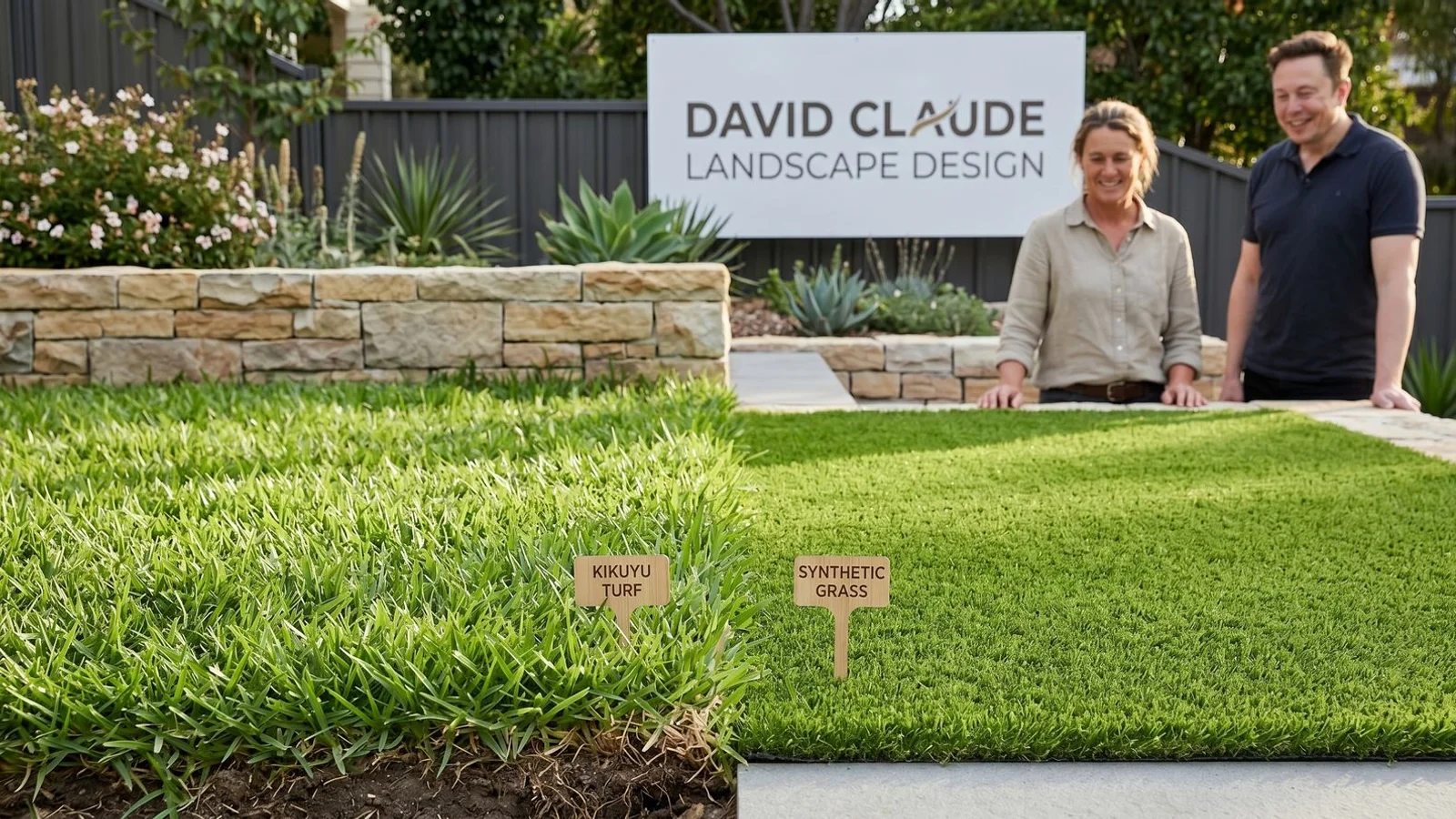
We speak with property owners every week who feel torn between the low maintenance of plastic and the classic feel of real grass.
Choosing the right surface impacts your home’s microclimate, maintenance budget, and overall livability.
We have noticed the natural turf vs synthetic grass debate has shifted heavily recently.
New local studies regarding heat retention and waste are changing the way people view these outdoor materials.
Let’s look at the current data for Melbourne homes and walk through exactly when each option makes practical sense.
Natural turf
Our clients often ask about the financial commitment required for real grass.
Sir Walter buffalo turf currently costs around $12 to $21 per square metre just for supply in 2026.
We factor in another $18 to $34 per square metre for professional installation and site preparation.
A living lawn provides a massive cooling effect for your property.
We always evaluate the temperature benefits of natural ground cover for urban properties.
A 2022 Western Sydney University study found that irrigated natural turf stays between 34°C and 42°C on hot summer days.
This surface actually cools the immediate surrounding area by nearly 5°C compared to concrete or bitumen.
We must also plan for the ongoing resource requirements.
Melbourne summers demand about 15 to 32 litres of water per square metre each week to keep a standard lawn healthy.
You will need to commit to weekly mowing during the active growing season.
Advantages of Real Grass
- Cool underfoot, making it pleasant to lie on during summer.
- Biologically active, which provides excellent value for insects, worms, and local wildlife.
- Renewable, as it can be replaced, re-sprigged, and repaired.
- More affordable to install upfront, with sir walter buffalo turf serving as the Melbourne default.
Disadvantages and Maintenance
- Watering requirements sit around 15 to 32 litres per square metre per week in summer.
- Mowing requires weekly attention during the growing season.
- Weed and pest management demands consistent monitoring.
- Grass fails in heavy shade, requiring alternative landscaping solutions.
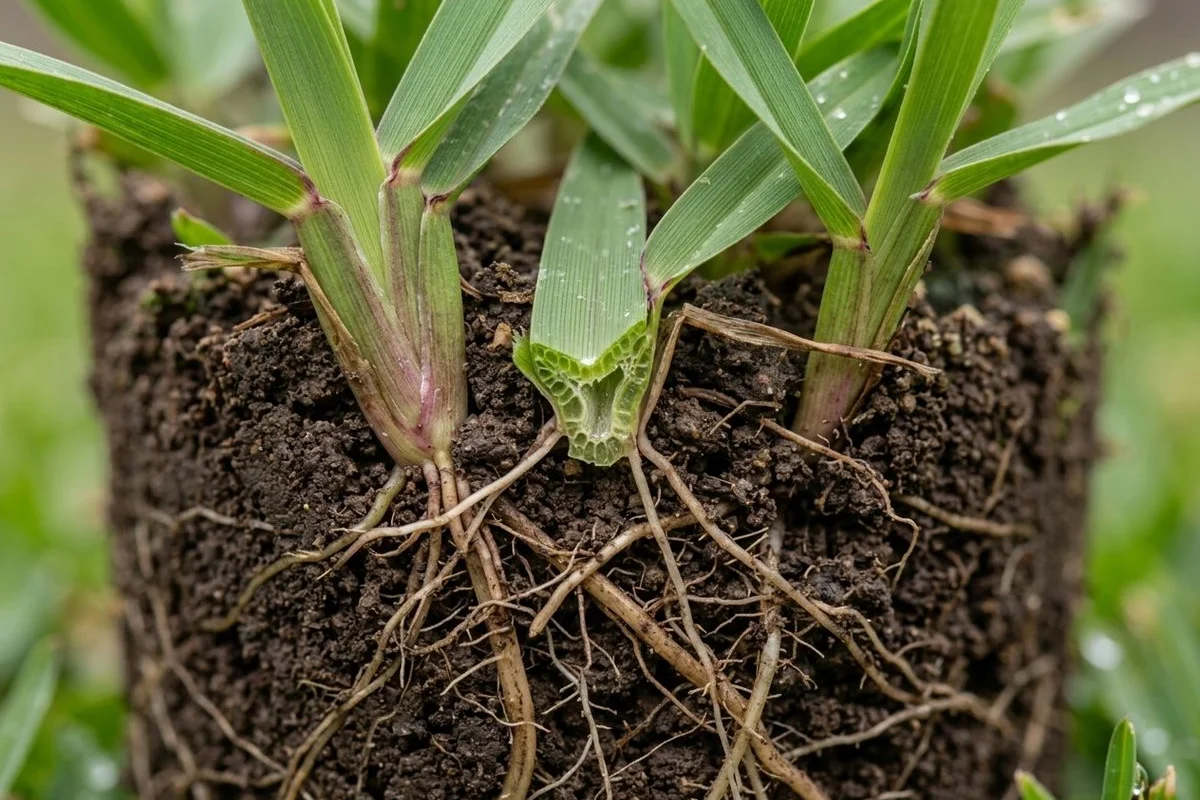
Synthetic grass
We understand the strong appeal of a surface that never needs a mower.
Synthetic grass melbourne installations skip the watering entirely and stay green all year long.
Our landscaping teams frequently use it in heavy shade or high-traffic zones where natural roots fail.
You need to know the heat metrics before committing to a plastic surface.
We closely track thermal data from local university research to advise clients accurately.
The same 2022 Western Sydney University study recorded synthetic surfaces reaching an astonishing 84.5°C on a 34°C summer day.
This intense heat makes artificial lawns unusable for kids and pets during peak sunlight hours.
Our design team also discusses the end-of-life disposal issues with every client.
Federal waste laws passed in 2020 restrict plastic exports out of Australia.
The Australian Microplastic Assessment Project (AUSMAP) reports that breakdown materials like rubber crumb infill often wash into local stormwater systems.
Advantages of Artificial Surfaces
- Zero watering required.
- No mowing needed at any time of year.
- Looks the same year-round regardless of the weather.
- Works perfectly in heavy shade where natural turf fails.
- High-traffic durability prevents worn paths.
Disadvantages and Limitations
- Extremely hot on full-sun surfaces, often exceeding 60°C.
- Displays a plastic aesthetic at close range.
- End-of-life disposal creates a major landfill issue after 12 to 15 years.
- Higher initial cost, sitting between $80 and $150 per square metre installed.
Side-by-Side Surface Comparison
| Feature | Sir Walter Buffalo Turf | Premium Synthetic Grass |
|---|---|---|
| Installed Cost | $30 to $55 per square metre | $80 to $150 per square metre |
| Peak Summer Heat | 34°C to 42°C | 60°C to 84.5°C |
| Lifespan | Indefinite with care | 12 to 15 years |
| Weekly Summer Water | 15 to 32 litres per square metre | None |
When we specify each
We match the surface material directly to how you actually use your outdoor space.
Finding the right balance prevents expensive mistakes and frustrating maintenance down the road.
- Natural turf: Excellent for kids’ play zones, main garden lawns, traditional aesthetic designs, and moderate-use areas.
- Synthetic grass: Perfect for low-water outdoor rooms, pool surround play areas, shaded courtyards, pet-heavy zones, and high-traffic entrances.
Both options can integrate with the broader garden planting service alongside planted zones.
We design these spaces to flow together naturally.
Conclusion
We know that selecting a ground cover feels like a massive commitment.
The natural turf vs synthetic grass decision comes down to your budget, your shading, and how much time you want to spend maintaining the yard.
Reach out to David Claude Landscape Design today to schedule a site consultation for your Melbourne property.