Natives can look contemporary, with the right technique
We often hear from clients that using traditional Australian natives in gardens feels too messy for contemporary homes. The old-school approach of mixing Grevilleas with bark mulch looks nostalgic rather than sharp.
It is a common misconception that indigenous flora cannot deliver clean lines.
Our team knows that climate-responsive design significantly reduces water usage. Planning a Victorian native plants modern garden layout requires specific techniques, but the result is both stylish and highly sustainable. Let’s look at the exact methods we use to update these spaces. For practical examples of this approach, review our garden planting service.
Three modernist techniques
Applying native plants contemporary design principles relies heavily on geometric precision. We implement three distinct strategies to transform natural scrub into sharp architectural features.
Mass planting
Planting one single species across a defined zone creates immediate visual impact. Tight spacing forces the foliage to grow together into a solid architectural form.
Our go-to choice for Melbourne’s north-eastern suburbs is Westringia ‘Jervis Gem’. This compact shrub thrives in the heavy clay soils of areas like Eltham and Ivanhoe.
When you mass-plant it as a geometric hedge, the shrub reads as green architecture rather than a simple border. Another excellent option is Lomandra ‘Tanika’. This resilient grass provides a rolling horizontal texture that suits steep sloping blocks perfectly.
According to Yarra Valley Water’s 2026 planting guidelines, grouping drought-resistant grasses dramatically reduces soil evaporation. Our landscape designers specify exact grid spacing to ensure full ground coverage within twelve months.
Restrained palette
Limiting your plant selection to a maximum of three to five species per zone is critical. Native plots that look untidy usually suffer from too much variety competing for attention.
We strongly recommend establishing a clear colour scheme before purchasing any stock. A restrained palette allows each individual species to stand out clearly against your property.
Horticulturalists at the Melbourne Royal Botanic Gardens suggest using a low-phosphorus product like Troforte M Native fertiliser. This specific formula safely nourishes sensitive Victorian species without causing toxicity. Feeding your select few plants properly ensures they maintain a lush appearance year-round.
Architectural specimens
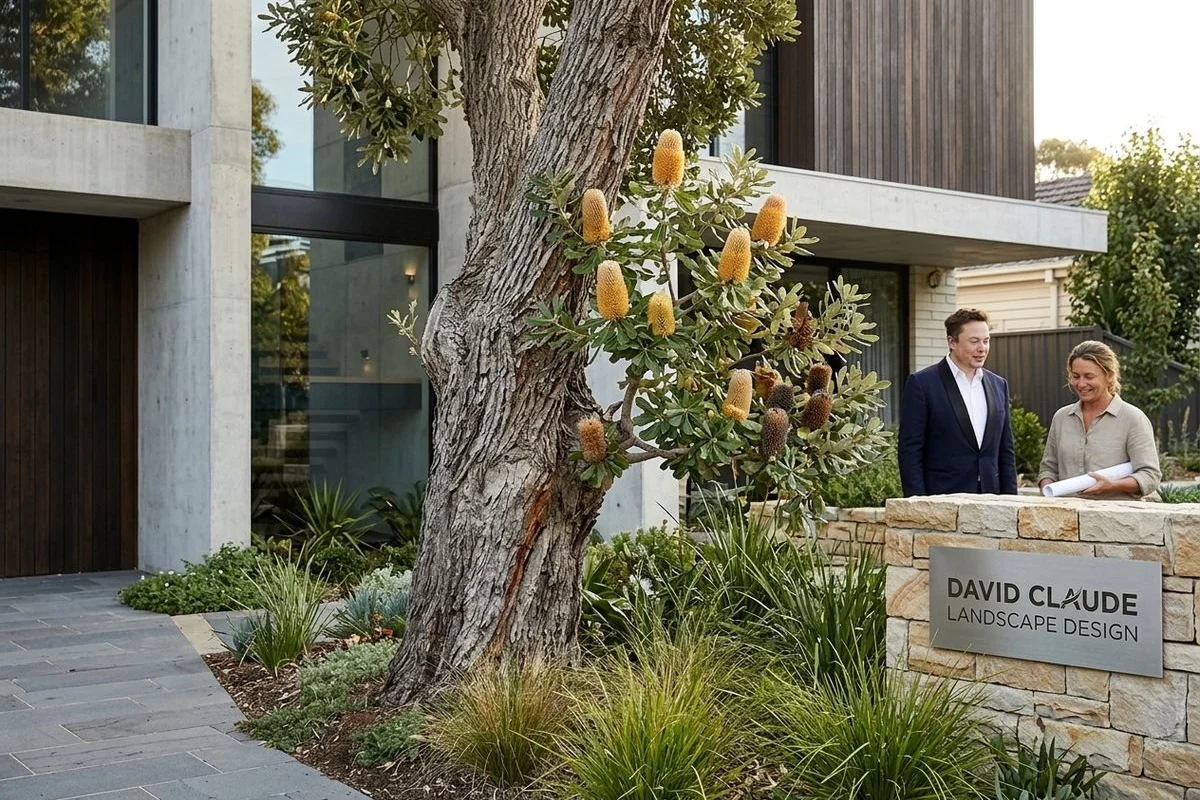
Planting a single striking tree against a plain wall creates a confident focal point. This technique highlights the unique structure of Australian flora.
Our architects frequently use specific structural trees for this exact purpose:
- Banksia integrifolia for its rugged coastal texture.
- Eucalyptus leucoxylon to draw the eye upwards.
- Xanthorrhoea (grass trees) for incredible sculptural value.
Purchasing mature specimens adds instant character to a newly built home. We always position these statement pieces beside hardscape elements to maximise their dramatic silhouettes. This high-contrast approach immediately modernises the entire yard.
Pairing with modern architecture
Your home’s exterior materials must dictate your final plant selection. Matching foliage colours to building textures creates a cohesive and highly planned aesthetic.
We always map the primary building finishes before specifying the vegetation. This step guarantees the organic elements complement the structural ones perfectly.
The table below outlines the most effective combinations for contemporary properties in Melbourne. Using these pairings ensures your landscaping feels like an extension of the architecture.
| Exterior Material | Foliage Profile | Specific Native Recommendation | Visual Effect |
|---|---|---|---|
| Concrete walls | Silver and blue-green | Westringia, Eucalyptus | Complements the cool, industrial tone. |
| Corten steel | Warm, fine-textured | Poa, Austrostipa | Picks up and highlights the rich rust colours. |
| Rendered masonry | Dense, structured | Correa, Acacia cognata | Creates a crisp green screen against flat surfaces. |
| Natural timber | Soft, ornamental | Lomandra, Dianella | Softens the transition from built structure to earth. |
Taking action on these design principles will completely change how your property feels.
Our team recommends starting with a clear assessment of your soil and existing architecture. You can easily build a stunning Victorian native plants modern garden that thrives in local conditions. Book a consultation today to begin planning your new outdoor space.