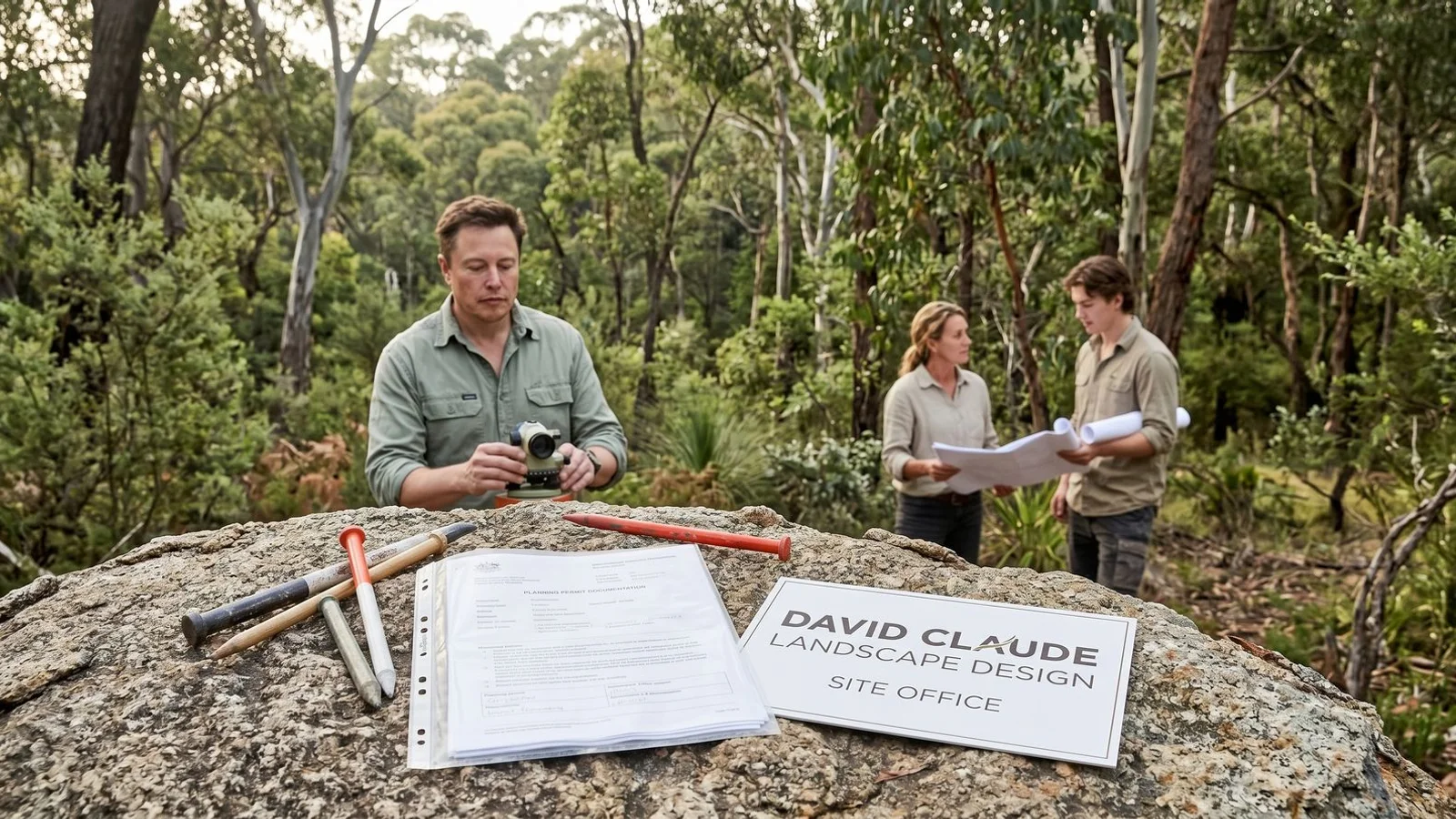
We often find that the steep terrain of Melbourne’s north-eastern suburbs presents a unique challenge for homeowners. Those stunning hillside views usually require serious earthworks and strict council regulations.
Our team knows that securing the right approvals is crucial before moving a single bucket of soil. The 1-metre cut or fill mark typically separates a straightforward project from one requiring extensive documentation.
We will break down exactly what triggers these council reviews in Nillumbik.
This guide outlines how specific overlays affect your property and the exact steps required to get your nillumbik steep block permits approved.
When earthworks trigger planning approval
We always check the natural ground level changes first when assessing a sloping site in Nillumbik. A planning permit is typically required if your earthworks alter the ground level by more than 1 metre over a significant area, or involve more than 100 cubic metres of cut or fill.
Our designers assess retaining walls together with the earthworks if they contribute to that overall ground change. Overlays can drastically reduce these volume and height thresholds.
Pro Tip: We highly recommend booking a free pre-application meeting with Nillumbik Shire Council planners. This simple step clarifies the exact requirements for your address and prevents frustrating application delays.
We see the Significant Landscape Overlay (SLO) trigger assessments for minor works that would be completely exempt in unoverlaid residential zones. The Bushfire Management Overlay (BMO) adds another layer of rules, requiring a careful balance between maintaining a defendable space around the home and preserving native vegetation.
Our project managers factor current statutory fees into your initial budget planning. For a single dwelling project in 2026, the Nillumbik earthworks permit application fees range between $226.90 and $1,462.50 depending on your total development cost.
Significant Landscape Overlay in practice
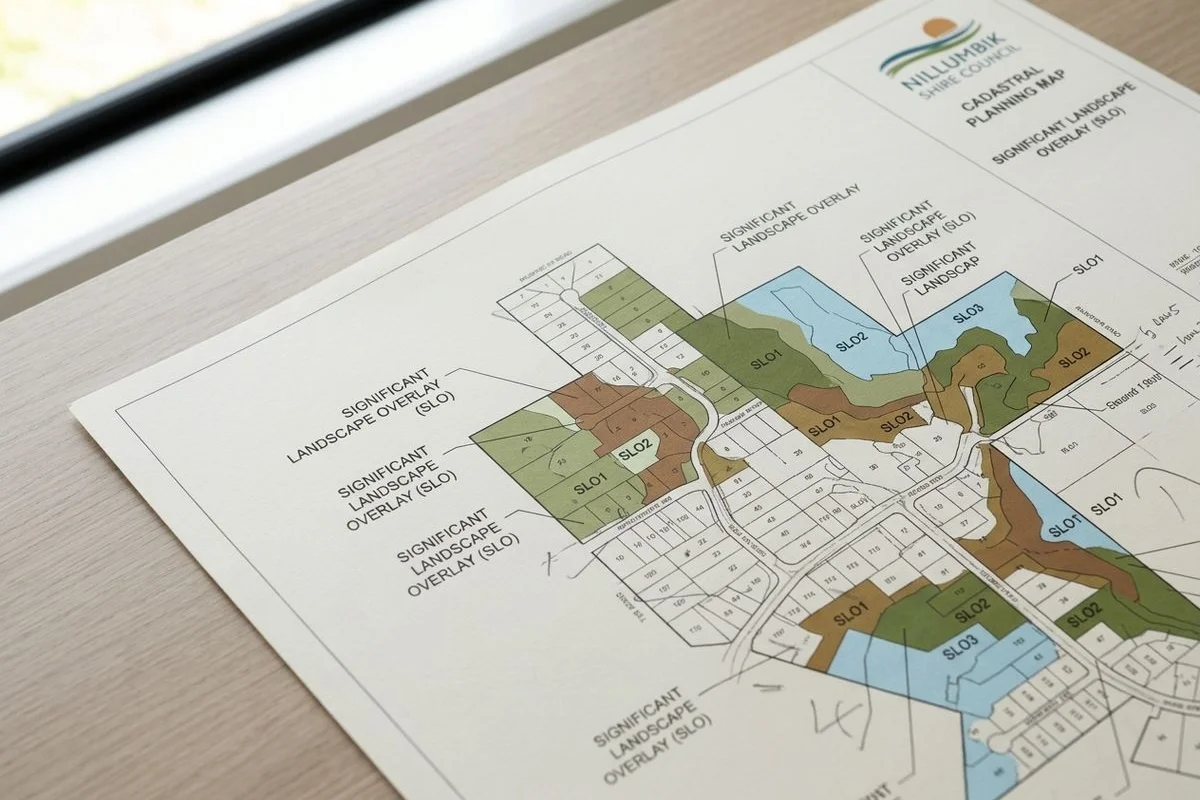
We regularly work within the SLO, which covers much of Eltham, Research, Diamond Creek, North Warrandyte, and parts of Plenty. The overlay protects the unique landscape character, specifically focusing on native vegetation, canopy trees, and the beloved bush-suburbia feel.
Our planning applications for SLO land always include a detailed vegetation plan. Nillumbik strictly defines a “substantial tree” as any vegetation with a trunk circumference greater than 0.5 metres at 1 metre above ground level, or a height exceeding 6 metres.
We adjust our approach based on the specific significant landscape overlay permit schedule applying to your property. Different zones enforce unique rules to protect the local environment:
- SLO1 (Eltham Town Centre): Focuses on integrating built environments with canopy trees.
- SLO2 (Bush and Semi-Bush): Protects the wider residential tree canopy.
- SLO3 (Bush Garden): Emphasises the relationship between buildings and native understorey plants.
Our team prepares the required statement demonstrating consistency with the overlay intent as part of our core design scope. The council offers a Native Vegetation Offset Program, allowing homeowners to purchase offset credits if tree removal is absolutely necessary.
We design the vast majority of projects within these constraints without triggering a refusal. The overlay shapes the project layout rather than completely preventing the earthworks you need.
Retaining-wall and surcharge triggers
We always remind clients that retaining walls above 1 metre from finished ground generally trigger a building permit governed by the Victorian Building Authority (VBA). Lower walls can easily trigger planning consideration on SLO or BMO land if they involve vegetation removal or are highly visible from the street.
Our engineers pay special attention to the location of your walls relative to the property boundaries. A building permit is mandatory for any retaining wall located within 1 metre of a boundary, or if it supports the soil of a neighbouring property, regardless of how short the wall is.
| Wall Condition | Planning Permit Likely? | Building Permit Required? |
|---|---|---|
| Under 1m, no surcharge, away from boundary | No (unless in SLO/BMO) | No |
| Over 1m in height | Yes (if earthworks > 100m³) | Yes (Mandatory) |
| Under 1m, near boundary or with surcharge | Yes | Yes (Engineer required) |
We must also calculate the impact of surcharge loading on your new structures. Surcharge loading occurs when extra weight, like a parked vehicle, a driveway, or a new shed, sits on the fill above the wall.
Our structural designs account for this extra pressure from day one. This additional load essentially adds to the wall’s functional height and can quickly move an otherwise-exempt structure straight into permit territory.
How we prepare documentation
We handle the entire documentation package required for nillumbik steep block permits to keep your project moving smoothly. A complete and accurate submission is the best way to avoid frustrating requests for further information from the council planner.
Our standard application package includes several mandatory items alongside the basic site plans. Nillumbik Shire Council specifically requires a recent Certificate of Title from Landata, dated within the last three months, to verify any registered covenants on your land.
We prepare the following key documents for your submission:
- Site plan with existing and proposed levels
- Cross-section drawings through the key cut and fill areas
- Structural engineering drawings for retaining walls
- Vegetation plan showing existing canopy and any proposed removals
- Statement of effects addressing SLO and BMO where applicable
- Current Certificate of Title and formal Arborist reports
This comprehensive checklist ensures every technical detail is covered. Our team lodges the application, responds to planner queries, attends to any additional information requests, and sees the permit through to issue.
For more on general permit logic across the three LGAs, see the general overview. We outline the physical construction side of these steep-site projects online. To see exactly how this work comes to life and start planning your project, view our sloping block service.