Water in the right place, at the right time
Have you ever watched your beautiful new garden wilt during a scorching 40-degree Victorian summer?
We know exactly how frustrating that feels, especially on the sloping clay blocks of Melbourne’s north-eastern suburbs. A garden without reliable irrigation systems spends its first two summers looking stressed.
This constant game of catch-up drains your time and wallet. Our team at David Claude Landscape Design treats smart watering as an absolute necessity.
The right setup is the literal difference between your new planting establishing or dying. We design every layout to match the specific needs of your terrain rather than forcing a generic solution.
Smart controllers and moisture sensors can take over the daily thinking for you. Let’s look at the exact steps to build a reliable watering setup for your home.
System types
Choosing the correct delivery method ensures water reaches the root zone without waste. We rely on three main approaches depending on your planting layout.
Drip irrigation
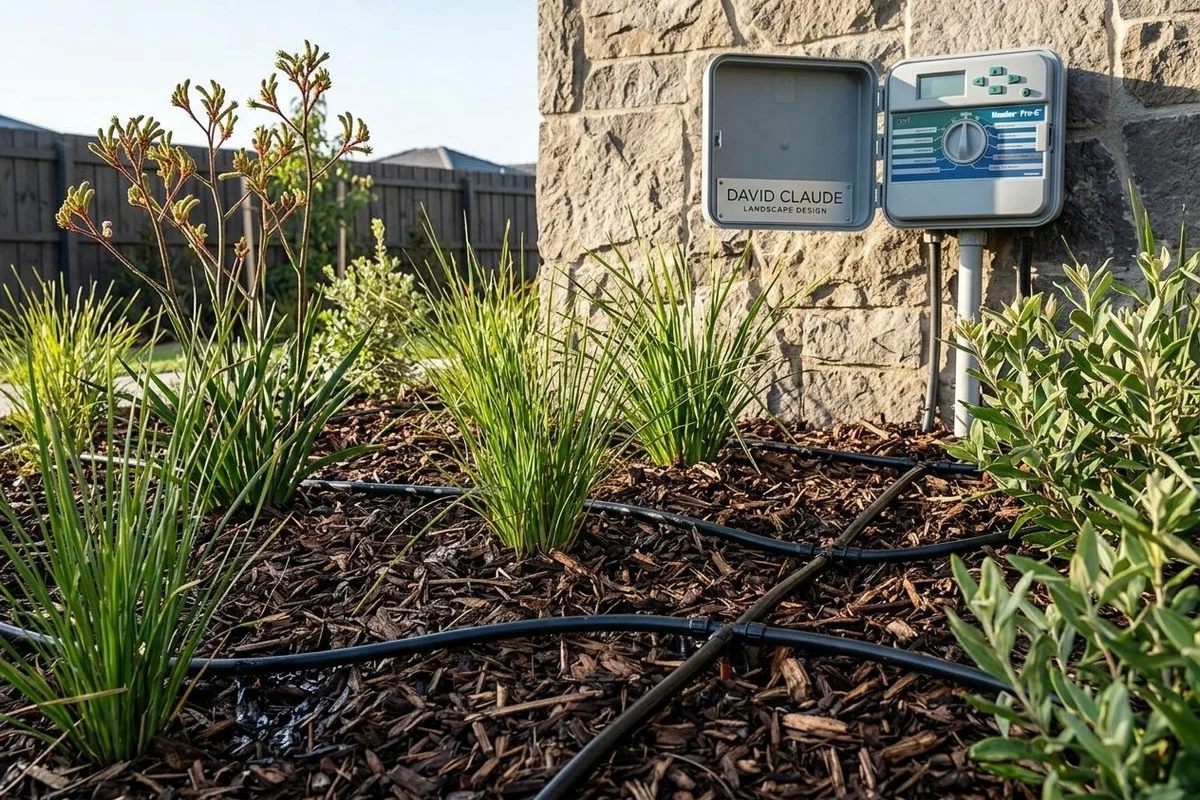
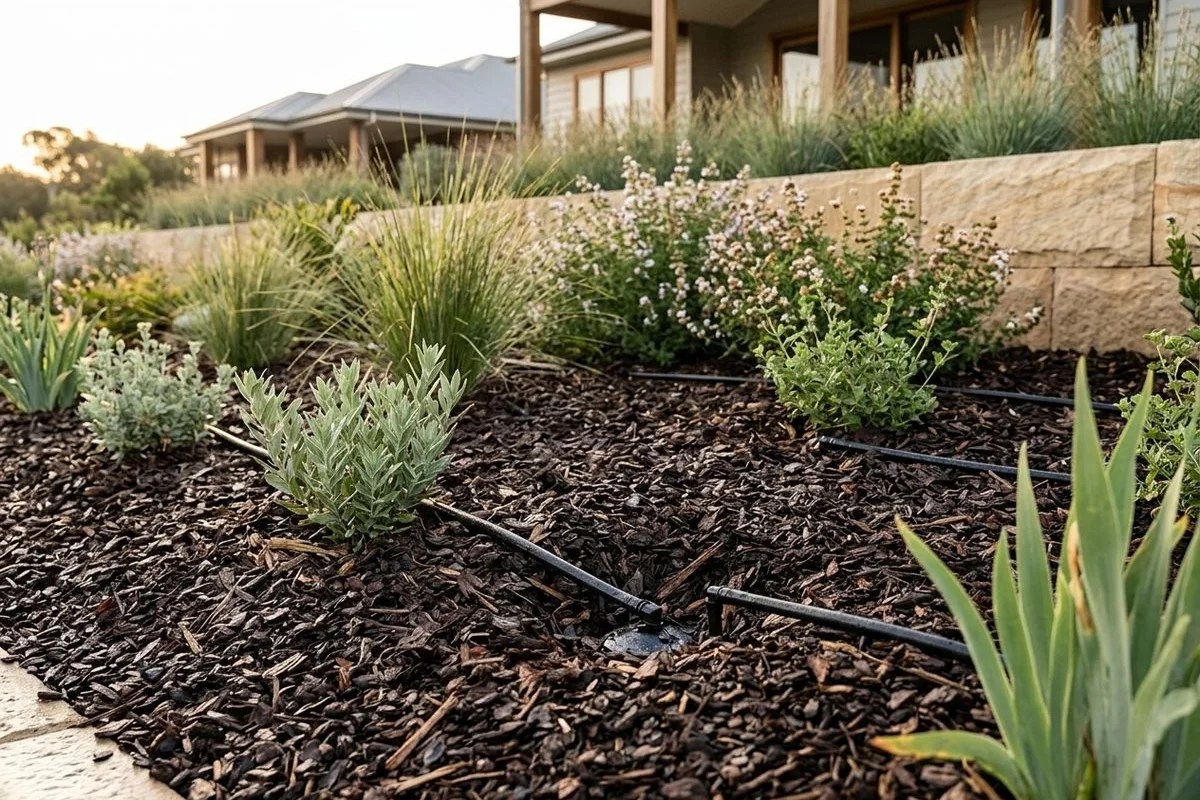
Installers lay low-pressure drip lines under your mulch through every single garden bed. Our default choice for native and exotic beds is the Netafim Techline AS XR.
This specific tubing features copper oxide to stop thirsty roots from clogging the emitters. We love how it delivers water directly to the soil, meaning evaporation loss drops close to zero.
Dry foliage also prevents fungal issues from ruining your plants. According to 2026 agricultural data, these precision drip setups save between 50% to 90% more water than older spray methods.
Here are a few reasons why this method works so well on our local clay soils:
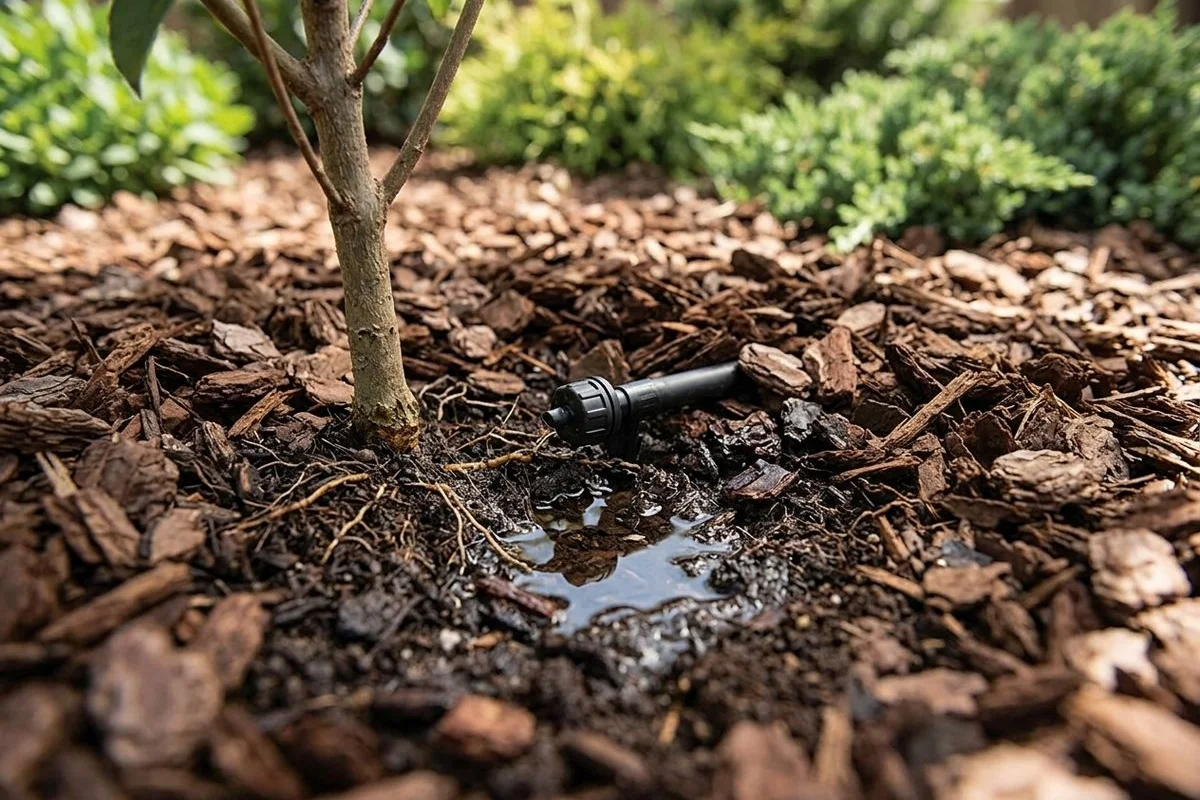
- Water drips at a slow, controlled rate of just 1.6 litres per hour.
- The slow application stops water from running down steep slopes.
- Nutrients stay locked in the root zone instead of washing away.
- The lines remain completely hidden beneath your mulch.
Pop-up sprinklers
Pop-up rotating sprinklers run on zoned circuits specifically for your lawn areas. We install heads that retract flush with the turf when turned off, keeping your yard neat.
The layout always includes a 20% overlap in the throw pattern to prevent brown patches. Our top recommendation for homeowners is the Hunter MP Rotator series.
Traditional spray nozzles often dump water faster than hard clay can absorb it. We use these specific rotators because their slow 10 mm per hour rate cuts water usage by up to 30%.
Subsurface irrigation
Buried drip lines sit roughly 100mm to 150mm underground beneath synthetic turf or high-traffic lawns. We suggest this premium option for specific applications like nature strips or podium gardens.
The installation cost is slightly higher upfront. Our clients find the investment worth it because the system is completely invisible and vandal-proof.
Underground placement also means zero evaporation occurs on hot, windy days. We find this setup incredibly useful for heavily sloping blocks in Warrandyte or Eltham where surface runoff is a constant battle.
Comparing these options side-by-side helps clarify the best fit for different zones:
| System Type | Best Application | Average Water Savings | Top Brand Choice |
|---|---|---|---|
| Drip Lines | Garden beds, dense planting | Up to 90% vs sprays | Netafim Techline AS XR |
| Pop-up Sprinklers | Natural grass lawns | Up to 30% vs standard sprays | Hunter MP Rotator |
| Subsurface | High-traffic turf, slopes | Near 100% evaporation reduction | Netafim Subsurface |
Control
A great physical setup needs a smart brain to run it efficiently. We always pair your pipework with reliable automation.
Automatic controllers
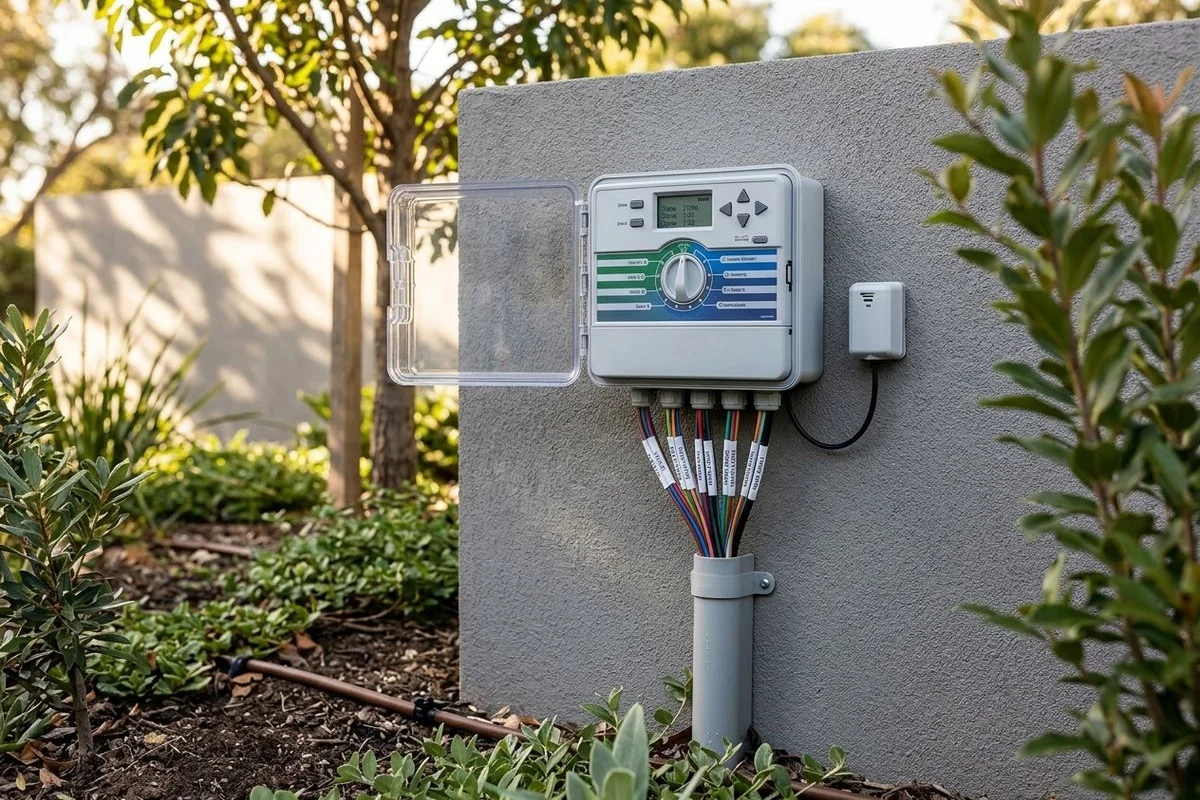
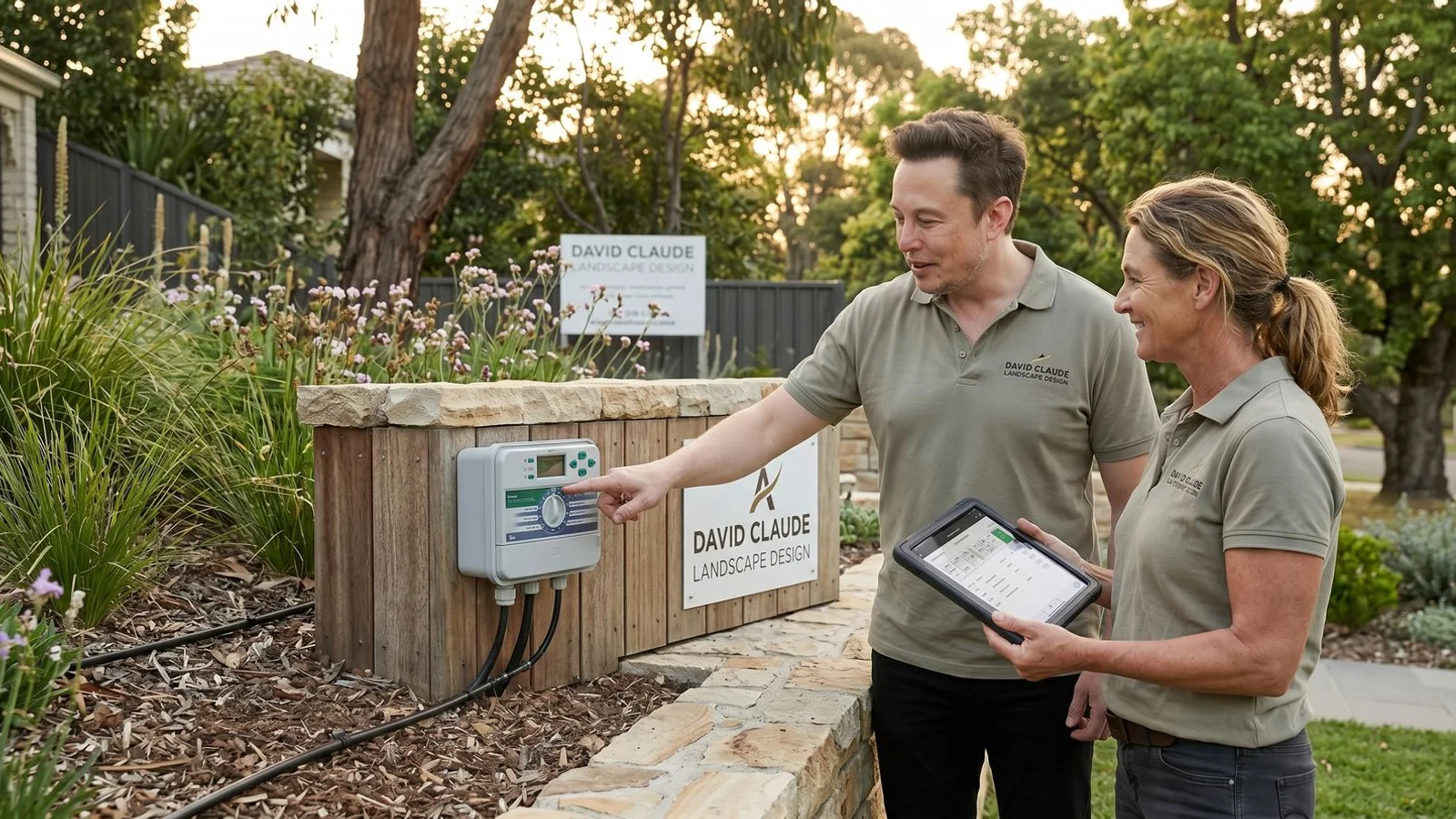
Network-capable controllers from brands like Hunter, Rain Bird, and Irritrol make daily management effortless. Our favorite option for tech-savvy homeowners is the Hunter Hydrawise Wi-Fi controller.
This clever device connects to local weather stations to check current temperatures and rainfall probability. We program it once during installation, and it actively adjusts your schedule using Predictive Watering technology.
These automatic adjustments can drop your overall water usage by up to 50%. You can even monitor the whole system right from a smartphone app while sitting at the office.
Moisture and rain sensors
A simple rain sensor acts as a hard stop when the weather turns wet. We highly recommend installing a device like the Hunter Mini-Clik on your roof or fence.
The sensor physically shuts the system down if it detects anywhere between 3mm and 19mm of rainfall. Our plumbers ensure you never accidentally water the lawn during a heavy thunderstorm.
Soil-moisture sensors add another layer of sophisticated control for fussy plants. They measure the exact moisture level at the root zone, preventing root rot in heavy clay.
Tank integration
Tying into an existing rainwater tank is a brilliant way to save on municipal water bills. We connect your tank to the new pipework so the garden gets free water first.
Drip setups can often run on the natural head pressure of a full tank without needing a pump. Our team installs submersible pumps, like the highly reliable Davey KRBS2, to provide the pressure needed for pop-up sprinklers.
Submersible units operate silently inside the tank, avoiding the annoying whine of older surface models. An automatic mains-switchover valve guarantees your yard stays green even when the rainwater runs dry.
Here are the key benefits of smart control integration:
- Weather-based adjustments prevent gross overwatering.
- Wi-Fi alerts notify you instantly if a pipe breaks.
- Rain sensors stop the sprinklers during sudden downpours.
- Submersible tank pumps keep your backyard completely quiet.
Seasonal scheduling
Melbourne’s famously unpredictable climate actually has four distinct watering seasons, not just two. We program a seasonal schedule at install and then review it at the spring and autumn equinoxes.
Summer requires heavier watering, usually three to four events per week with longer runtimes. Our local permanent water use rules mandate that residential gardens must be watered before 10 AM or after 6 PM.
“Watering before 10 AM is a critical 2026 water-saving rule in Melbourne. It allows water to soak deep into the soil before the afternoon sun causes massive evaporation.”
The shoulder seasons of autumn and spring need significantly less water, typically just one or two events weekly. We usually turn the controller off entirely during the damp winter months.
A well-programmed system using quality parts rarely wastes a drop of water in any season. We love seeing clients enjoy a thriving outdoor space without the stress of manual hosing.
| Season | Watering Frequency | Controller Setting |
|---|---|---|
| Summer (Dec-Feb) | 3-4 times per week | 100% runtime (Before 10 AM) |
| Autumn (Mar-May) | 1-2 times per week | 50-60% runtime |
| Winter (Jun-Aug) | Off completely | System paused or rain sensor override |
| Spring (Sep-Nov) | 1-2 times per week | 60-80% runtime |
Ready to protect your plants and save water? Contact us today to discuss upgrading your home with these reliable irrigation systems.