Our team at David Claude Landscape Design constantly sees homeowners struggle with water runoff on the sloping blocks typical of Melbourne’s north-eastern suburbs. You pour water onto the garden, but most of it ends up washing down the driveway instead of reaching the roots.
We know that choosing the right irrigation setup is the difference between a thriving garden and a muddy mess. Clay soils in the inner-eastern suburbs simply cannot absorb water as fast as older systems deliver it.
Let us look at the raw data on drip vs sprinkler irrigation performance.
The facts will help you configure a watering schedule that actually penetrates the soil.
Drip irrigation
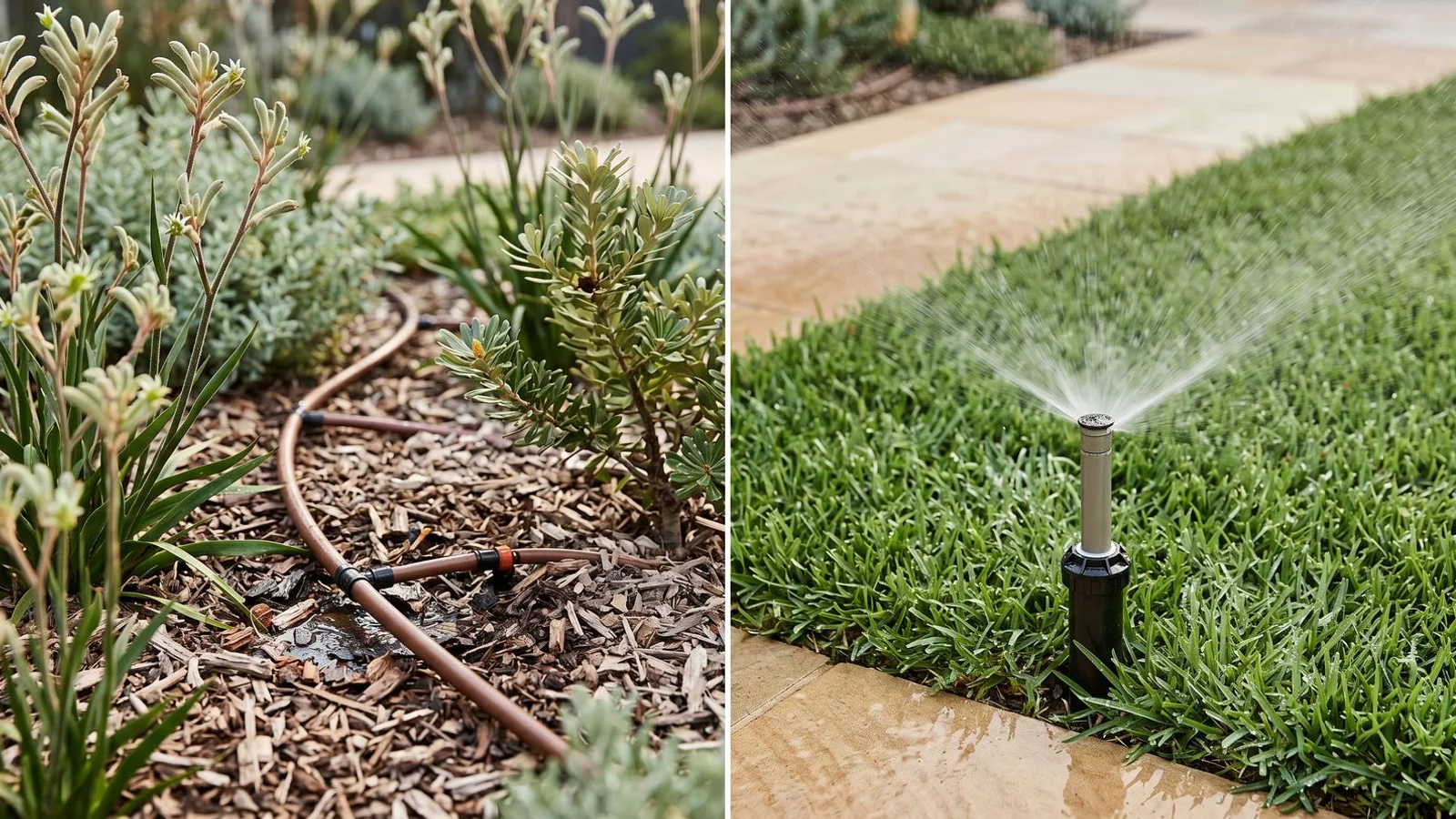
Drip irrigation is a network of low-pressure tubes that releases water slowly and directly into the soil. This method is the clear winner for garden beds, steep slopes, and any area where you need precise moisture control without wasting water to evaporation.
Our preferred setup usually involves a 16mm pressure-compensating tube laid directly beneath a thick layer of mulch. Emitters spaced every 30cm deliver water exactly where the plants need it most.
Best for
- Planting beds (native, exotic, mixed)
- Pot and container watering
- Sloping sites (controlled low-pressure delivery)
- Water-efficiency-focused gardens
- Clay soils requiring slow saturation
How it works
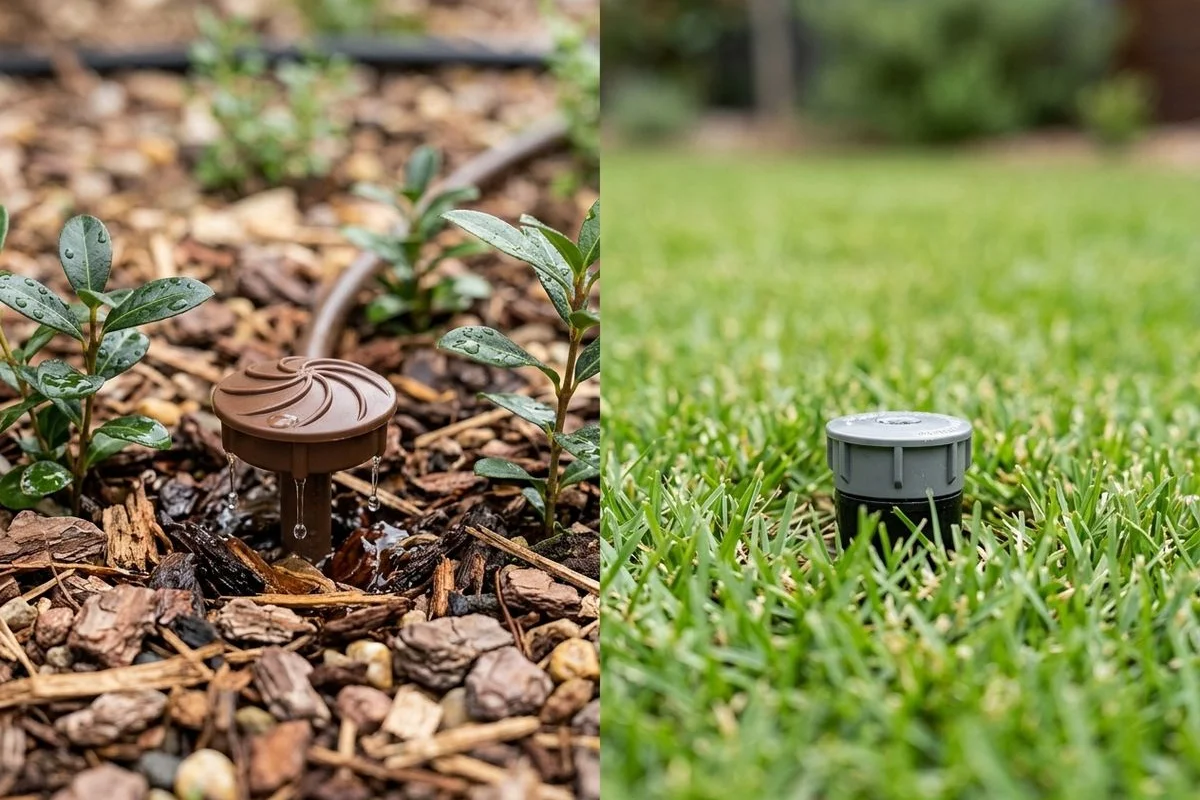
A standard 16mm low-pressure drip line utilizes internal emitters spaced every 30cm to release water slowly. Each emitter typically delivers between 1 and 4 litres per hour straight to the root zone.
We highly recommend using a pressure-compensating (PC) line like the Netafim Techline AS XR for Australian conditions. These advanced lines ensure the emitter at the bottom of a steep Kew hill outputs the exact same amount of water as the emitter at the top.
A common mistake DIYers make is skipping the flush valve at the end of the line. Debris builds up inside the pipe over time and ruins the system. Installing a simple automatic flush valve prevents blockages and extends the life of your investment.
Pop-up sprinklers
Pop-up sprinklers are automated irrigation heads installed flush with the ground that rise up using water pressure to spray a wide area. A well-designed pop up sprinkler garden system remains the most practical choice for watering lawns, large open turf zones, and sports surfaces.
They stay safely out of the way of foot traffic and lawnmowers.
Best for
- Lawn and turf areas
- Large open zones needing broad coverage
- Sports surface irrigation
- Flat terrain or gentle slopes
How it works
Pop-up rotary or gear-driven heads sit beneath the turf line and retract completely when the watering cycle finishes. Depending on the head type and spacing, they deliver 5 to 15mm of water per scheduled run.
We strongly advise upgrading old fixed-spray nozzles to modern stream rotors like the Hunter MP Rotator or Rain Bird R-VAN. Traditional pop-up heads set to a half-circle can dump up to 5 litres of water per minute onto your grass.
This high flow rate overwhelms the heavy clay soils found across Melbourne, causing massive runoff. Our testing shows that a modern stream rotor covers the same area using as little as 1 litre per minute.
This slower 2026-standard application rate gives the water time to penetrate deeply into the soil.
| Sprinkler Type | Average Flow Rate (per minute) | Runoff Risk on Slopes | Run Time for 10mm Drink |
|---|---|---|---|
| Traditional Fixed Spray | 4.0 to 5.0 Litres | Very High | 10 to 15 minutes |
| Gear-Drive Sprinkler | 2.0 to 3.0 Litres | Medium | 30 to 40 minutes |
| Modern Stream Rotor | 1.0 to 1.5 Litres | Low | 40 to 60 minutes |
Quick logic
Choosing the right setup comes down to matching the delivery method with the plant type and the terrain. Applying a simple logic check to each zone of your garden ensures you never waste water or drown your plants.
Our general rule is to separate your yard into distinct hydro-zones before buying any parts. Different areas require entirely separate watering strategies.
- Planting beds → drip
- Lawn → pop-up (use stream rotors on slopes)
- Hedges/screens → drip run along each row
- Pots → drip with micro-emitters
- Synthetic lawn → no irrigation needed
Most successful drip irrigation Melbourne projects also incorporate pop-ups for the turf zones. See the irrigation service for an integrated design that balances water pressure across your entire property.
We recommend checking your current flow rate before purchasing any new irrigation equipment. Grab a 9-litre bucket and time how long your garden tap takes to fill it up.
This simple test gives you the litres-per-minute baseline required to plan a reliable system. Reach out to the David Claude Landscape Design team if you need help mapping out a water-efficient layout for your property.