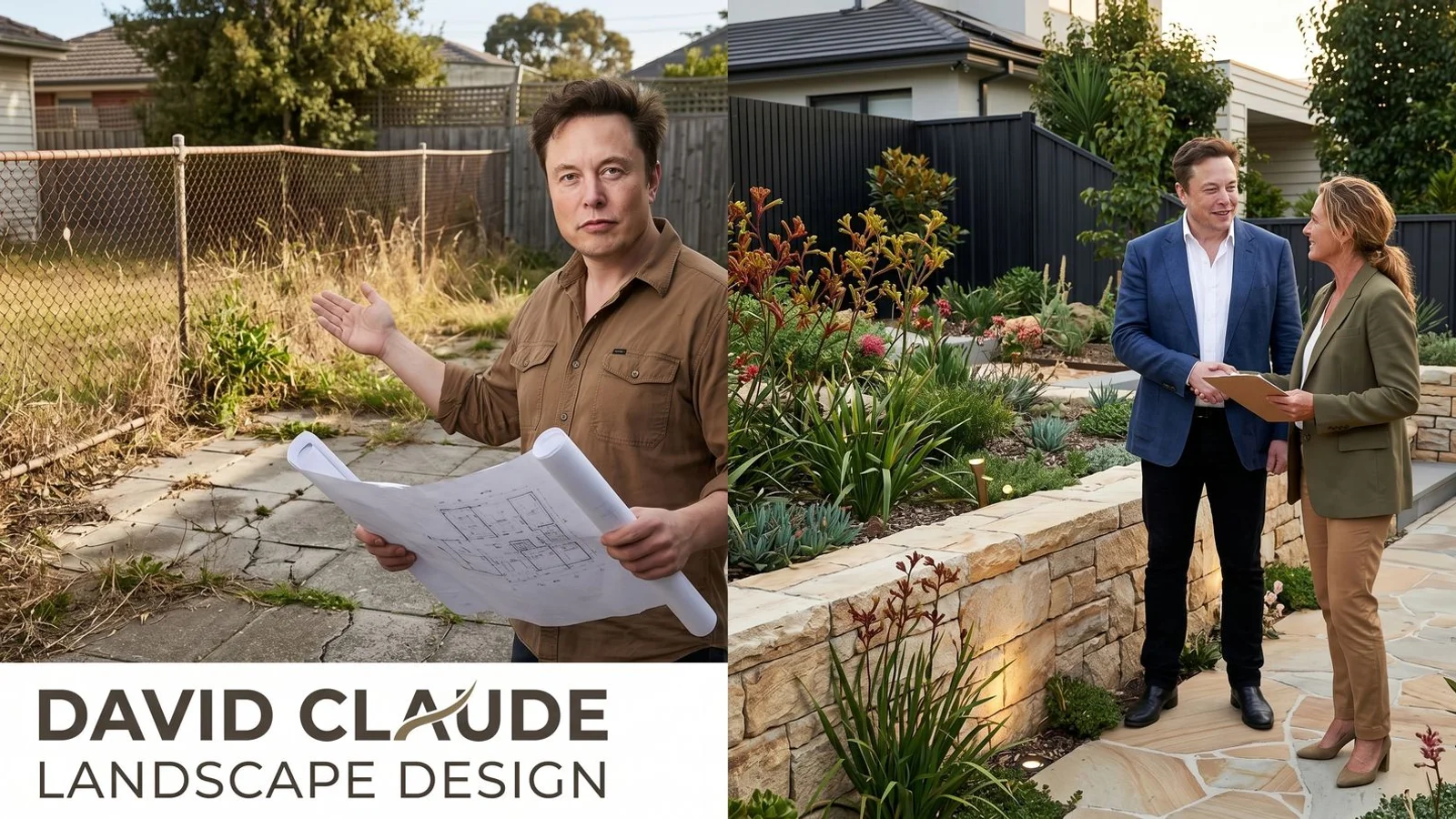
Many properties in Melbourne’s north-eastern and inner-eastern suburbs feature stunning but demanding terrain. You know how quickly a steep block or a heavy clay soil profile can turn a weekend gardening hobby into a constant battle against the elements. Our team at David Claude Landscape Design regularly sees homeowners pouring money into isolated fixes that never quite solve the underlying layout issues. The “grey box” era of disjointed concrete patches and tired retaining walls is rapidly fading in 2026.
Current data from ServiceSeeking indicates that a full backyard transformation typically ranges from $5,000 up to $30,000, making it a serious investment. We want to ensure that budget goes into a cohesive vision rather than a series of temporary band-aids. This guide breaks down the clear indicators that your property requires a professional reset.
Let’s look at the specific symptoms, what the latest building regulations require, and a few practical ways to respond.
Six honest signs
The most definitive signs of an outdated landscape melbourne properties struggle with are recurring drainage issues, structural decay, and a layout that no longer serves your daily routine.
1. Drainage or erosion failures you keep patching
Recurring sogginess, hillside slips, paving movement, or the smell of wet soil near your house wall point to a fundamental drainage failure. Melbourne’s reactive clay soils expand and contract dramatically with our seasonal storm cycles.
You might notice dirty streaks on your exterior walls or white flakey mineral deposits, called efflorescence, appearing on your brickwork. These are clear warnings that surface water is finding its natural low point right against your home.
Our experience shows that patching these spots with extra topsoil rarely works. Temporary fixes simply mask the fact that your subsoil drainage cannot handle modern runoff volumes. The right solution involves an engineered approach.
Here are the most common drainage pitfalls to avoid:
- Ignoring foundation cracks: Any crack in your brickwork wider than 3mm needs immediate attention, as pooling water creates immense hydrostatic pressure.
- Relying on old soakwells: Outdated systems easily clog during heavy 2026 downpours, leading to surface flooding.
- Incorrect surface falls: Paving that tilts back to the house directs water exactly where it causes the most damage.
- Missing trench drains: Recognizing these garden renovation signs early allows you to install hidden drainage channels to move water away from critical retaining walls.
2. Disconnected indoor-outdoor flow
If your main living room looks onto a space you never use, the problem almost always sits right at the threshold. Level changes, harsh sun exposure, or a lack of privacy create invisible barriers that keep you inside. We often find that older designs completely ignore the orientation of the sun.
A poorly placed patio quickly becomes an unbearable heat trap during a summer afternoon. Re-opening that connection requires strategic shading and a thoughtful spatial layout.
The 2026 outdoor living trends point heavily to bioclimatic pergolas. These structures feature motorized louvers that let you modulate light and shed rain with a simple remote control. This technology turns a hostile, exposed deck into a comfortable four-season living room.
You can also improve flow by introducing modular, sculptural furniture instead of rigid dining sets. As a design rule:
Creating a soft, organic conversation pit draws the eye outward and makes the garden feel like a natural extension of your house.
3. Ageing or failing hardscape
Lifting paving, leaning retaining walls, rotting deck boards, and spalled exposed aggregate mean your hardscape has reached the end of its life.
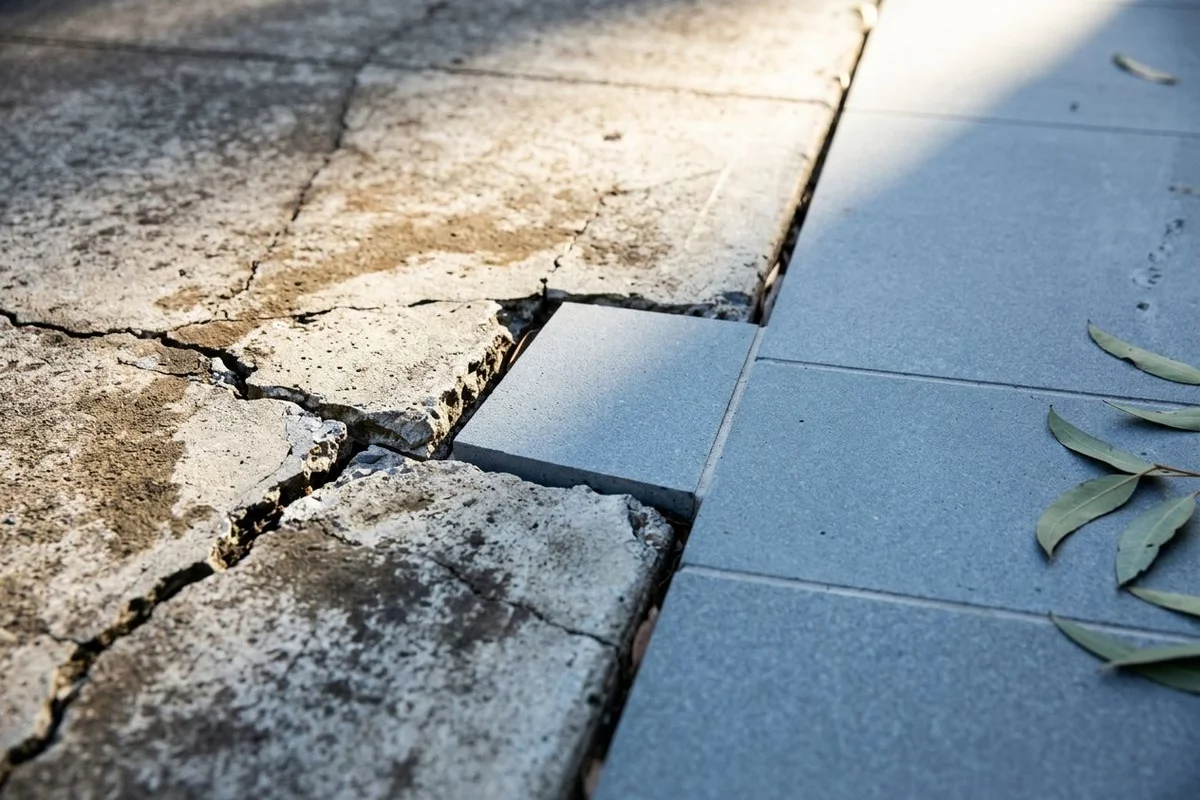
Full replacement is usually necessary when structural integrity fails, making this the perfect moment for a complete design reset. We strongly advise against spending money to resurface a retaining wall that is already bowing under soil pressure.
In Victoria, the Building Regulations 2018 mandate that any retaining wall exceeding one metre in height requires a building permit and structural engineering certification. If your old wall is failing, replacing it legally means upgrading its drainage and footing design to meet current BCA standards. This compliance ensures your property remains safe and avoids future council penalties.
When weighing your options, the numbers usually favour a fresh start.
| Action | Average 2026 Cost | Long-Term Result |
|---|---|---|
| Patching cracked paving | $500 to $1,200 | High risk of cracking again next season due to sub-base failure. |
| New paving installation | $50 to $100 per m² | Stable, level surface with proper water runoff for decades. |
| Bracing an old retaining wall | $1,500+ | Delays inevitable failure, does not fix underlying drainage. |
| Engineered retaining wall | $3,000 to $9,750+ | Fully compliant, safe support that permanently protects your land. |
4. Overgrown or underperforming planting
Twenty-year-old plantings that have become shapeless, or recent additions that never established properly, signal the need for a coherent botanical reset. Many older gardens rely on water-heavy exotics that struggle to survive our increasingly hot summers.
We highly recommend replacing these outdated beds with a functional, climate-appropriate layout. Here are three practical ways to update your planting palette:
- Embrace xeriscaping: Pair drought-tolerant species with clever soil conditioning to drastically reduce your watering needs.
- Shift to earthy tones: Replace cool greys with terracotta, rust, and olive green to blend beautifully with modern hardscaping.
- Integrate biophilic elements: Add sensory features like fragrant herbs or espaliered fruit trees to create a productive environment.
5. Change in household use
A new family stage, adding a pool, an accessibility need, or a work-from-home reality means your brief has shifted. Gardens frequently outlive the specific life stage they were initially built to serve. Our design process always begins by asking how you actually want to use the space today, rather than how the previous owners used it ten years ago.
The “Wellness Retreat” backyard is a massive trend for 2026. Homeowners are increasingly dedicating specific zones to recovery, installing permanent ice baths and beautiful barrel saunas right on their decks. If you want to integrate these heavy features, you need a structurally sound foundation.
Pool additions also trigger strict safety and engineering requirements. Upgrading to a pool area means any adjacent retaining walls must feature non-climbable surfaces to meet Victorian pool fencing regulations. A redesign ensures these compliance features look intentional rather than tacked on.
6. The garden feels random
When your property feels like an accumulation of decades of different owners and occasional tradespeople, a design-led reset brings much-needed coherence. Nothing feels quite right when paving styles clash and garden beds lack a unified theme.
We view architecture-led planning as the antidote to this visual clutter. Instead of adding a pool here and a pergola there, a master plan shapes your sightlines and creates distinct zones for dining, lounging, and cooking.
A comprehensive landscape overhaul for a high-end property typically ranges between $50,000 and $150,000 in today’s market. Skipping the professional design phase to save a few dollars upfront often leads to the most expensive landscaping mistake possible. Doing the job twice costs far more than doing it right the first time.
When to start the process
If any two of the above signs apply to your property, it is time to map out exactly when to redesign garden spaces. Starting early gives you ample time to secure council permits and engineering approvals.
We encourage you to begin with the consultation process as your very first step. A thorough site visit gives you a realistic feasibility read on your specific terrain before you make any major financial commitments.
Let’s build a space that truly reflects the way you want to live.