The question behind every steep site machinery access enquiry
Can you actually secure steep site machinery access on a sharply sloped property? The answer is almost always yes, but the specific method depends entirely on your site.
We constantly hear this concern from homeowners across Melbourne’s north-eastern and inner-eastern suburbs. Managing steep access is a core part of what David Claude Landscape Design does every day. Those dramatic slopes in areas like Eltham or Kew create beautiful views, yet they require careful logistical planning.
The steep gradients in these regions turn standard landscaping into a true engineering challenge.
Our team will break down the exact methods required to handle this terrain. Examining the local site data reveals exactly how to approach these logistical hurdles across three main areas:
- Narrow-access equipment specifications
- Safe crane lifting procedures
- Efficient spoil removal logistics
Narrow-access excavators and dingoes
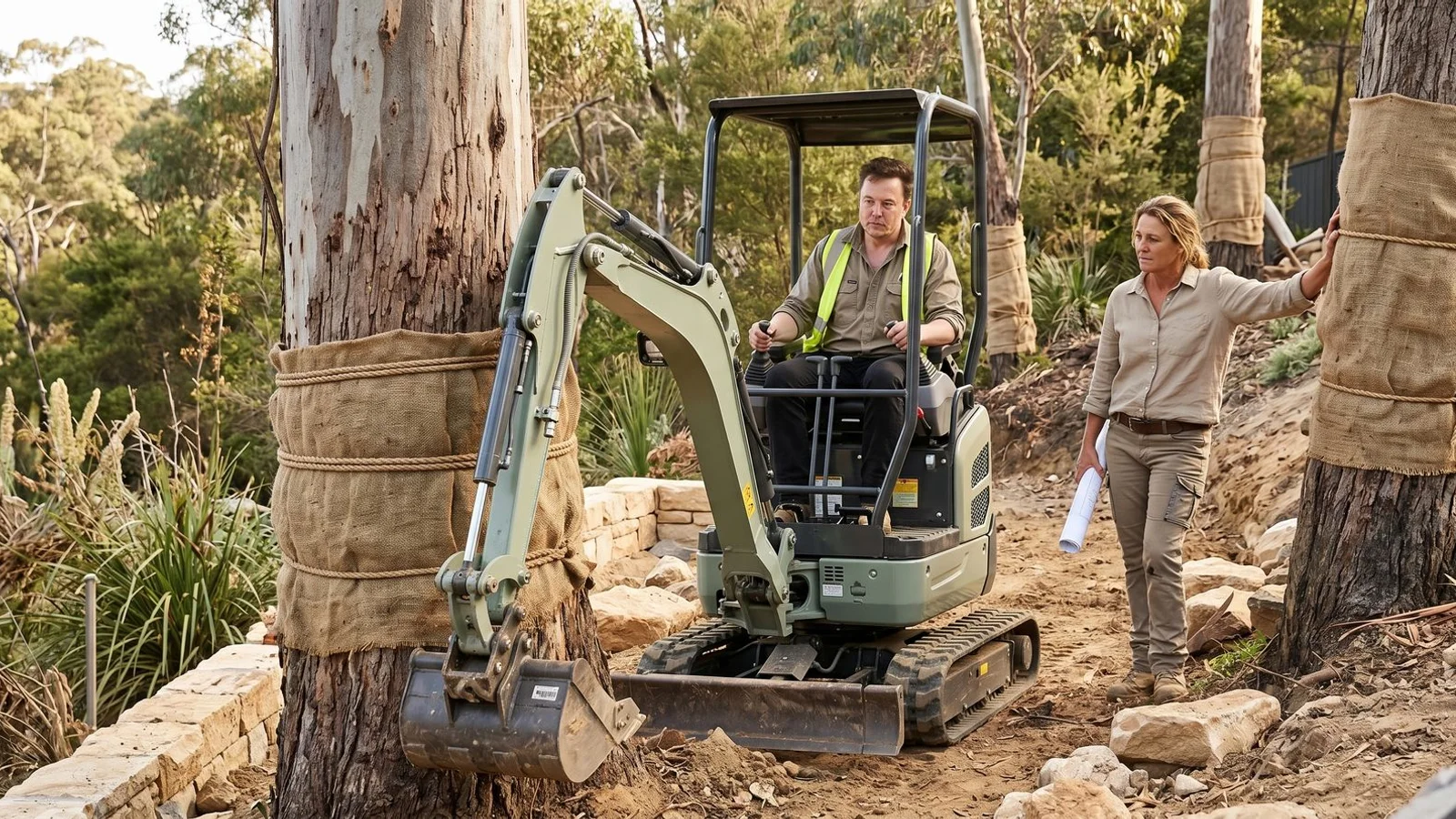
Standard excavators are simply too wide for typical bush-block pathways, so the solution is specialised, compact equipment. We deploy narrow access excavators and mini-loaders to move through the tightest residential boundaries.
A standard Melbourne side gate is often just 900mm to 1000mm wide. This restricted space is exactly where a Kubota U17 shines. Our operators retract the tracks on this machine to squeeze through gaps as narrow as 990mm.
Tight spaces require precision to avoid damaging existing structures. Dingoes and skid-steers handle the lighter earthmoving tasks in these confined spots. We utilise specific Dingo models that measure just 760mm across, allowing them to pass through standard pedestrian doorways.
Knowing the clear access width available dictates exactly which machine gets the job. Here is a quick breakdown of the typical equipment used for limited access sites:
| Equipment | Minimum Width Required | Best Used For |
|---|---|---|
| Kubota U17 Excavator | 990mm | Trenching and heavy digging |
| Kubota U25 Excavator | 1500mm | Bulk earthworks on moderate slopes |
| K9-3 Dingo Mini Digger | 760mm | Moving soil through standard gates |
Certain properties completely lack vehicle entry from the street. We frequently have a Dingo craned or walked in through a neighbour’s yard using formal access arrangements. This option adds cost, but it ensures no property is truly inaccessible.
Crane lifts
When a site cannot be reached by rolling machinery, materials are simply crane-lifted into position. We regularly hoist pallets of sleeper blocks, bluestone pavers, bulk soil bags, and mature trees directly over rooftops.
A single, well-planned crane lift day can deliver an entire project’s worth of heavy supplies. The current 2026 rate for a 20-tonne slew crane in Melbourne averages around $250 to $350 per hour. Our planning team consolidates deliveries to maximise this hourly investment and keep your budget in check.
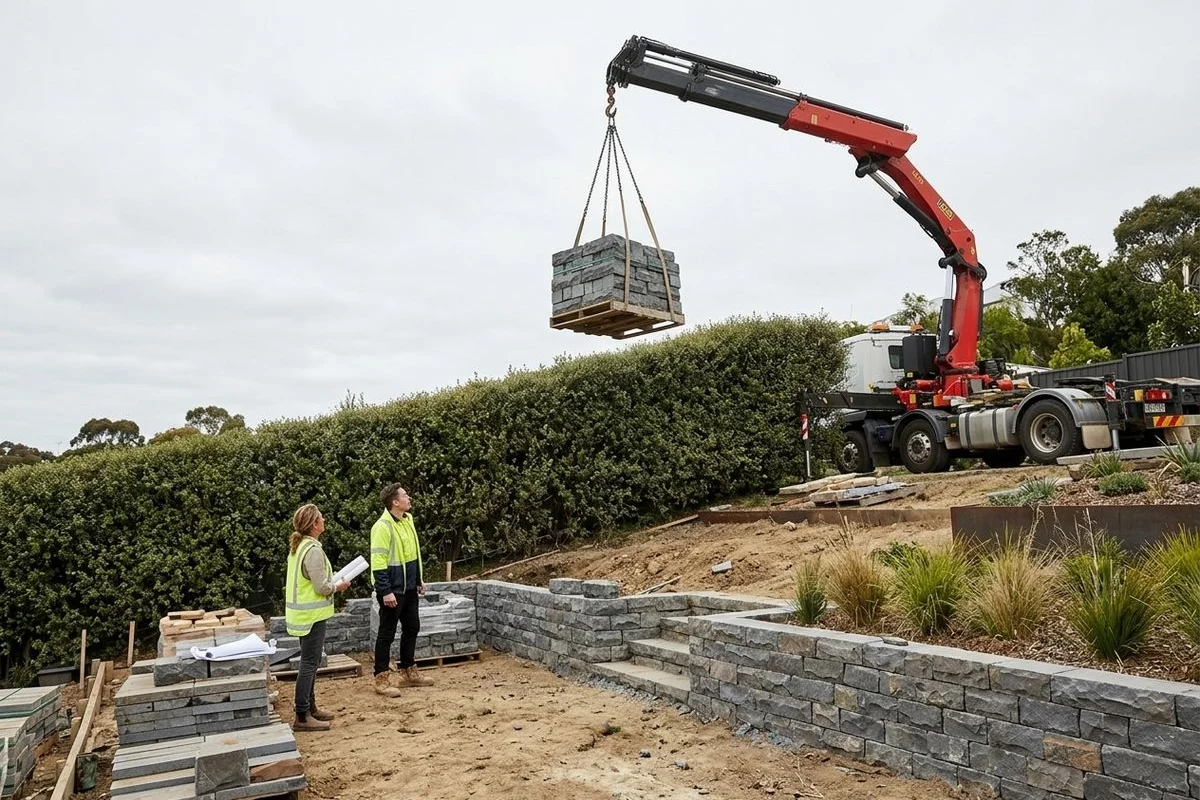
Heavy lifting operations require serious logistical coordination and adherence to local safety regulations. You must secure specific permissions, such as a Street Occupation Permit from councils like Boroondara or Banyule, before any equipment arrives.
We handle these council approvals well in advance to prevent any sudden project delays. Strict traffic management plans are also legally required to keep the street safe during lifting hours.
Several critical factors must align perfectly to ensure a smooth operation:
- Street width and power lines: Clearances determine the exact size of the crane required.
- Delivery sequencing: Trucks must arrive in the specific order that materials will be stacked on site.
- Traffic control: Professional spotters manage pedestrian and vehicle flow safely.
Spoil removal
Steep site spoil removal needs to be mapped out before the dig starts, not discovered as a problem on day three. We typically truck excavated soil off-site daily during the earthworks phase to prevent dangerous stockpiling issues.
Cut-and-fill operations generate a massive amount of loose dirt very quickly. A major trap for inexperienced operators is forgetting to account for the soil bulking factor. We calculate that every cubic metre of solid clay dug out will expand to roughly 1.3 to 1.5 cubic metres of loose spoil.
Flat properties allow you to stockpile this dirt nearby, but a sloping block offers nowhere to put it safely. A standard tandem tipper truck holds about 10 cubic metres of loose soil at a time.
“Efficient earthworks on a slope require a continuous loop. The excavator digs, the mini-loader ferries the soil up the hill, and the waiting tipper takes it away immediately.”
Our operators establish a secure loading point that remains accessible to heavy transport vehicles throughout the day. This constant cycle keeps the work zone clear and prevents loose earth from washing away during sudden rain.
Neighbour and street logistics
Every sloping block project affects the surrounding street with crane days, truck movements, and temporary footpath storage. We manage this disruption by defining strict operating windows and maintaining open communication with your neighbours.
Building good relationships early prevents stressful noise complaints later on. The EPA Victoria guidelines restrict residential construction noise to between 7:00 am and 6:00 pm on weekdays.
Our community management process includes several strict protocols:
- Written notice: Project managers notify adjacent residents a week before major works begin.
- Direct communication: A dedicated phone line is provided for immediate questions during the build process.
- Restricted hours: Our crews halt all weekend truck movements to respect the peaceful morning hours.
This is a sloping block service that lives or dies on proper planning. Many competitors quote these difficult jobs and walk away shortly after.
We find that restricted entry is usually the exact hurdle they simply could not figure out how to clear. Proper preparation for steep site machinery access makes all the difference for a successful build, so contact our design team today to schedule an initial site assessment.