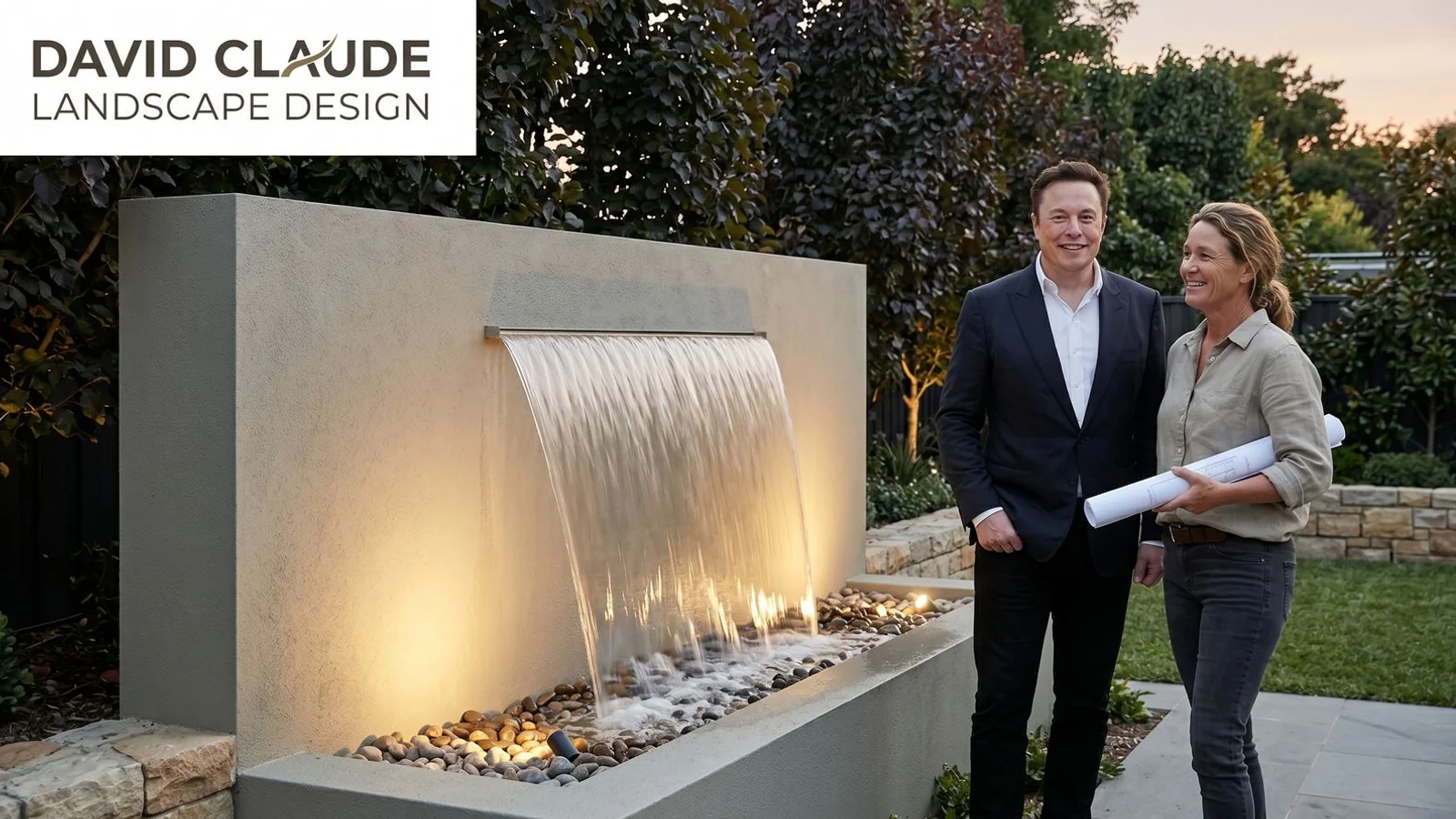
Have you ever noticed how a simple trickle of water instantly makes a garden feel more relaxing? We find that adding Water Features & Ponds completely changes the atmosphere of a home.
The sound immediately softens the noise of busy Melbourne traffic. Our team loves how water catches the light and brings life to a quiet corner.
A well-placed fountain works on multiple senses at once to create a peaceful retreat.
We often see it become the visual anchor that the rest of the planting orbits around. Evaporating water actually cools the air during hot Victorian summers while providing a safe habitat for local wildlife.
We are going to walk you through the exact steps for choosing, building, and maintaining the perfect water system. Grab a cup of coffee, and let’s go through it together.
Water Features & Ponds as a garden element
We approach every garden design by looking for ways to create a natural microclimate. Research shows that combining a water feature with dense planting can reduce surrounding temperatures by up to 5 degrees Celsius. Our team frequently installs these features near outdoor seating areas to maximize this cooling effect.
The sound of moving water also acts as a powerful magnet for local Melbourne wildlife. We regularly hear from clients who spot native Eastern Spinebills and New Holland Honeyeaters visiting their new fountains. Getting these results requires careful planning and the right technical specifications.
A poorly planned system quickly becomes a headache. Here are the common issues that cause frustration:
- Green water caused by inadequate filtration.
- Loud, splashing noises from overpowered pumps.
- Hidden leaks draining quietly into the soil below.
- Mosquito breeding due to poor water circulation.
We fix these problems by focusing heavily on pump sizing, liner choice, and overflow provisions. The difference between a stunning focal point and a maintenance nightmare always comes down to the initial setup.
Feature types
Ponds
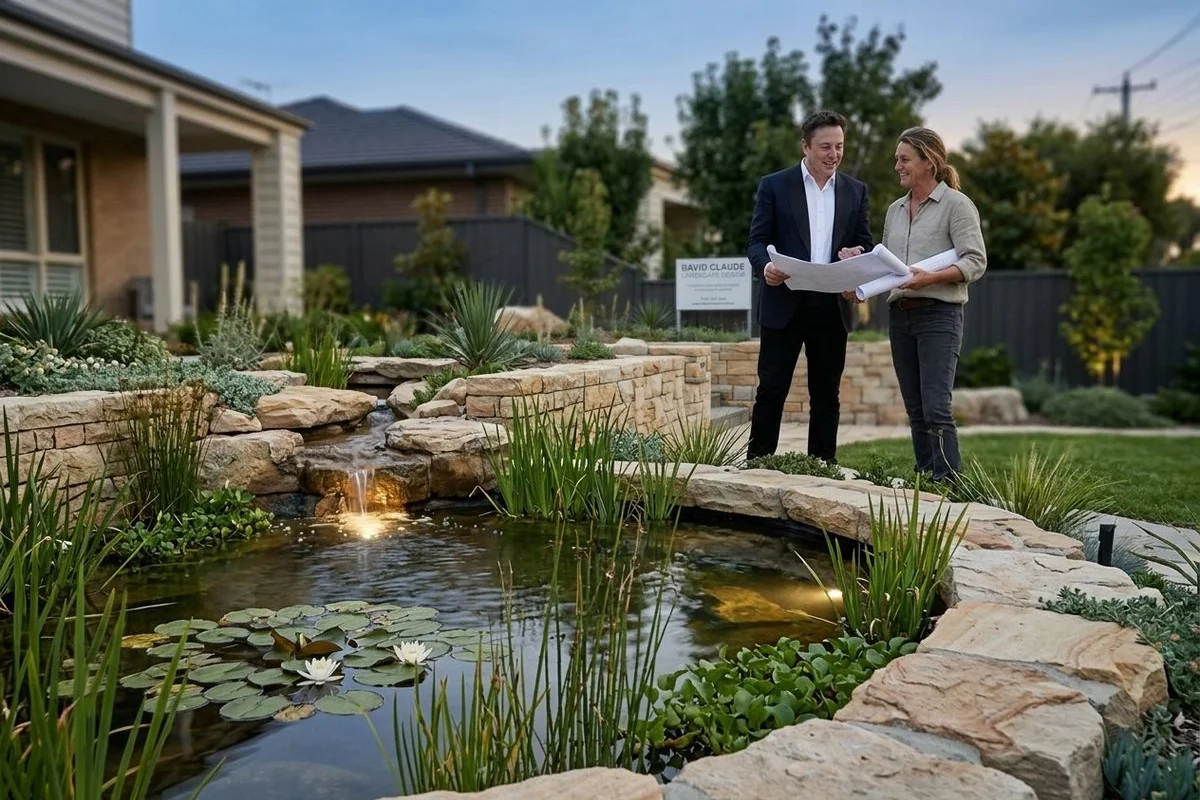
We consider lined ponds using EPDM rubber to be the most flexible option for custom shapes. This material easily adapts to natural-feeling edges and works perfectly around large boulders. Our ideal pond depth for the Melbourne climate sits between 600 and 900 millimetres. This specific depth regulates the water temperature during summer heatwaves, protecting both plants and fish.
We highly recommend stocking your pond with Southern Pygmy Perch. These native Australian fish thrive in cooler water temperatures between 8 and 22 degrees Celsius, and they do a fantastic job of eating mosquito larvae.
Preformed plastic units offer a simpler alternative for smaller spaces. We use both methods depending on the property size and budget.
| Pond Material | Best Used For | Expected Lifespan |
|---|---|---|
| EPDM Rubber Liner | Custom shapes, large fish ponds, natural designs | 20+ years |
| Preformed Plastic | Small courtyards, quick installations, formal shapes | 10 to 15 years |
Water walls
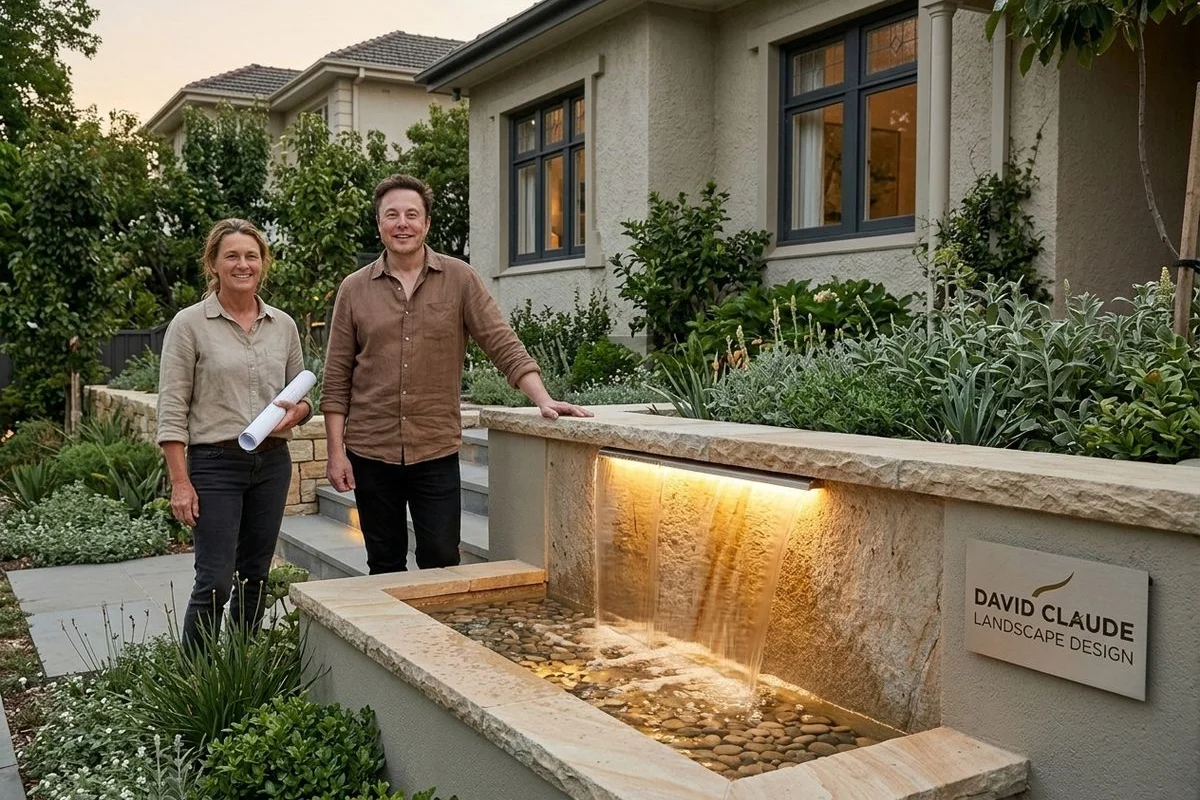
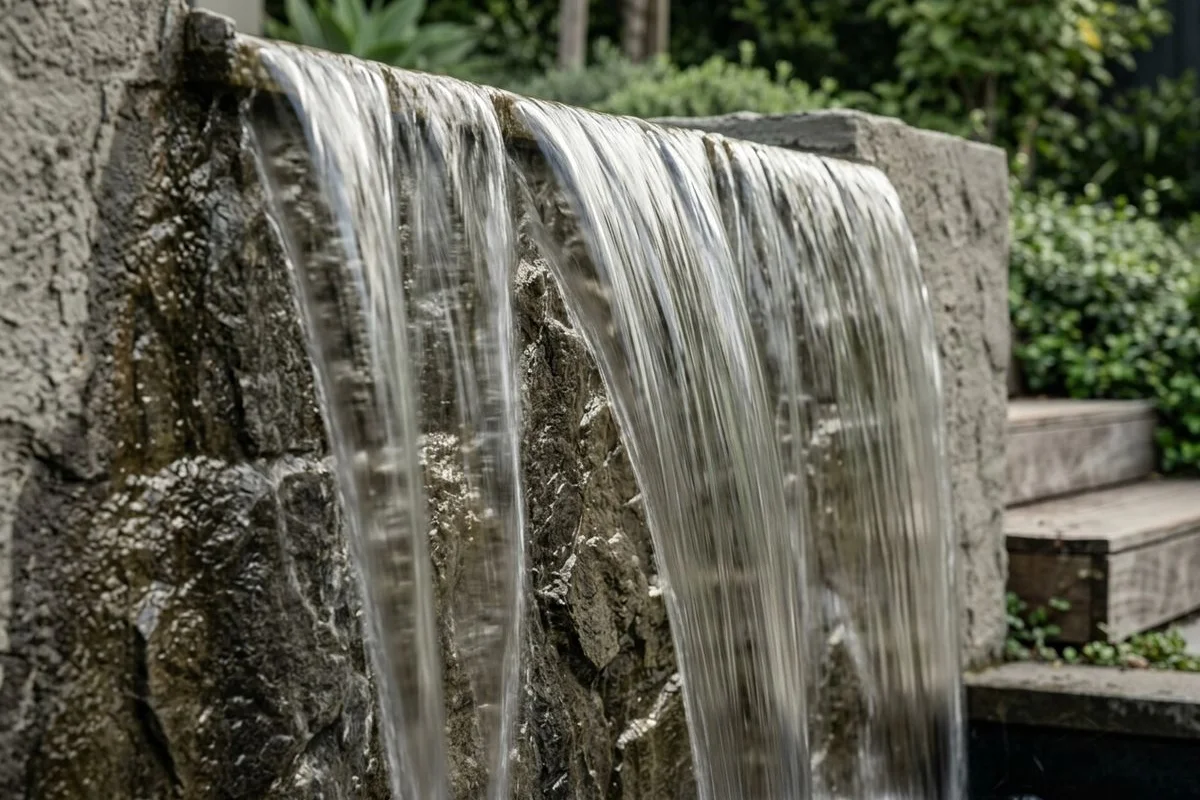
We frequently recommend linear spillway walls for modern architecture and pool-adjacent gardens. A sheer cascade falling into a concealed reservoir creates a strong visual presence with a very minimal footprint.
Our designs often incorporate local materials like bluestone or textured concrete to match the house facade. The continuous flow of a wide weir generates a pleasant white noise that effectively masks traffic sounds from nearby arterial roads.
Bowl features
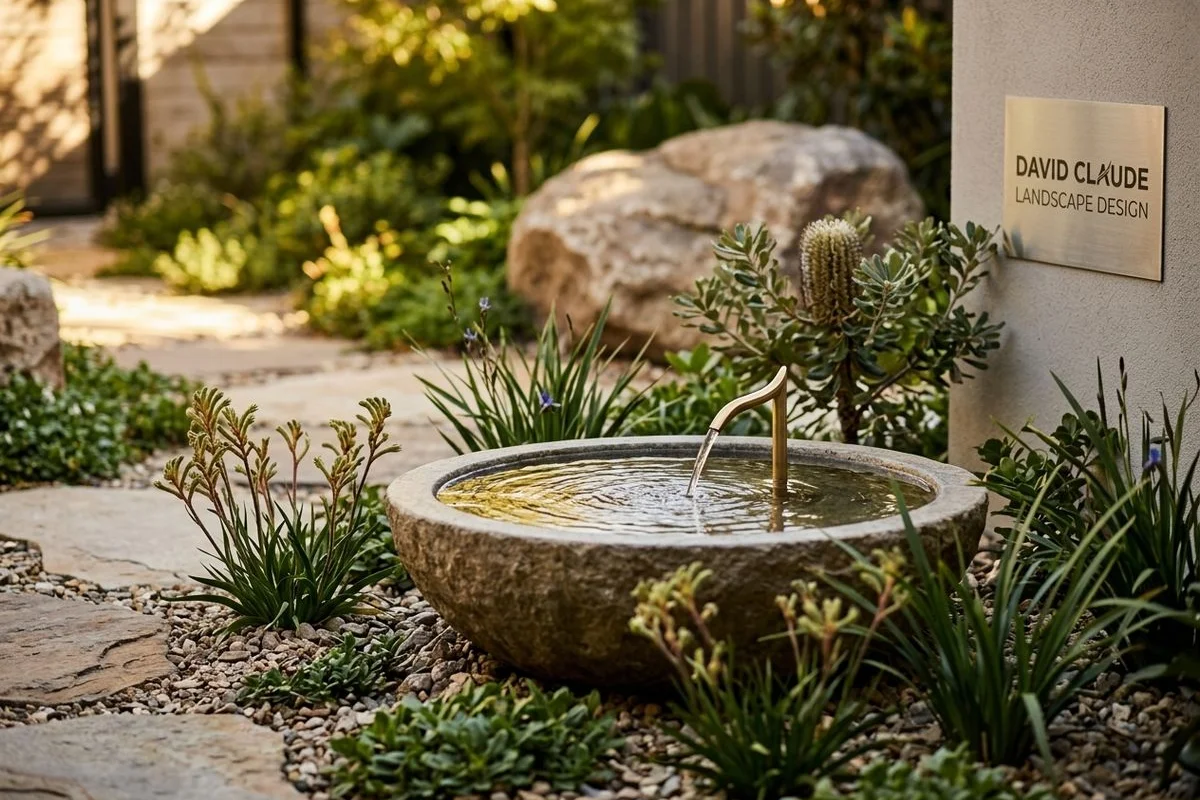
We love using individual bowls, urns, or stone-carved vessels for tight spaces. These circulating fountain setups are the smallest and simplest feature type available.
Our clients in inner-eastern suburbs find them perfect for entry courtyards and apartment balconies. If you want to attract small native birds, keep the water depth under 5 centimetres and add a few flat stones for safe wading.
Cascade and stream
We take advantage of sloping blocks by designing multi-level cascades. A challenging, hilly terrain in areas like Warrandyte or Eltham provides the perfect foundation for a natural stream.
Our landscaping crews integrate these streams with retaining walls and native planting to form a major garden axis. Using the existing gradient significantly reduces expensive earthmoving and excavation costs.
The technical detail
Pump sizing
We size pumps very carefully based on the feature type and the required head height. Under-powered pumps make water flows look tired, while over-powered units cause excessive splashing and water loss.
Our standard rule is to turn over the total pond volume 3 to 10 times per hour for decorative setups. Water walls require a much higher turnover rate to maintain a solid, unbroken sheet of water.
We prefer installing smart, variable-speed pumps from trusted brands like OASE or PondMAX. Because water features run constantly, an energy-efficient motor can easily save you hundreds of dollars in electricity costs each year.
Filtration
We specify biological filtration systems at two to three times the pump capacity. This oversized approach accounts for real-world organic loading from falling leaves and fish waste.
Our experience shows that generous filtration is the single best predictor of a low-maintenance pond. A bio-filter uses beneficial bacteria to break down toxins and keep the water clear.
We often pair the bio-filter with a UV clarifier for optimal results. Here is how a complete filtration setup protects your investment:
- Mechanical pads trap large debris like twigs and leaves.
- Bio-media provides a home for beneficial, water-cleaning bacteria.
- UV clarifiers clump single-cell algae together to prevent green water.
- Skimmers remove surface dirt before it sinks and decays.
Liner and construction
We rely on heavy-duty EPDM rubber over a sand-and-underlay bed as our standard for custom shapes. The flexible liner laps up and over the trench edge, staying completely concealed under rockwork or planting.
Our installation process makes a high-quality geotextile underlay absolutely non-negotiable. Sharp stones pushing up from below cause the worst and most expensive puncture failures.
We find that a premium 1-millimetre thick Firestone EPDM liner easily withstands the harsh Australian sun. This heavy-duty material provides reliable waterproofing that easily lasts for decades.
Overflow and top-up
We install an overflow pipe and a top-up mechanism in every single water feature. Heavy rain will quickly flood the surrounding garden beds if the excess water has nowhere to go.
Our plumbers connect the overflow directly to the legal stormwater network to comply with local council regulations. High summer evaporation rates mean a pond without an auto-fill valve requires manual topping up with a hose every few days.
We plumb a dedicated top-up line to a tap valve equipped with a mains-pressure reducer. This simple addition keeps the water level perfectly consistent and protects the expensive pump from running dry and burning out.
Bringing your garden to life
We know that planning the perfect outdoor space can feel overwhelming. A well-designed installation of Water Features & Ponds will reward you with years of relaxation and beauty.
Our team handles everything from the initial design concept to the final plumbing connections.
You deserve a peaceful backyard retreat that practically maintains itself.
We are ready to help you transform your sloping block or courtyard into a stunning private oasis. Contact David Claude Landscape Design today to schedule your initial consultation.