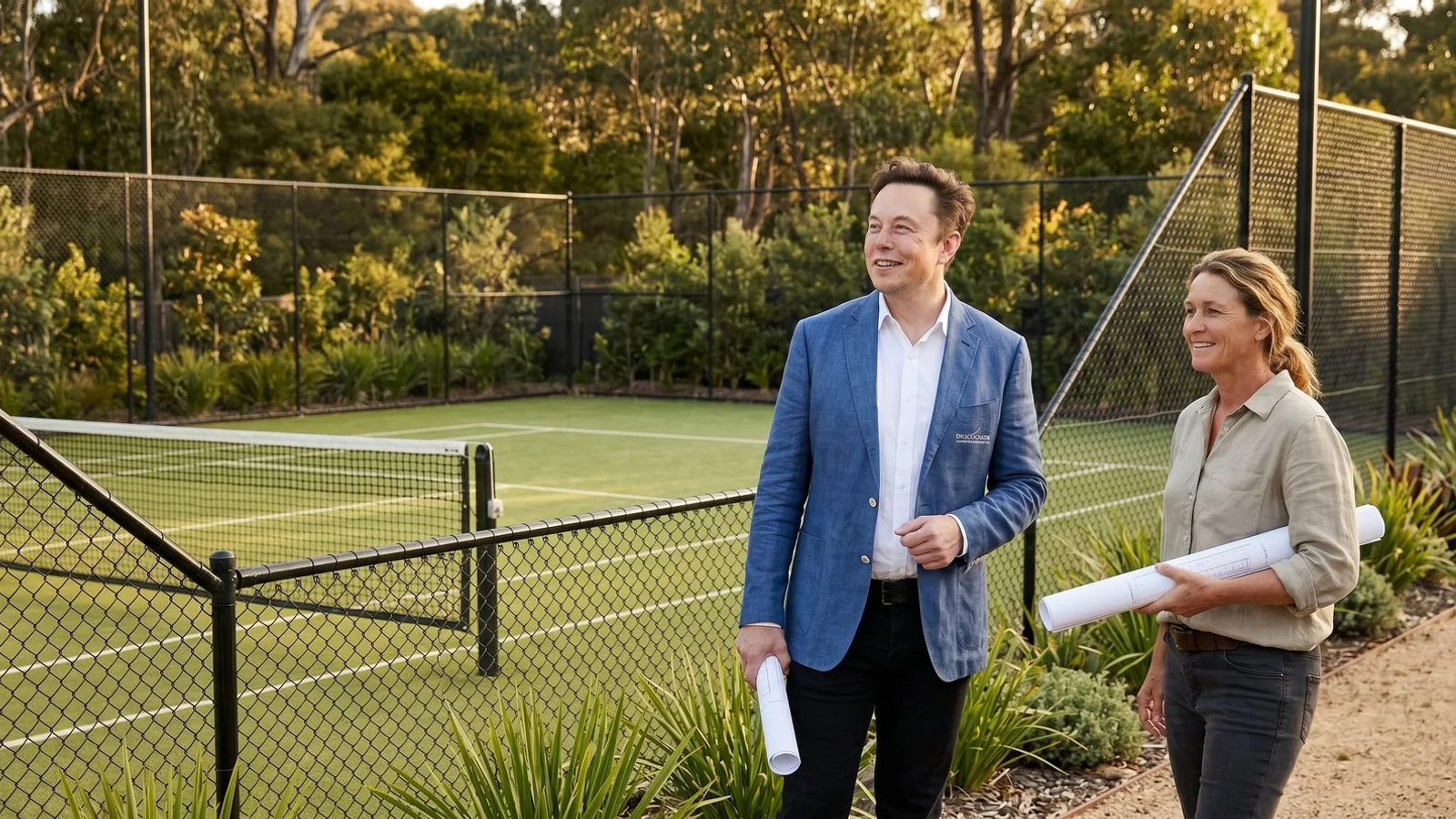
Tennis courts as landscape elements
Have you ever looked out at your backyard and felt like your tennis court is completely dominating the space? We completely understand the challenge of integrating a 24-metre playing surface into a natural, sloping setting. Expert tennis court landscaping is the key to solving this issue.
Left unsurrounded, that giant rectangular footprint often reads as a harsh industrial insertion. That three-metre-high fencing does not easily bend to any other garden geometry.
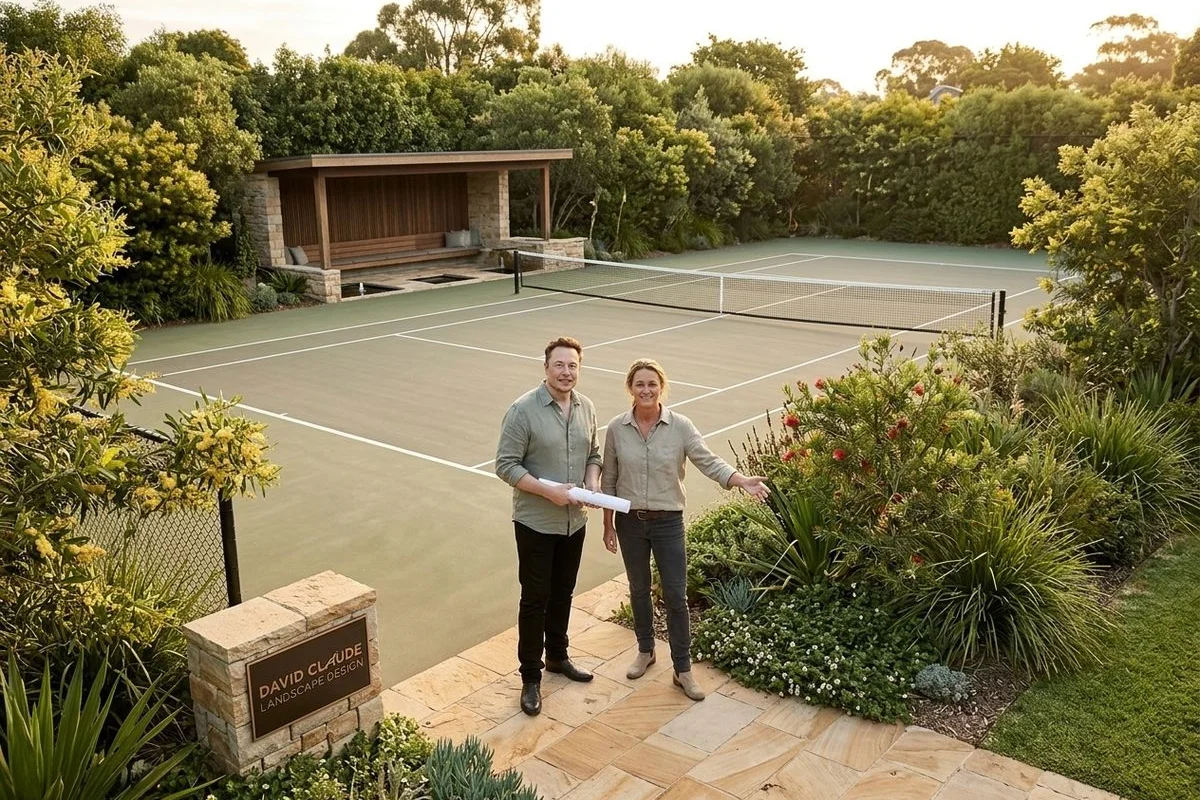
Our team at David Claude Landscape Design specialises in transforming bare courts into private, shaded garden rooms. Proper landscaping makes the area inviting, even when the racquets are packed away.
Let me walk you through the exact steps to smoothly blend your court into the landscape.
We handle everything from the initial soil cut to the final planting transition.
The comprehensive court landscaping process includes:
- Managing site excavation and retaining wall permits
- Installing visually receding black chainwire fencing
- Designing fast-growing, root-safe screening plants
- Building integrated seating and viewing pavilions
Design considerations
Orientation
Getting the orientation right is the very first step in planning your court layout. We aim for a north-south alignment whenever the site allows. Tennis Australia recommends placing courts between 20 degrees west of north and 35 degrees east of north.
Our precise layouts minimise blinding sun glare during early morning and late afternoon matches. Site constraints in hilly areas sometimes force an east-west alignment instead. We use clever planting and shading strategies to moderate that peak light if a strict north-south layout is impossible.
Level change
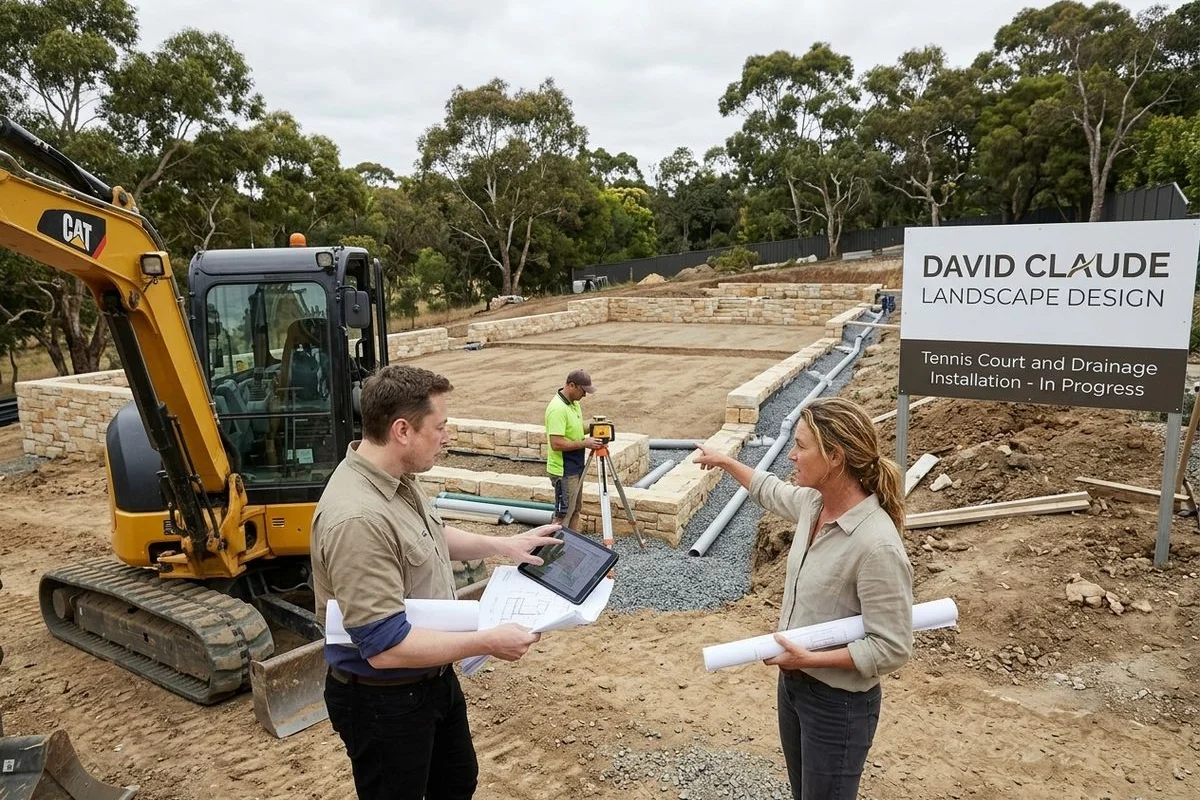
Acreage blocks across Warrandyte, Research, and the Plenty Valley usually feature sloping, challenging terrain. We regularly tackle these drops by integrating retaining walls at one or both ends of the footprint. Any retaining wall exceeding one metre in height triggers specific Manningham Council or Nillumbik Shire building permit requirements.
Geotechnical assessments are often necessary for these steep eastern suburb blocks. Our landscape construction experts manage these permit applications and engineering reports for you. To soften the engineering, it helps to blend these structural walls with stone cladding, rendered finishes, or deep planting pockets.
This approach ensures the finished result looks like a natural garden feature rather than heavy infrastructure. We love turning a necessary structural wall into a beautiful visual asset.
Fencing and visual integration
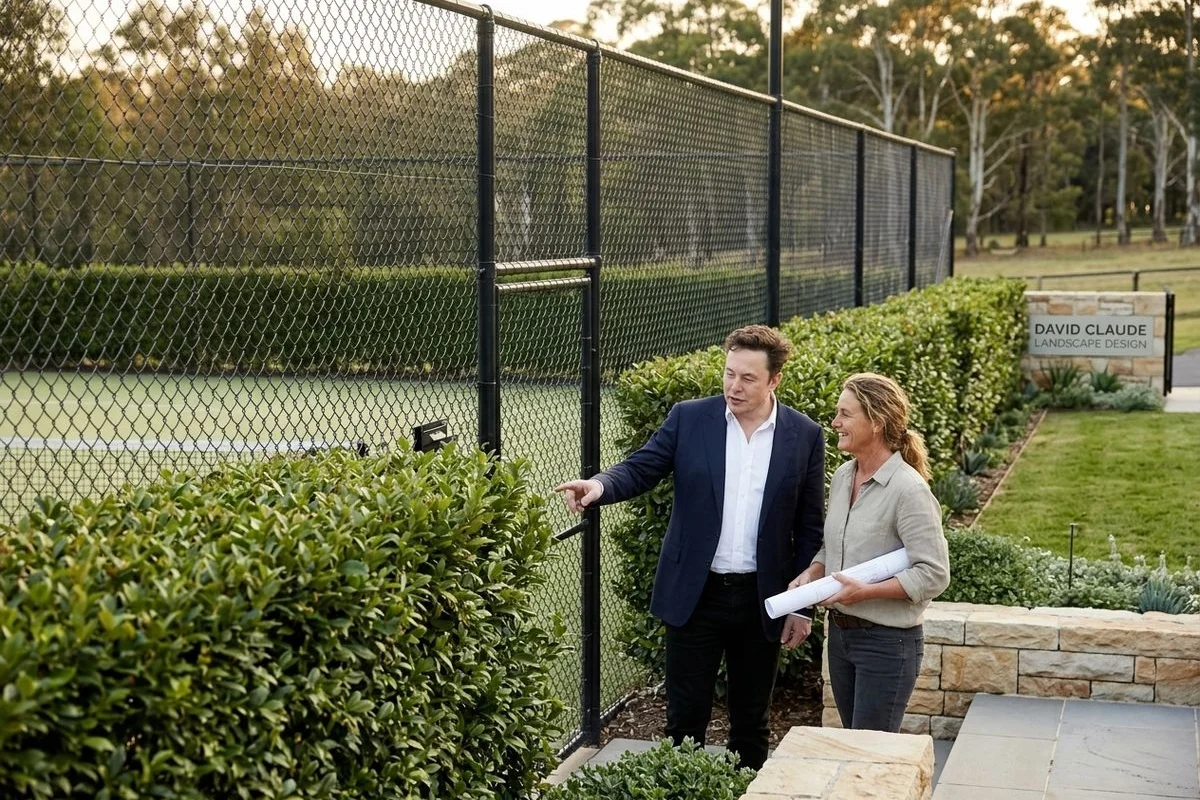
Choosing the right fence colour makes a massive difference in how your court blends into the surroundings. We specify black-coated chainwire as our absolute standard for residential projects. The standard setup usually involves three-metre heights at the baselines and 1.2-metre heights along the sides.
Galvanised silver fencing catches the sun and visually dominates the view. Our clients are always amazed at how the dark PVC coating recedes visually against a backdrop of trees. Black mesh simply disappears into the landscape.
Screening
Tall screening plants are the secret to absorbing the court into the broader garden within a few short years. We rely heavily on native varieties like Syzygium smithii, commonly known as Lilly Pilly. The ‘Goodbye Neighbours’ Lilly Pilly cultivar is fantastic because it can grow up to two metres a year in ideal Melbourne conditions.
Choosing psyllid-resistant varieties keeps your foliage looking lush and healthy year-round. Our planting plans specify exact positions with root-respectful offsets from the court slab. Keeping a safe distance ensures the growing tree roots never lift or damage the playing surface.
Here is a quick comparison of the screening plants that work wonderfully in Melbourne gardens:
| Plant Variety | Typical Growth Rate | Key Benefit |
|---|---|---|
| Syzygium ‘Goodbye Neighbours’ | Up to 2 metres per year | Rapid, dense privacy screening |
| Pittosporum ‘Silver Sheen’ | 1 metre per year | Soft, textured foliage |
| Eucalyptus cultivars | 1.5 metres per year | Iconic native canopy shade |
We also incorporate Pittosporum and Eucalypts to add varied texture and gentle movement to the space.
Pavilion and seating
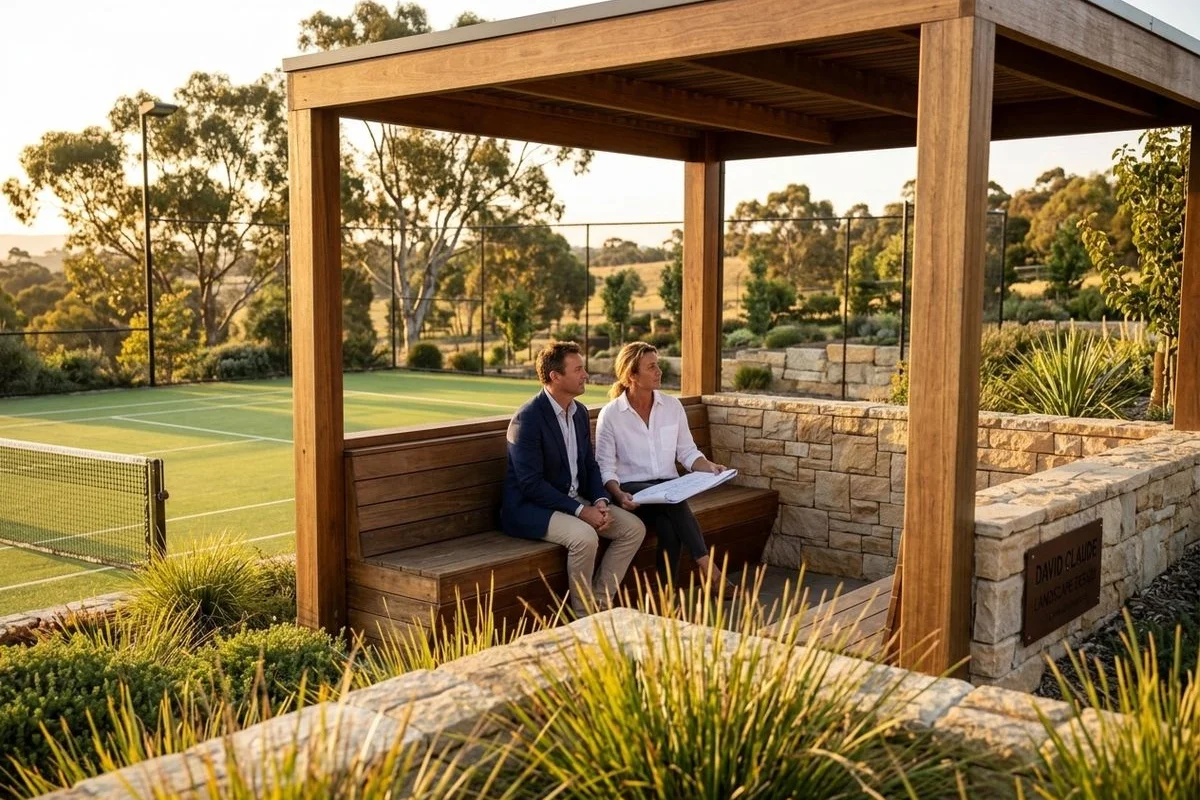
A dedicated shelter gives players and spectators a comfortable place to gather between sets. We design custom pergolas and covered pavilions using durable, locally sourced Silvertop Ash timber. Adding built-in seating or a small outdoor kitchen underneath a classic Colorbond steel roof stops the court from feeling isolated.
Our designs integrate these structures directly with the planting plan for a highly cohesive look. Having a shaded spot makes the entire area a usable entertaining zone, even on non-playing days.
Lighting for evening play
Evening matches are a fantastic way to use the space, provided the lighting is neighbour-friendly. We design lighting plans that meet the Australian Standard of 250 lux for recreational and training play. Keeping pole heights between six and eight metres is the best way to minimise unwanted glare.
Our electrical teams specify cutoff-optic fixtures to ensure light strictly hits the playing surface. Complying with local council regulations regarding obtrusive light spill is an absolute requirement in residential zones. Pairing an efficient lighting setup with early neighbour consultation prevents headaches down the track.
| Play Level | Recommended Brightness | Ideal Pole Height |
|---|---|---|
| Casual / Recreational | 250 Lux | 6 to 8 metres |
| Club Competition | 350 Lux | 8 to 10 metres |
| International | 1000+ Lux | 12+ metres |
We handle the entire installation process to ensure your lighting is powerful, compliant, and beautifully integrated.
Contact David Claude Landscape Design today to schedule a consultation for your tennis court landscaping. We are ready to transform your tennis court into a stunning garden feature.