Our team constantly sees the same struggle when planning outdoor spaces across Melbourne’s hilly terrain. You want a beautiful outdoor entertaining area, but the steep slopes make choosing between hardwood vs softwood decking a genuine headache.
Getting the material balance right is the critical first step.
The choice of timber dictates everything from your upfront costs to how much maintenance you will handle each summer. From our perspective, picking the wrong material for an elevated deck can lead to warping or failed bushfire compliance.
We are going to break down the most reliable timbers for this climate and walk through the exact logic our designers use to match the right board to your property.
The four mainstream options for hardwood vs softwood decking
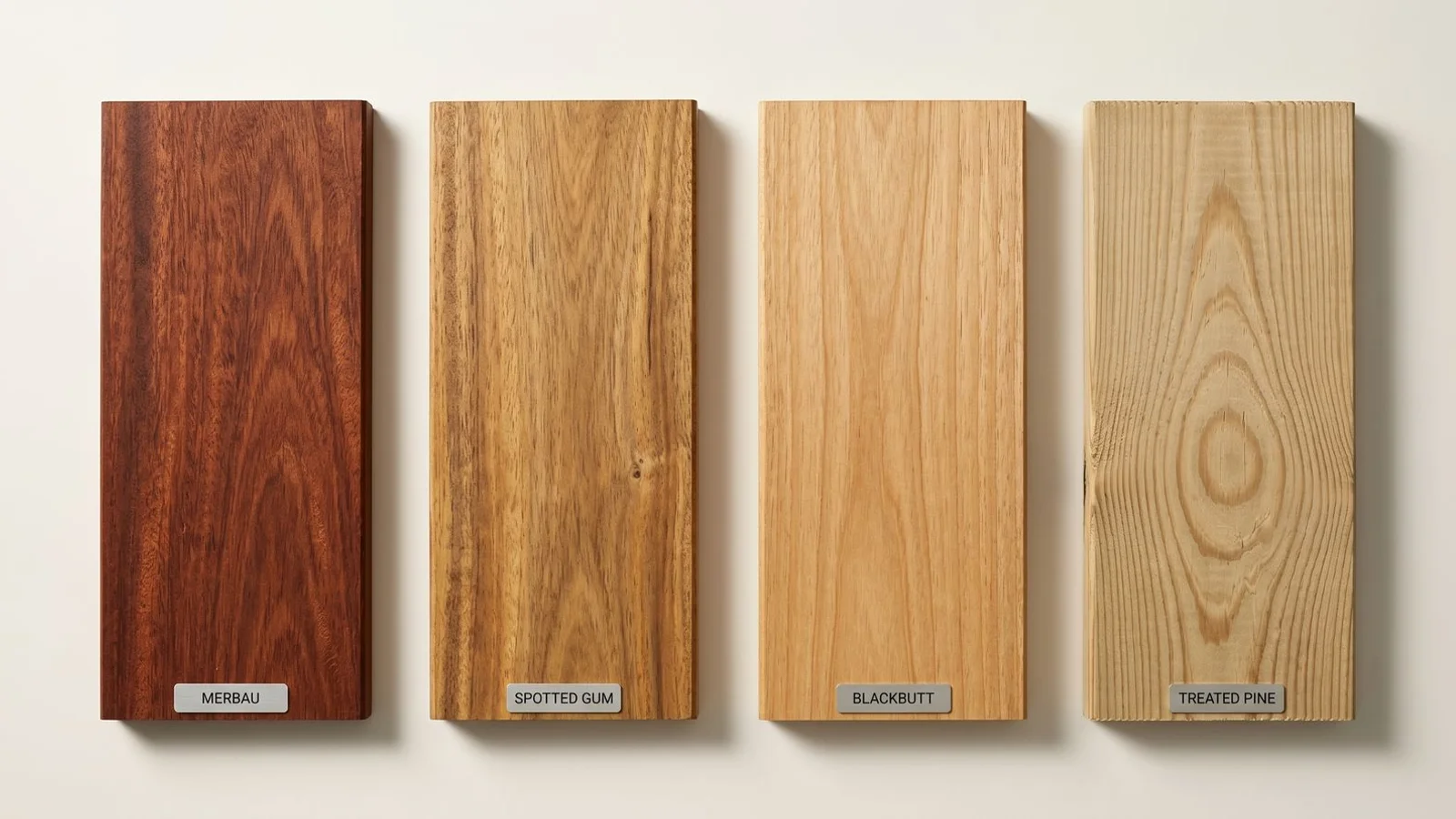
The best decking timber melbourne offers falls into four proven categories that handle our local weather extremes. Spotted gum and blackbutt lead the premium market for durability, while merbau provides a traditional look and treated pine serves as the budget-friendly structural choice.
Spotted gum (hardwood)
- Cost: $9 to $14 per linear metre for a standard 90x19 board
- Lifespan: 30 to 40 years above ground (Class 1 Durability)
- Hardness & Safety: 11.0 Janka rating and BAL-29 bushfire compliant
- Look: Mid-toned with a strong grain, weathering to silver if not oiled
- Source: Eastern Australian native and sustainable
Spotted gum is the undisputed heavyweight champion for high-traffic areas and bushfire-prone suburbs. This timber meets BAL-29 compliance standards straight off the rack, which is essential for homes nestled in Melbourne’s north-eastern green wedges.
We specify this native hardwood as our default recommendation because it flat-out performs. With a massive Janka hardness rating of 11.0, these dimensionally stable boards easily resist dents from moving furniture, heavy foot traffic, and large dogs. The dense grain also means it has a low tannin content. You avoid the dark, tea-like stains that softer woods often bleed onto the expensive stonework or pool paving beneath your elevated deck.
Blackbutt (hardwood)
- Cost: $8 to $12 per linear metre
- Lifespan: 30 plus years with proper maintenance
- Hardness & Safety: 9.1 Janka rating and naturally fire resistant
- Look: Lighter, blond appearance with a subtle grain
- Source: Australian native timber
Blackbutt is the ideal choice when you want to brighten up a shaded backyard or match a modern, coastal aesthetic. It delivers top-tier structural strength with a lighter, blond appearance that makes smaller outdoor areas feel significantly more spacious.
Our crews love working with blackbutt because it machines beautifully and provides Class 1 durability. However, this timber is prone to surface checking, which means tiny cracks can form if it dries out too quickly. You must apply a high-quality, UV-protective oil immediately after installation and keep up a strict annual sealing schedule to maintain its smooth finish. When comparing spotted gum vs blackbutt, remember that blackbutt requires slightly more diligent maintenance to look its best.
Merbau (hardwood)
- Cost: $7 to $11 per linear metre
- Lifespan: 25 to 35 years (Class 1 and 2 Durability)
- Hardness: 8.6 Janka rating
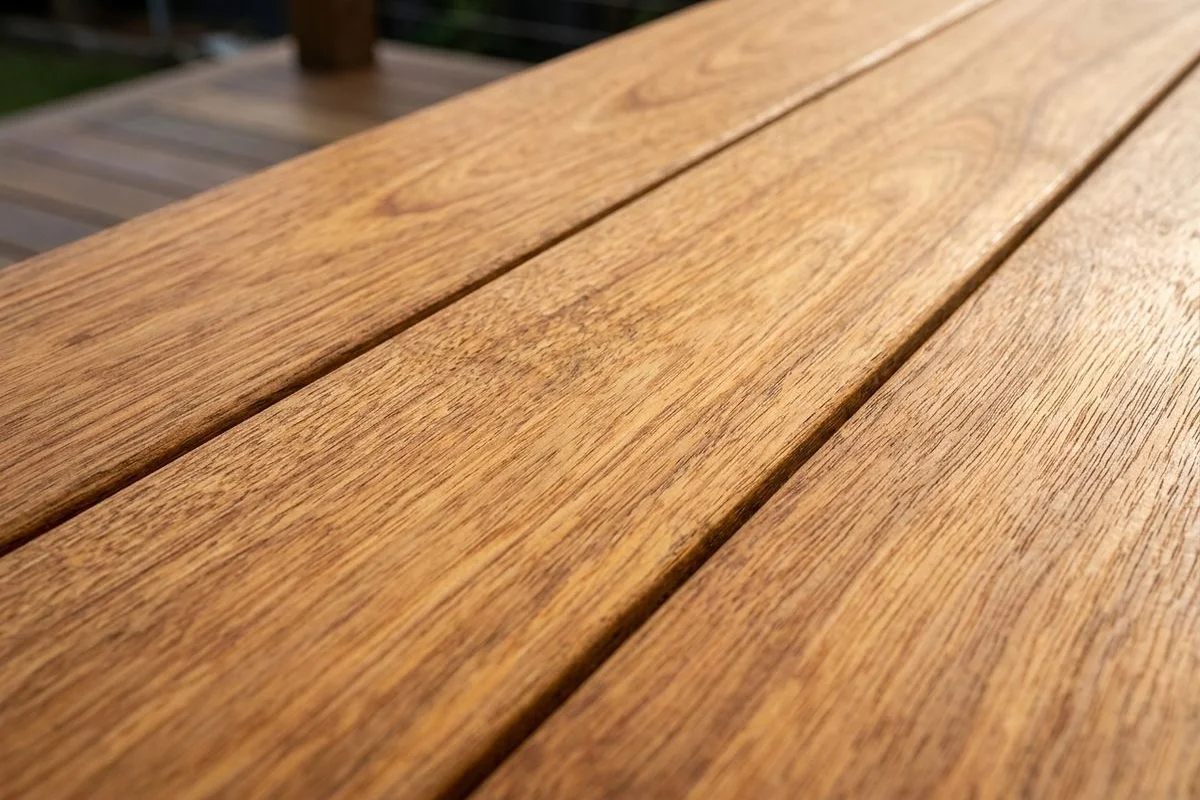
- Look: Deep reddish-brown, stable, and traditional
- Source: Imported (Specify FSC-certified to avoid sustainability concerns)
Merbau remains a staple in Melbourne backyards due to its rich colour, structural stability, and budget-friendly price point for a hardwood. This timber naturally resists rot and termites, making it a reliable performer for ground-level decks.
Our team frequently uses merbau for heritage home renovations, but it comes with a serious warning regarding tannin bleed. If unsealed merbau gets wet, it aggressively leaks a dark, tea-like liquid. This run-off will permanently stain light-coloured concrete, sandstone pavers, or rendered walls sitting underneath the structure. You must actively leach the boards with a specialized deck cleaner or seal them immediately upon installation to lock those tannins in.
Treated pine H3 (softwood)
- Cost: $4 to $7 per linear metre
- Lifespan: 15 to 25 years
- Maintenance Level: High (Paint takes well, but needs frequent sealing)
- Look: Pale tint that lacks natural grain character
- Source: Australian plantation softwood
Treated pine is your most cost-effective solution for creating functional outdoor floor space on a tight budget. It takes paint or dark stains exceptionally well, allowing you to easily match the deck to your home’s exterior trim.
We regularly recommend treated pine for structural subframes, but using it for the visible surface boards requires a commitment to upkeep. Because it is a softwood, pine is highly susceptible to dents from dropped tools, high heels, or heavy barbecues. If left exposed to Melbourne’s harsh summer sun without a fresh coat of sealant, the boards will quickly turn a dull grey, warp, and begin to splinter.
Quick logic
When making your final decision, the right choice always comes down to matching the material to your specific site conditions and lifestyle. Review this quick logic guide to confidently select the ideal board for your upcoming project.
| Decking Goal | Recommended Timber | Key Reason |
|---|---|---|
| Strict Budget | Treated Pine | Lowest upfront material cost at $4 to $7 per linear metre. |
| Maximum Durability | Spotted Gum | BAL-29 compliant with a massive 11.0 Janka hardness rating. |
| Bright Aesthetic | Blackbutt | Pale blonde tones brighten shaded areas perfectly. |
| Traditional Heritage Look | Merbau (FSC-Certified) | Deep reddish-brown colour with excellent dimensional stability. |
Pro-Tip: If your property sits on a steep, uneven block, expect your installation labour costs to increase by up to 30%. Building a complex structural subframe on challenging terrain requires significantly more time and specialized footings than a standard flat block.
These same timber rules apply directly to overhead structures. A pergola structure is almost always built using hardwood to guarantee long-term durability and a premium visual finish. See our decking and pergolas service for the full scope of what is possible in your backyard.
To wrap up your decision on hardwood vs softwood decking, remember that your site’s specific microclimate dictates everything. Reach out to our design team today to schedule a site assessment and let us help you build an outdoor space that truly lasts.