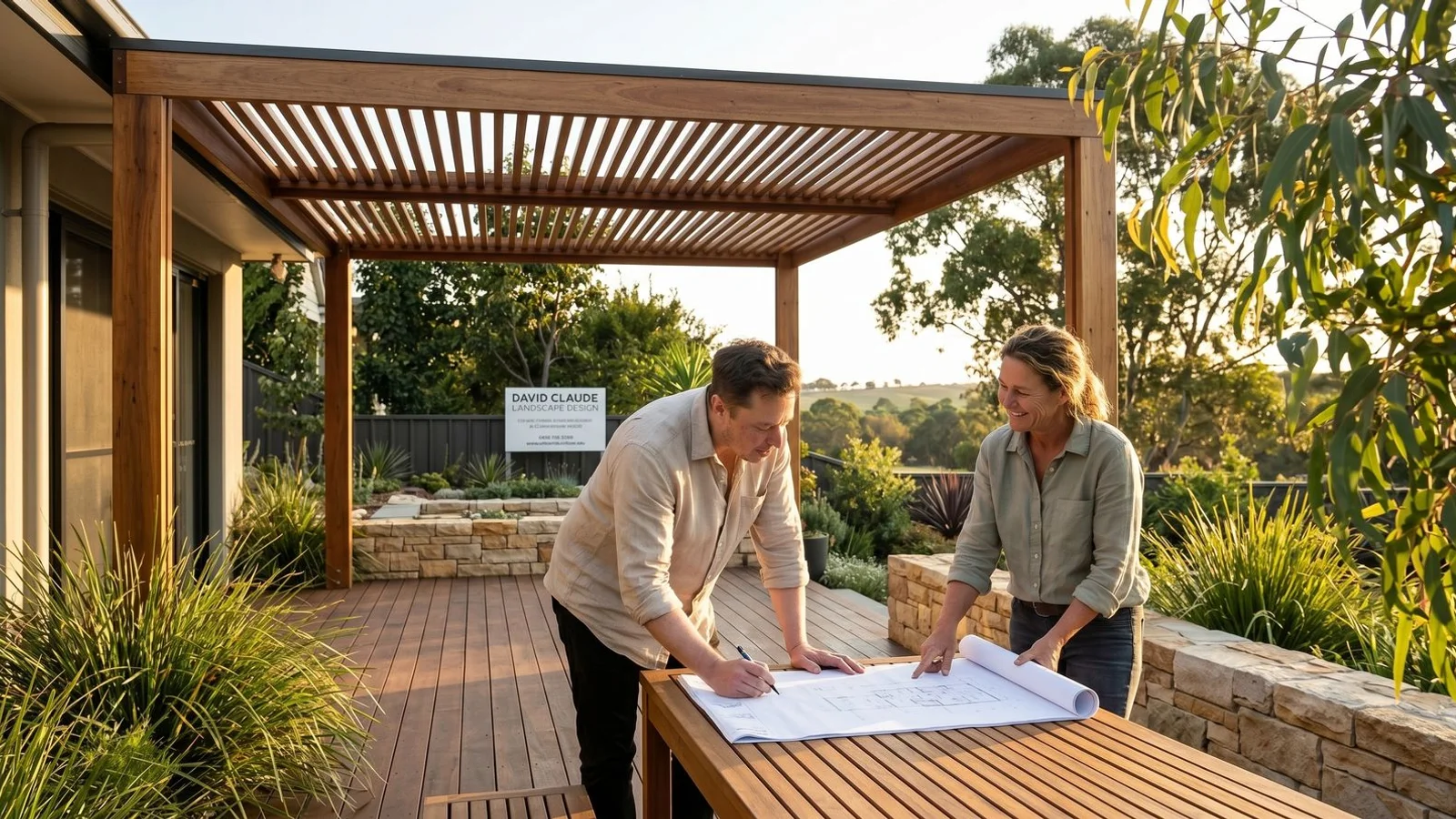
We constantly see Melbourne homeowners debating the benefits of an attached vs freestanding pergola. The slope of your property and local council permit boundaries usually dictate the final decision. Choosing the wrong layout can easily inflate your budget and delay the project.
Our team relies on a straightforward framework to help clients make the right structural call. This approach prevents unexpected foundation costs before construction begins.
Let’s look at the data, what it actually tells us, and explore a few practical ways to respond.
Attached pergolas
Our primary definition of a pergola attached to house framing is a structure connected directly to your home using a ledger board flashed into the wall. The house itself provides essential structural support for one entire side of the framework. A 2026 review of Victorian building regulations shows these additions often bypass permit requirements entirely.
We typically see council exemptions granted if the floor area is under 20 square metres and the peak height remains below 3.6 metres. This specific size limit comfortably accommodates a five-by-four-metre entertaining zone, which is a popular pergola design Melbourne residents frequently request. Keeping the frame within 2.5 metres of the front wall is another strict requirement to avoid council paperwork.
Advantages
Our estimators calculate that clients save considerable money with this connected configuration. Eliminating one wall of posts reduces both material and labour expenses significantly. Average installations often run 20% cheaper than standalone alternatives, easily keeping thousands of dollars in your pocket.
We always highlight these core advantages for connected designs:
- Lower construction costs stem directly from needing one fewer wall of posts.
- Tight threshold details make the space feel like a true, continuous extension of the house.
- Our design plans ensure better weather protection on the house-adjacent side.
- Integrating lighting and power points is incredibly simple.
- The structure utilises your existing property footprint efficiently.
Disadvantages
Our installation crews must pay absolute attention to the ledger flashing detail. Poorly installed flashing will quickly allow rainwater to leak directly into your house walls. The existing house wall must also be structurally adequate to carry the new weight.
We rarely encounter load-bearing problems on modern homes, but older properties sometimes require expensive reinforcement. Proper fall-direction design is critical to shed water safely away from your foundation. Adding a solid Colorbond roof immediately classifies the unit as a verandah, which automatically triggers a mandatory building permit.
Freestanding pergolas
Our preferred solution for difficult terrain is a completely independent structure. All four sides of a freestanding pergola stand on their own footings, entirely separate from the house. This design requires absolutely no attachment to your existing roofline or fascia.
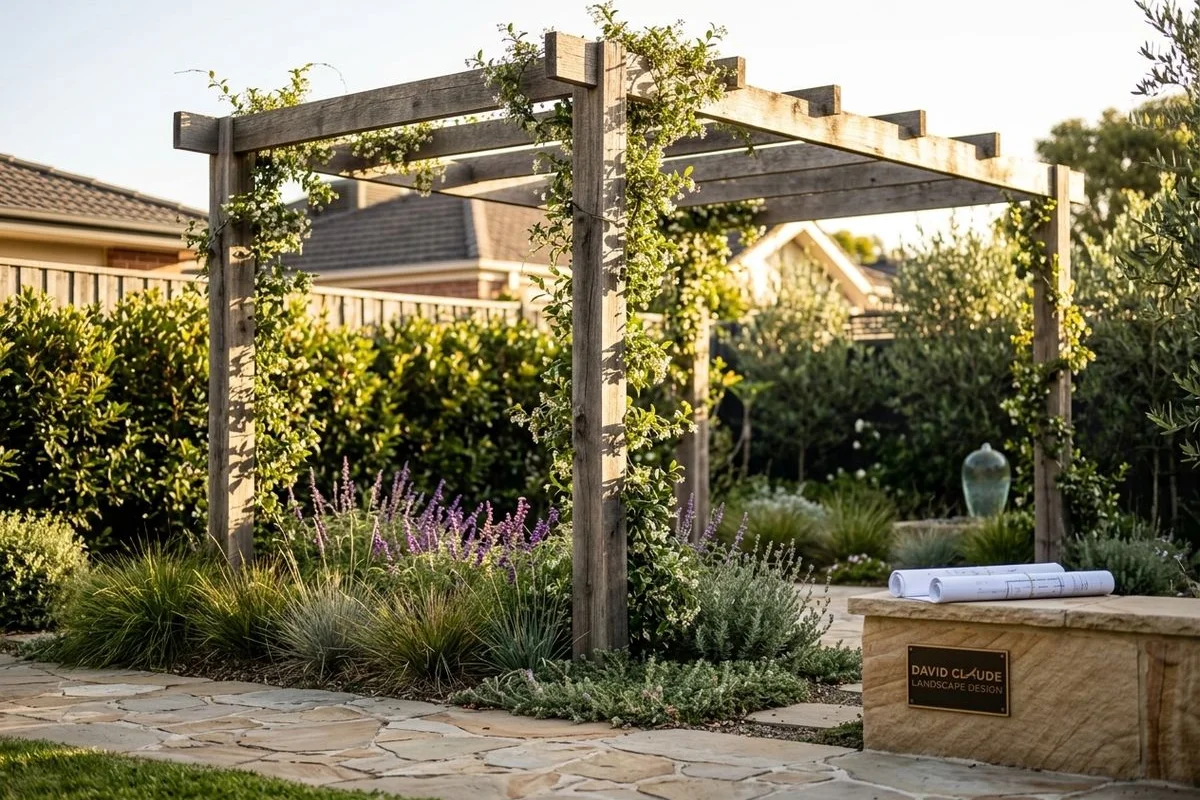
We utilise these standalone frames to conquer the steep sloping blocks common throughout Melbourne’s north-eastern suburbs. Deep screw piles or sturdy concrete foundations effectively stabilise the heavy upright posts. You completely bypass the complex engineering challenges associated with altering a home’s exterior cladding.
Advantages
Our landscape architects love the full design freedom this placement option provides. You can position the shade structure exactly where the afternoon sun is most pleasant. There is absolutely no house-interface detail to compromise the visual appeal.
We frequently build these independent features for specific backyard functions:
- Garden-centre pavilions provide a shaded retreat away from the main house noise.
- Poolside shade covers offer a dedicated lounging zone.
- Our custom dining zones create a beautiful destination at the rear of the property.
- Heritage homes maintain their original architecture without modern attachments.
- Large properties gain clear, distinct functional areas.
Disadvantages
Our estimators always factor in higher baseline costs for these detached builds. Extra posts and dedicated footings naturally drive the total price up by 15 to 25 percent. Difficult terrain can easily add $2,000 to $8,000 in site preparation expenses alone.
We must frequently arrange structural engineering for larger sizes to ensure strict wind load compliance. Building any standalone unit over 20 square metres in Victoria definitely requires a formal building permit. The garden will feature more visual posts, requiring thoughtful planting to soften those vertical lines.
Choosing between them
Our advice always comes back to your primary daily goal for the space. Attach the frame when the pergola serves as a threshold extension of the kitchen or living room. Build a freestanding unit when the structure needs to act as a distinct destination in the garden, like covering a spa or scenic view point.
We use the data below to help clients quickly compare the baseline expectations. Reviewing these metrics makes the structural decision much more objective. Clear numbers remove the guesswork from your backyard planning.
| Feature | Attached Pergola | Freestanding Pergola |
|---|---|---|
| Cost | Lower (saves 20% on average) | Higher (requires extra posts and footings) |
| Victorian Permit Exemption | High (if under 20 sqm and 3.6m tall) | Moderate (terrain often triggers engineering) |
| Best Application | Continuous indoor-outdoor extensions | Poolside shade or sloping garden destinations |
Our team is ready to evaluate your property and recommend the best approach for your specific block. For our decking and pergolas service, including structural design and permit handling where required, reach out today. Getting the engineering right the first time prevents expensive rework down the track.