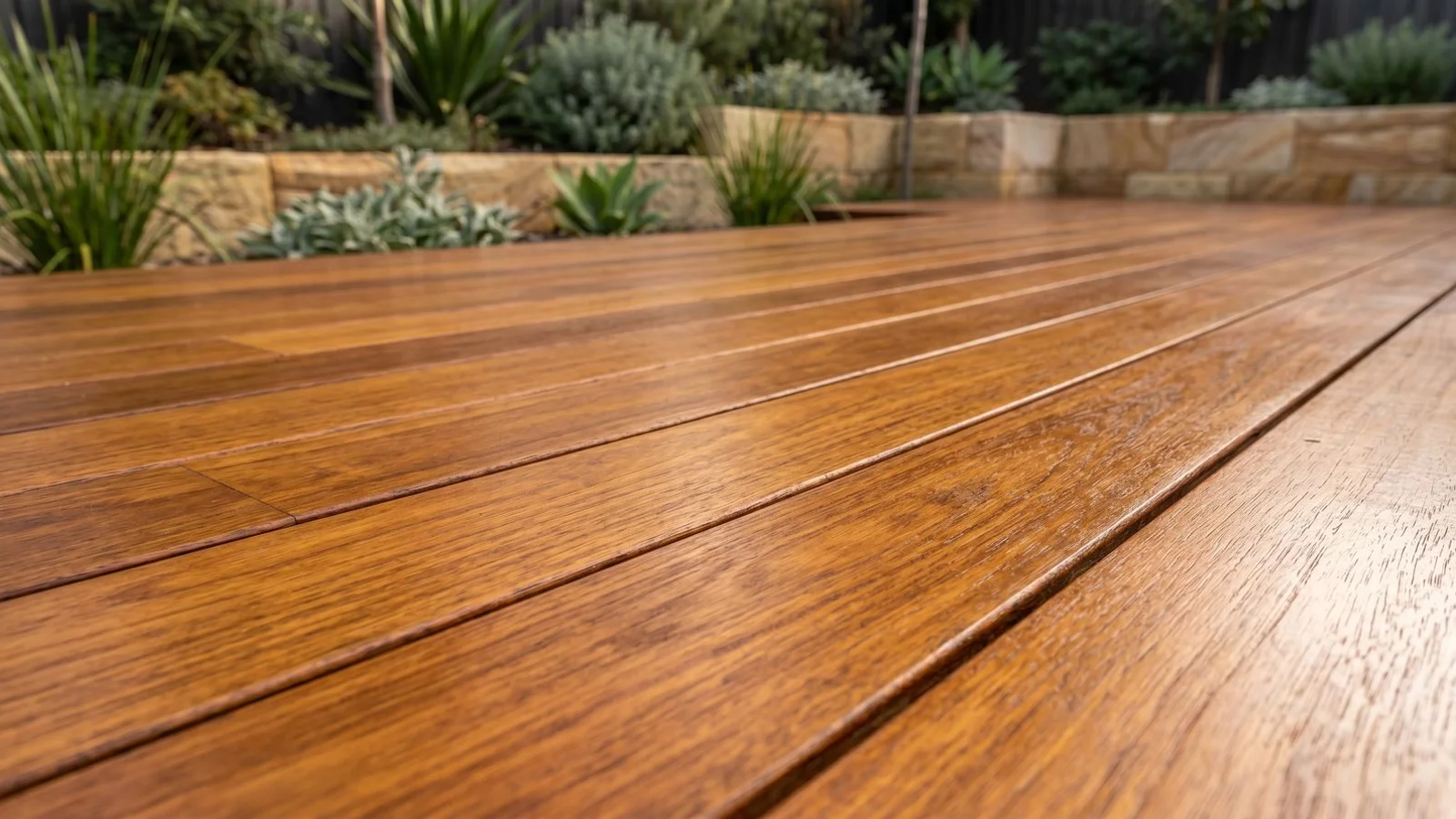
We constantly perform the deck maintenance Melbourne weather demands because beautiful timber structures age prematurely in this climate.
The intense summer sun followed by wet winters creates a brutal cycle for natural materials. A solid maintenance plan is the only way to stop that expensive deterioration.
Our design team focuses on sub-floor integrity first rather than just looking at surface aesthetics. Let’s answer the question of how long does a deck last and outline the exact upkeep steps that actually work.
How long a deck actually lasts
Hardwood options like spotted gum or blackbutt will endure for 25 to 40 years if they receive proper ventilation and annual oiling. Our experience shows that treated pine H3 trails behind with a realistic lifespan of 15 to 25 years.
Merbau delivers a solid 25 to 35 years of service under those same ideal maintenance conditions. Construction details matter far more than the specific wood species you choose.
Our recent cost data from 2026 indicates that composite alternatives like Trex now last 25 to 30 years with minimal upkeep. Any timber installed without adequate sub-floor airflow will rot out in 10 to 15 years regardless of its density. A well-ventilated pine structure can easily outlast an expensive hardwood build that lacks breathing room.
| Material Type | Estimated Lifespan | Average Installed Cost (2026) |
|---|---|---|
| Hardwood (Spotted Gum/Blackbutt) | 25 to 40 years | $350 to $500/m² |
| Hardwood (Merbau) | 25 to 35 years | $300 to $450/m² |
| Treated Pine (H3) | 15 to 25 years | $200 to $280/m² |
| Premium Composite (Trex/ModWood) | 25 to 30 years | $350 to $500+/m² |
What fails first
We always inspect the sub-structure first when evaluating an older installation for safety issues. Moisture and poor structural planning cause the vast majority of early deck failures. The surface boards often look flawless while the framing beneath them is actively collapsing.
Sub-floor rot
Our standard practice involves ensuring raised perimeter gaps or installing vented fascia panels to promote constant airflow. Trapped moisture underneath the framing rots the joists and bearers directly from the bottom up. Sub-floor ventilation is the single most important longevity detail you can implement.
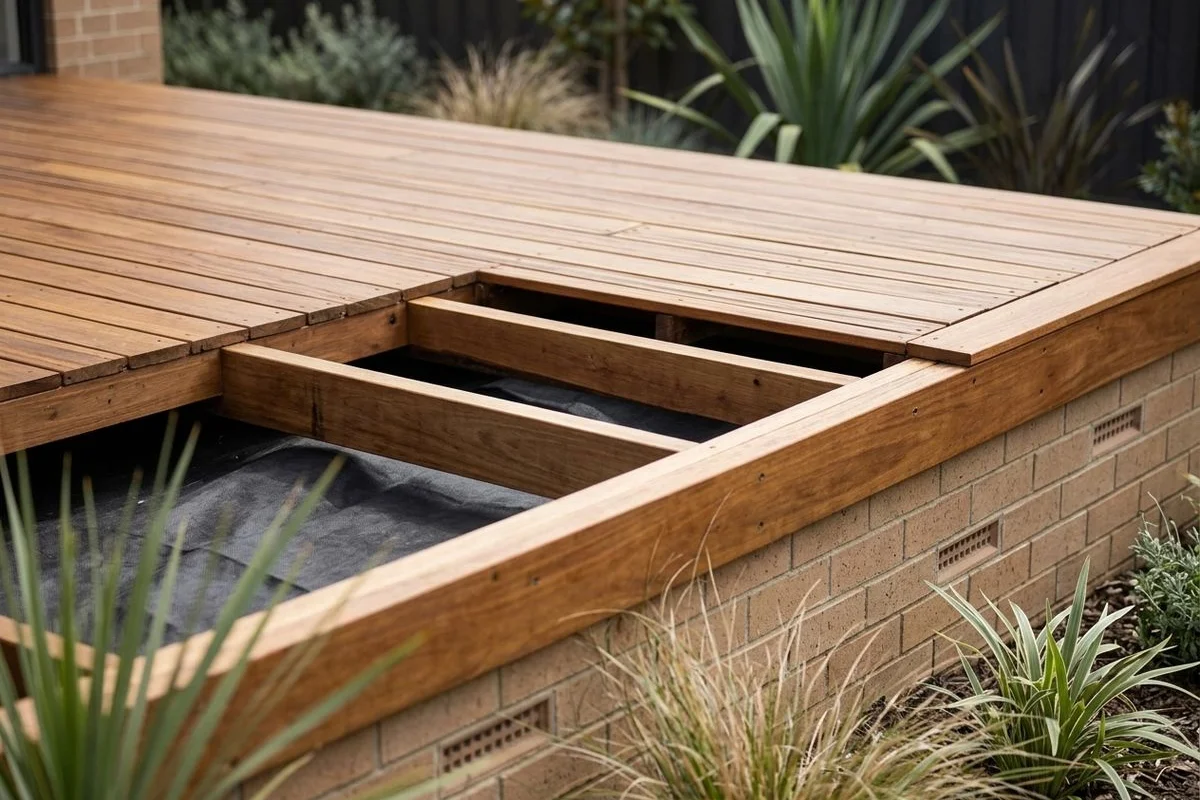
We strongly enforce the Australian Building Code (BCA) ventilation mandates to prevent this costly damage. Coastal Victoria and humid regions require very specific airflow metrics to keep the timber dry. Ground clearance should typically sit at a minimum of 400mm between the soil and your bearers.
- Minimum Clearance: 400mm from ground to bearer in standard conditions
- Sloping Sites: Can reduce to 150mm near external walls if proper drainage exists
- Vent Sizing: Minimum 6000mm² of ventilation opening per meter of wall
- Vent Placement: Evenly spaced and positioned within 600mm of every corner
Our team requires a heavy-duty plastic moisture barrier over the soil if sloping terrain forces that clearance down to 150mm. This physical barrier stops ground evaporation from rising directly into the timber framing. Failing to manage this moisture leads to a rapid decay cycle that ruins the foundation.
Board cupping and splitting
Our maintenance crews see boards cup and split rapidly when UV rays strip the natural oils from the timber. Regular oiling prevents moisture from entering the end-grain and keeps the boards dimensionally stable.
A dried-out surface will split along the grain at the board ends within two to three dry Melbourne summers.
We recommend applying a premium water-based deck oil Melbourne suppliers stock, like WOCA Exterior Wood or Intergrain UltraDeck, for superior UV defense. These high-performance coatings repel rain effectively while still allowing the timber to breathe. Applying these treatments on mild days between 15°C and 25°C ensures the best possible absorption.
Fixings corroding
Our specification always calls for a minimum of 304-grade stainless steel screws for standard residential projects. Non-stainless screws will rust quickly and leave dark streaks down the face of your timber. You must specify quality-coated fixings right from the start of the build.
We advise clients near Port Phillip Bay or with saltwater pools to upgrade to 316-grade marine stainless steel. Corroded screws will eventually snap under the natural expansion and contraction of the wood. Cheap galvanized fasteners routinely cause thousands of dollars in avoidable repair costs.
Deck maintenance Melbourne: The annual routine
We find that a strict yearly schedule is the only guaranteed way to protect your outdoor investment. Late winter is the ideal time to prep the surface so it is ready for heavy spring use. Following a consistent checklist prevents small issues from becoming major structural hazards.
- Pressure-wash in late winter to remove mould, algae, and surface dirt
- Sand lightly with 80 to 120 grit paper where boards have grown rough
- Oil with quality decking oil, applying two coats and doing the end-grain first
- Check structure once a year by looking under the deck for any soft timber or insect activity
- Replace fixings showing corrosion immediately to prevent structural compromise
Our broader decking and pergolas service covers these crucial construction details, so reach out to us for a comprehensive maintenance handover. Taking these steps ensures your outdoor space remains safe and functional for decades. A little scheduled deck maintenance Melbourne homeowners implement today easily doubles the practical lifespan of these materials.